KOSPI Surges 2.81% as Falling Oil Prices and the Fed's Rate Hike Ease Persistent Global Inflation Worries
Institutional investors led broad-based gains across technology, manufacturing and other sectors after a volatile week for South Korean equities.
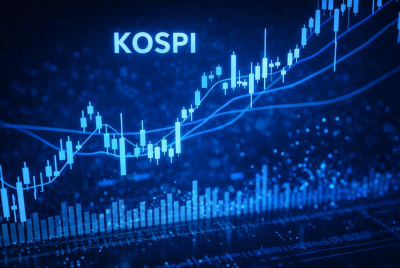
SEOUL — South Korea's benchmark KOSPI index surged 2.81% to 6,903.94 by mid-afternoon Friday, adding 188.53 points, as falling global oil prices and a widely anticipated interest rate increase from the U.S. Federal Reserve combined to ease inflation worries that had rattled markets throughout the week.
The rally built on strength that was evident from the opening bell. The index opened at 6,885.70, up 170.29 points, or 2.54%, from the previous close, and continued climbing through the morning session, touching 6,870.45 by 9:02 a.m. local time before extending further gains into the afternoon. The advance marked one of the KOSPI's strongest single-day performances in recent weeks, offering a sharp reversal from a volatile stretch that had seen the index swing between steep losses and partial recoveries over the preceding four trading sessions.
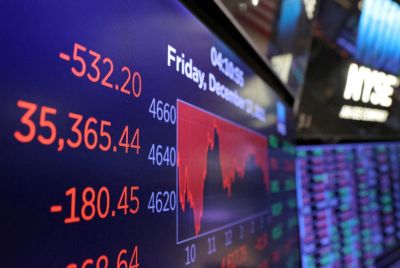
Friday's gains tracked a broadly positive overnight session on Wall Street. U.S. stocks closed higher after falling oil prices and easing pressure in the bond market lifted investor sentiment, with the S&P 500 adding 1.14% and the technology-heavy Nasdaq Composite climbing 1.69%. That rally followed confirmation that the Federal Reserve had raised interest rates as widely expected, an outcome that removed a significant source of uncertainty that had weighed on global markets throughout the week. Combined with a pullback in crude oil prices, which had surged in recent sessions amid escalating tensions in the Middle East, the resolution of both the rate decision and the energy price pressure gave investors reason to step back into riskier assets.
Within the KOSPI, gains were broad-based across sectors, though technology and industrial shares led the advance. The electric and electronics sector climbed 3.29%, the single strongest-performing group in Friday's session, followed by manufacturing shares, up 2.66%. Construction stocks rose 1.77%, securities firms gained 1.13%, and machinery and equipment makers advanced 1.05%, rounding out a session in which nearly every major sector participated in the rally.
Trading activity showed a notable divergence between different categories of investors. Individual retail investors were net sellers during the session, offloading a net 174.1 billion won worth of shares, while foreign investors also recorded modest net selling of 16 billion won. Institutional investors, by contrast, were the primary buyers driving the rally, recording net purchases of 111.2 billion won, suggesting large domestic institutions moved more aggressively to capitalize on the improved macroeconomic backdrop than either retail or foreign participants during Friday's session specifically.
Friday's rebound caps an unusually turbulent week for South Korean equities. The KOSPI tumbled 3.26% on Monday amid a combination of surging oil prices, rising U.S. Treasury yields and renewed doubts about the pace of global artificial intelligence infrastructure spending, before slipping a further 0.85% on Tuesday. The index staged a partial recovery Wednesday, adding 1.37% as chipmakers Samsung Electronics and SK Hynix clawed back some lost ground, before Friday's sharper rally pushed the benchmark decisively higher for the week overall.
The broader bullish case for South Korean equities has remained intact even amid the recent volatility. Goldman Sachs Research has identified the Korean stock market as its highest-conviction regional pick in Asia, citing a projected 300% surge in 2026 corporate earnings, which the firm's analysts describe as the strongest annual profit expansion in any major Asian market since the region's recovery from the 1999 Asian financial crisis. Central to that bullish outlook is what Goldman Sachs has called a memory chip supercycle, driven by record shortfalls in memory chip supply, surging demand from hyperscale cloud computing providers, and the broader global buildout of artificial intelligence computing infrastructure. Timothy Moe, the firm's chief Asia Pacific regional equity strategist, has said Korea represents the firm's "highest-conviction view" within the region, and Goldman has set a KOSPI target of 9,000, implying substantial further upside from Friday's levels even after the index's sharp gains so far this year.
The KOSPI's performance over the past year illustrates both the scale of that opportunity and the volatility that has accompanied it. The index touched an intraday record high of 9,385.59 in June before retreating sharply in the weeks since, with its 52-week trading range spanning from a low of 3,365.73 to that June peak, according to data compiled by Investing.com. Friday's close of 6,903.94, while representing a strong single-day gain, still sits well below the index's record high, underscoring how much ground South Korean equities have given back since the market's peak earlier in the year even as the underlying earnings and semiconductor demand story that originally drove the rally has, according to Goldman Sachs and other bullish analysts, remained largely intact.
With Friday's session bringing some measure of resolution to the twin sources of pressure that dominated trading earlier in the week, the Fed's rate decision and surging oil prices, investors are likely to turn their attention next to whether South Korea's underlying semiconductor and technology earnings growth can reassert itself as the primary driver of the market's direction heading into the final months of the year, following one of the more volatile stretches the KOSPI has experienced in recent months.
© Copyright 2026 IBTimes AU. All rights reserved.
- Recommended For You