

Tampa Bay Battles Worst Dengue Fever Outbreak In Nearly A Century As Cases Double In A Week Officials Say
Tampa Bay Battles Unprecedented Dengue Fever Outbreak Amid Rising Mosquito Populations
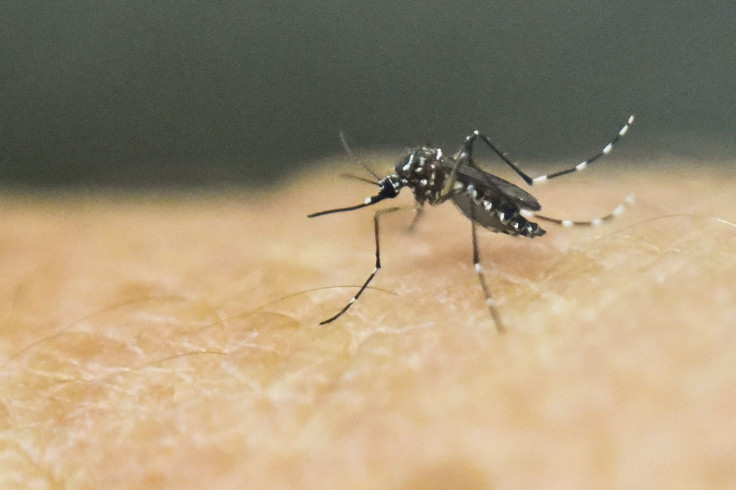
TAMPA, Fla. — Florida is battling its largest outbreak of dengue fever in nearly a century, with mosquito control officials across the Tampa Bay area waging an intensifying fight against the two invasive mosquito species responsible for spreading the disease.
Since July, 209 Floridians have been hospitalized with dengue fever, more than any other state in the country. At least 73 of those people contracted the virus locally rather than while traveling abroad, and 65 of those local infections occurred within the Tampa Bay region. No deaths have been reported so far this year, but officials say the scale of the outbreak is unprecedented for the area.
"We're trying not to panic. But people need to take this very seriously," said Gabriela Henderson, spokesperson for Hillsborough County's mosquito control department. "Something of this scale has never happened here before."
Kristi Miley, who teaches at the University of South Florida's College of Public Health, said dengue case counts across Florida have been gradually rising since the year 2000, but the current concentration in Tampa Bay marks a distinct and worrying shift.
"There's clearly something happening here that's not happening in the rest of the state," Miley said. "And it's just a matter of time until it spreads."
The numbers illustrate just how sharply the outbreak has accelerated. In 2024, following two hurricanes that left behind piles of debris and standing water, Hillsborough County recorded seven locally contracted dengue cases. This year, that figure has climbed to 59. Pinellas County had not recorded a single case in 30 years before logging five this summer. Pasco County reported its first dengue infection just last week.
The disease is spread by two mosquito species, Aedes aegypti and Aedes albopictus, small insects marked by black-and-white stripes and a distinctive harp-shaped pattern on their backs. Beyond dengue, both species can also transmit Zika, yellow fever and chikungunya. Unlike other mosquito species that breed in mangroves and marshes, these two prefer laying eggs in small containers of standing water, including discarded toys, trash cans and backyard bromeliads, with a single bottle cap capable of harboring as many as 100 larvae.
Only female mosquitoes of these species bite humans, seeking blood meals needed to lay eggs, and unlike some other mosquito species, they do not feed on birds, meaning traditional sentinel chicken coops used to detect disease outbreaks cannot serve as an early warning system for dengue. The mosquitoes also tend to avoid flying during dusk or nighttime hours, when most fogger trucks typically operate, and because they primarily breed in residential backyards rather than open wetlands, spraying public streets alone does little to control their populations.
To adapt, mosquito control workers on both sides of Tampa Bay have begun carrying insecticide-filled backpacks to target much smaller, more precise areas, rather than relying solely on wide-area spraying. Because the mosquitoes typically travel only a couple of football fields from where they hatch but can lay up to 1,000 eggs over their monthlong lifespan, officials have also had to switch to specialized traps that emit a mist resembling the smell of dirty socks, since the dengue-carrying strains are not attracted to standard light-based mosquito traps.
Hillsborough County currently employs 25 mosquito control workers who maintain 140 traps across the county. Locations that previously caught around 200 insects are now logging as many as 1,000. Since July, technicians have tested 2,324 mosquitoes, finding the dengue virus present in 14 separate samples.
Jason Stuck, an entomologist who has worked in Pinellas County's mosquito control department for 28 years, described his hands-on approach to studying the insects, saying he regularly lets mosquitoes land on him "so I can suck them off and study them."
Alissa Berro, who directs Pinellas County's mosquito control and vegetation management department, said the community's cooperation has become central to the effort in ways that differ from combating other mosquito species.
"The biggest difference in combating this sort of mosquito vs. others is how much we're depending on the community," Berro said. "They're in your yards. They're outside your private businesses."
Berro, who transitioned into mosquito research after initially studying ladybugs, described a genuine fascination with the insects even as she works to control them.
"I love mosquitoes. I can't help it," Berro said. "They're utterly fascinating and beautiful. But we have to control them."
Public health officials note that dengue often goes undetected, since only about one in four infected people show symptoms, which typically resemble the flu and can include fever, body aches and a mild rash, often appearing weeks after the initial bite. In more severe cases, the disease can cause organ failure, bleeding from the eyes and ears, high fever and severe bone pain. The virus cannot spread directly between people, though pregnant women can pass it to their unborn children, increasing the risk of miscarriage. Individuals who contract a second, different strain of dengue after a prior infection face significantly elevated risk of hemorrhaging and death. There is no cure for the disease, and treatment is generally limited to rest, fluids and pain relievers.
Globally, dengue infects roughly 400 million people annually, according to the Centers for Disease Control and Prevention, a rate 30 times higher than a generation ago, with about 100 million people developing severe symptoms and an estimated 40,000 deaths worldwide each year. Public American Health Organization spraying efforts had helped virtually eliminate local dengue transmission in the United States by the 1940s, though isolated cases resurfaced in Key West in 2009, followed by a larger cluster across Florida in 2024 after that year's hurricanes.
Officials continue urging residents to empty standing water from outdoor containers at least once a week, the approximate time it takes mosquito eggs to hatch, and to report neighborhood code violations that could contribute to breeding sites. Pinellas County has even distributed free mosquito fish, which eat larvae, for use in horse troughs and turtle ponds.
Henderson said the intensified spraying and trapping efforts are showing measurable results, even as the broader fight remains difficult.
"When we trap 100 mosquitoes, then spray, we might get eight the next time," Henderson said. "It shows what we're doing is working. Unfortunately, it's an uphill battle."
Despite those efforts, the number of dengue cases across Tampa Bay doubled just last week, underscoring the scale of the challenge still facing local health and mosquito control officials as the outbreak continues to develop.
© Copyright 2026 IBTimes AU. All rights reserved.