Scientists Discover Garnet on Mars for the First Time, Unlocking Clues to the Red Planet's Ancient Past
A groundbreaking find on Mars reveals garnet, providing a new perspective on the planet's geological evolution.
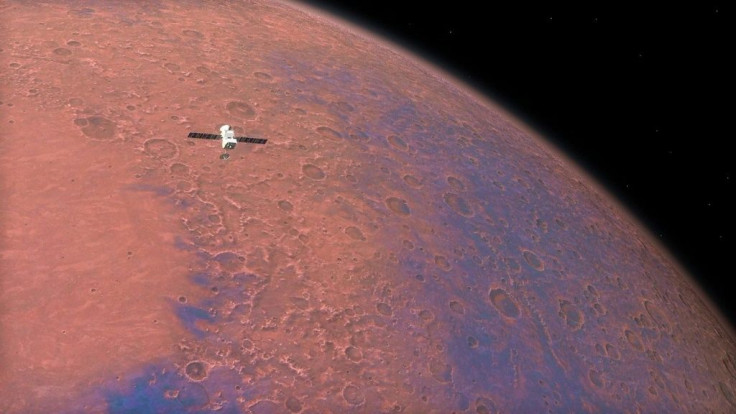
An international team of scientists has identified a completely new type of rock on Mars and, for the first time ever, discovered the mineral garnet in a sample from the Red Planet — a breakthrough that offers researchers a rare glimpse into Mars's ancient geological history and could help piece together billions of years of planetary evolution.
The discovery was made by a multinational research team that includes James Darling, professor of Earth and Planetary Science at the University of Portsmouth's School of the Environment and Life Sciences, alongside researchers from Brock University in Canada, the Royal Ontario Museum, the Università di Trieste in Italy, and the Open University in the United Kingdom.
A Familiar Mineral in an Unfamiliar Place
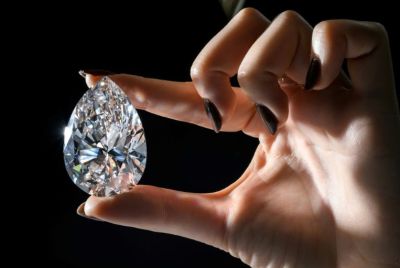
On Earth, garnet is widely recognized as a dark-red gem that was popular with ancient Egyptians, Romans, and the Victorian elite alike, and it remains January's official birthstone. Beyond its decorative appeal, garnet serves as a cornerstone mineral in geology, providing scientists with a powerful record of the tectonic forces, ore-forming processes, and fluid-rock interactions that shape Earth's crust and mantle.
Its discovery on Mars marks an entirely new application for that geological record-keeping ability. The find offers a new geological time capsule, preserving clues about the temperatures, pressures, and processes that shaped Mars billions of years ago.
"The findings add a striking new dimension to our understanding of the geology of Mars and open an exciting new window into the evolution of our planetary neighbour," said Darling.
How the Discovery Was Made
The research was led by Tanya Kizovski, assistant professor of Earth Sciences at Brock University, who described the discovery's broader significance for understanding Martian geology. "This discovery is going to expand our knowledge of the geologic processes that are possible on this planet," Kizovski said. "This new garnet-bearing rock type could give us clues to how Mars has changed throughout its history and new insights into the ancient environments that could have formed the garnet and related minerals."
The breakthrough emerged somewhat unexpectedly, growing out of routine analysis of an existing meteorite sample rather than a targeted search for new minerals. Kizovski and colleagues at the Royal Ontario Museum came to know of the garnet's presence while analyzing a fragment of a Martian meteorite known as NWA 8171, held within the museum's collections. Kizovski had set out simply to identify the fragment's minerals and chemical composition when she noticed something unusual.
"This little section of the meteorite looked really interesting, and the chemistry was a bit odd," she said. "At first, we assumed it was a mineral called pyroxene, which is very common, but then we decided to take a second look."
That second look proved decisive. Using the University of Portsmouth's Electron Microscopy and Microanalysis Unit along with the Royal Ontario Museum's specialized laser equipment, the team was surprised to discover garnet — a mineral that had not been identified on Mars until now.
How Garnet Could Have Formed on Mars
After confirming the mineral's identity, the team turned its attention to analyzing the fragment's broader chemistry and mineralogy in an effort to speculate on how the garnet might have formed in the first place. Kizovski explained the geological process that typically produces garnet on Earth, and how a similar process could plausibly have occurred on Mars.
"Garnet is a classic example of a mineral often found in metamorphic rocks on Earth. The process of metamorphism transforms igneous or sedimentary rocks into a new form through exposure to extreme heat, high pressure or hot fluids," Kizovski said. "On Mars, the heat and pressure needed to produce garnet through metamorphism could have come from the impact of a meteorite hitting the surface of Mars, magma rising up into the Martian crust or both."
Both of those scenarios — a violent meteorite impact or upwelling volcanic activity — would have generated the kind of intense heat and pressure conditions on Mars that are typically required to transform existing rock into garnet-bearing material here on Earth, giving researchers two plausible pathways to explain how the mineral might have come to exist on the Martian surface or within its crust.
An Open Question: Is the Rock Even Martian?
Despite the excitement surrounding the discovery, Kizovski was careful to note a significant unresolved question hanging over the find. The research doesn't definitively indicate whether the garnet-bearing rock formed on Mars or was delivered to the Red Planet and incorporated into its surface via a meteorite landing from elsewhere, leaving open the possibility of what researchers describe as an "extra-Martian" origin.
In other words, scientists cannot yet rule out that the garnet-bearing fragment originated on a different planetary body entirely and was later transported to Mars's surface by an impacting meteorite, only to subsequently become embedded in Martian material and eventually find its way to Earth as part of the larger NWA 8171 meteorite.
The Next Step: Studying Oxygen Isotopes
Resolving that uncertainty will require a more invasive form of analysis that scientists have so far avoided due to the sample's extraordinary rarity. Scientists need to now study the garnet's isotopic signatures to verify whether it was originally produced on Mars or on another planetary body. "Measuring oxygen isotopes from the garnet-bearing rock type itself would help to confirm if it is Martian in origin or from an exotic meteorite impactor," Kizovski said. "Isotopes are a collection of atoms with equal numbers of protons and electrons, but different numbers of neutrons."
However, that process would entail destroying some of the sample, "which was avoided thus far due to its rarity, as it may be the only garnet-bearing Martian rock we have for study," Kizovski added — a tension that illustrates the delicate balancing act facing planetary scientists when working with exceptionally scarce extraterrestrial material. Every test performed on the fragment carries the risk of consuming a piece of evidence that, for now, appears to be entirely unique among known Mars samples.
What Comes Next
Despite the open questions surrounding the garnet's precise origin, researchers remain optimistic about what continued study of the sample could reveal. Royal Ontario Museum curator Kim Tait and research assistant Jessica Tomacic, working alongside Professor Darling, are continuing to study the sample in detail. "With their work and more comparisons to rover and orbital data, I'm hopeful that we will be able to learn more about the origin and history of garnet on Mars," Kizovski said.
That comparative approach — cross-referencing the meteorite fragment's mineral signatures against data gathered by Mars rovers and orbiting spacecraft — could eventually help researchers determine whether similar garnet-bearing rock formations exist elsewhere on the Martian surface, potentially opening up an entirely new category of geological material for future Mars missions to study directly.
Publication and Funding
The team's study, titled "Expanding Mars' lithologic diversity: discovery of a garnet-bearing clast in NWA 8171," was published Tuesday, June 16, in the journal Geochemical Perspectives Letters.
The research project received funding support from multiple sources, including the Government of Canada's Natural Sciences and Engineering Research Council, the Killam Trusts' Dorothy Killam Fellowship, and the Science and Technology Facilities Council's funding program at the University of Portsmouth.
For planetary scientists, the discovery represents more than simply the addition of a new mineral to the catalog of materials known to exist on Mars. It offers a fresh analytical tool — one already well understood from decades of terrestrial geology — that could help unlock new chapters in the 4.5-billion-year history of a planet that continues to reveal previously unknown facets of its geological past with each new sample subjected to modern laboratory analysis.
© Copyright 2026 IBTimes AU. All rights reserved.
- Recommended For You