

Yayoi Kusama, the Visionary Polka-Dot Artist Who Turned Childhood Hallucinations Into Global Fame, Dies at 97
Celebrating the Life and Impact of Yayoi Kusama, a Pioneering Force in Contemporary Art
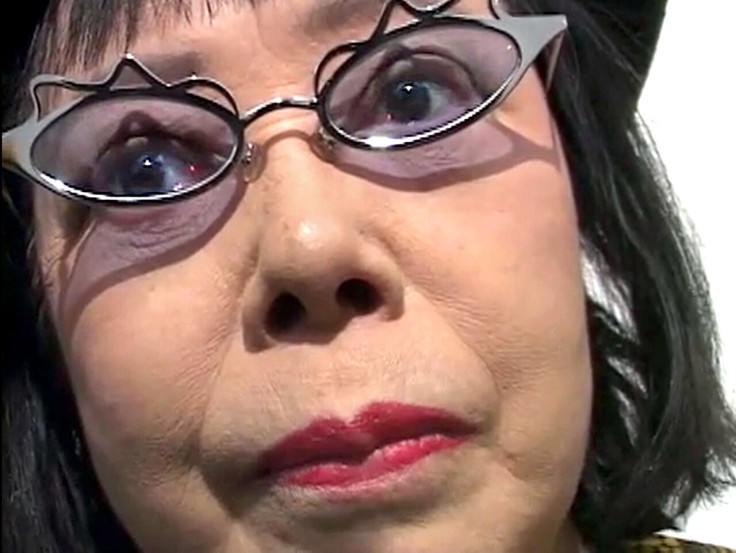
TOKYO — Yayoi Kusama, the Japanese artist whose swirling polka dots, pumpkin sculptures and mirrored "infinity rooms" turned childhood hallucinations into one of the most commercially successful bodies of work in contemporary art, has died. She was 97.
Kusama died Aug. 14 at a hospital in Tokyo, according to a statement from Yayoi Kusama Studio. The cause was multiple organ failure, Kyodo News reported. The David Zwirner gallery, which represented the artist, confirmed her death in a statement as well.
The studio said Kusama had continued working almost to the very end, describing an artist who never abandoned her craft even in her final days. "She continued to paint until her final days, never setting aside her brush," the studio said in its statement.
From rural Japan to the New York avant-garde
Kusama was born March 22, 1929, in Matsumoto, a town in Nagano Prefecture, to parents who ran a plant nursery. She often described a difficult childhood marked by a physically abusive mother and a father who was frequently unfaithful. It was during those early years that Kusama began experiencing the vivid hallucinations that would shape her life's work — visions of dots and patterns spreading uncontrollably across her surroundings until, as she once put it, they consumed "the whole room, my whole body, and the whole universe."
She later described the act of surrendering to those visions as a kind of "self-obliteration," a concept that became central to both her art and her understanding of her own mental health. Kusama moved to New York in 1958, throwing herself into the city's avant-garde scene of the 1960s alongside contemporaries such as Andy Warhol and Donald Judd. She staged provocative happenings, painted sprawling "Infinity Net" canvases, and became known for pushing boundaries around nudity, feminism and psychedelia at a time when few women artists commanded such visibility.
Decades out of the spotlight, then a global resurgence
In 1973, Kusama returned to Japan, and by 1977 she had voluntarily taken up permanent residence at a psychiatric hospital in Tokyo, where she continued to live for the rest of her life while maintaining a nearby studio. For years afterward, her international profile faded even as she kept working prolifically.
That changed with a critical reappraisal beginning in the late 1980s and accelerating through the 2000s. Museums including the Museum of Modern Art and the Whitney Museum of American Art in New York exhibited her work, and her immersive "Infinity Mirror Rooms" — installations that surrounded visitors with endlessly repeating fields of colored light — became some of the most photographed and socially shared artworks in the world, drawing long ticketed lines wherever they appeared.
Her commercial success grew alongside her critical rediscovery. In 2008, Christie's sold one of her paintings for $5.8 million, a record at the time for a living female artist. Her pumpkin sculptures, rendered in her signature black-and-yellow dot pattern, became instantly recognizable installations from Naoshima, Japan, to public plazas around the world. She also collaborated with fashion houses, including a widely publicized partnership with Louis Vuitton and designer Marc Jacobs that placed her polka dots on handbags and storefronts across the globe.
Honors and recognition
In 2016, Kusama received Japan's Order of Culture, one of the country's highest honors for artistic achievement. Accepting the award, she told reporters she remained driven to keep working. "I am now still fighting to the death for my art," she said, according to NBC News.
That determination defined her final years. Even as she was rarely seen in public, her work continued to expand in scale and reach, appearing in exhibitions and public installations on nearly every continent. She once said of her ambitions for her art, "I will keep on making my art until the day I die," a vow that, by all accounts, she kept.
A singular artistic vision
Kusama's work resists easy categorization, having touched pop art, minimalism, feminist art and environmental installation over a career spanning more than seven decades. Repetitive motifs were her hallmark — netting, swirls, and above all, dots — rendered across canvases, sculptures and immersive rooms in what she described as an attempt to express the infinite nature of the universe.
Her influence extended well beyond gallery walls. Her immersive installations helped define what it meant for art to be both critically serious and broadly popular in the social media era, drawing millions of visitors who lined up for the chance to spend a few private minutes inside her mirrored worlds. Her pumpkin and polka-dot imagery became instantly recognizable symbols reproduced on merchandise, fashion collaborations and public art installations worldwide, generating what CNN described as millions of dollars in auction revenue over the course of her career.
A legacy carried forward
In its statement announcing her death, Yayoi Kusama Studio said it intended to continue her mission. The studio said it would honor her wishes by using her art to bring hope to people around the world in the years ahead.
Kusama is survived by her artistic legacy: a body of work housed in major museum collections across the globe, ongoing public installations from Japan to Europe to the United States, and a foundation and studio that plan to continue managing and exhibiting her art. No immediate family members were listed in the studio's announcement.
Tributes poured in from across the art world following news of her death, with galleries, museums and collaborators describing her as one of the defining artistic voices of the past century — a woman who transformed personal suffering into a visual language embraced by millions.
© Copyright 2026 IBTimes AU. All rights reserved.