

Wordle #1826 Answer for June 19, 2026: EMOJI Stumps Players With Tricky Letter Placement
Wordle's June 19, 2026 puzzle features 'EMOJI', reflecting the game's evolving word list.
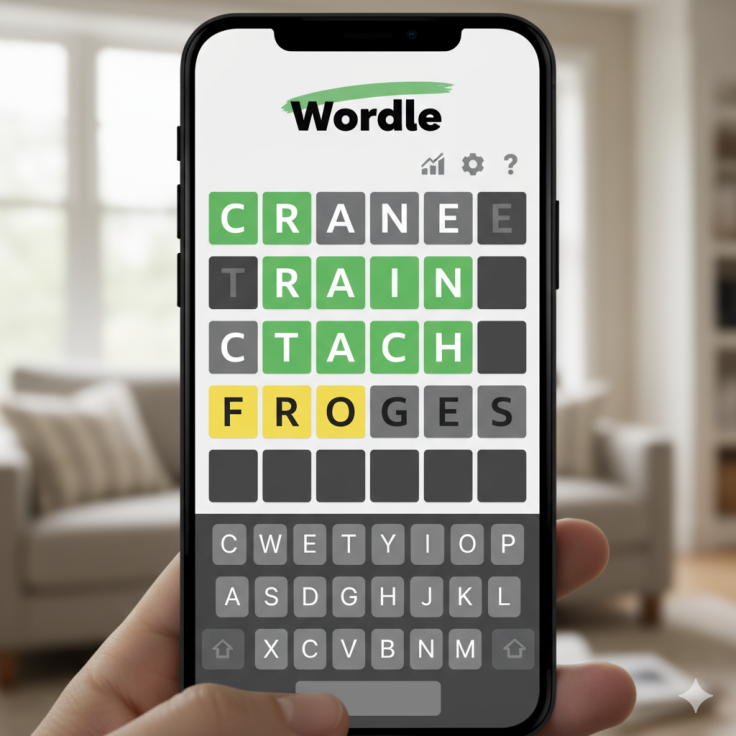
Wordle enthusiasts faced one of the more distinctive puzzles in recent memory on Thursday, as the daily New York Times word game served up a five-letter answer drawn from the modern digital lexicon rather than the traditional vocabulary that typically populates the game's word list.
The answer to Wordle puzzle number 1,826 for June 19, 2026, is EMOJI. The word refers to digital pictograms used to express ideas, objects, and feelings.
A Notably Modern Answer
What set Thursday's puzzle apart from typical Wordle fare was the contemporary nature of the word itself. Given that "emoji" was only added to the Merriam-Webster dictionary in 2015, there is a strong case for this being one of the newest words ever to have appeared as a Wordle answer. The choice reflects how Wordle's word selection has increasingly embraced modern vocabulary alongside the more traditional five-letter words that defined the game's early years.
The word is a noun with three vowels and two consonants, and there are no repeated letters in the puzzle's solution. Today's word starts with the letter E.
Why the Puzzle Proved Difficult
Solvers across multiple gaming outlets reported a more challenging-than-usual experience with Thursday's puzzle, largely due to the unusual placement of one particular letter. The "J" in the middle of a vowel-heavy word like EMOJI was a real curveball for many players, who found themselves spending extra guesses trying to figure out that letter placement.
The difficulty was compounded by the sheer volume of viable candidate words available to solvers even after several rounds of guessing. According to the New York Times' WordleBot, the average player completed Wordle puzzle 1,826 in 3.8 moves in easy mode, or 3.7 moves under hard-mode rules.
One veteran Wordle commentator detailed a strategic breakdown of the puzzle's difficulty curve. Beginning with the starting word ORATE — chosen because it contains five of the most common letters in Wordle answers — the word turned both "O" and "E" yellow, but that still left a substantial 104 possible answers, according to WordleBot. Better alternative starting words existed: MOLTS would have left 33 possible answers, while CLOSE and MODEL would have lowered that figure to just 11 each. Starting with SPOIL would have left only five options in play.
The commentator's second-guess strategy also illustrated the puzzle's tricky construction. Aiming to play a mix of the letters "L," "I," "S," "N," and "C" on the second turn, the attempt with FELON wasn't particularly helpful, merely ruling out two yellow letters from consideration.
Strategy Tips for Future Puzzles
Wordle veterans and gaming sites alike continue to emphasize a handful of core strategic principles that can help players navigate even the trickiest puzzles. Players should not rule out duplicate letters too quickly just because they've tried a letter once, since Wordle answers sometimes use the same letter twice, as in words like SHEEP or BLOOM. The first two or three guesses can be used more freely to eliminate as many unused letters as possible, but if a player is down to their last two guesses, it's best to avoid wild guesses and instead opt for words that fit all known rules.
Other useful patterns to watch for include common word endings like "-ED," "-ER," or "-Y," which appear frequently among Wordle answers. And for players who find themselves staring down a difficult sixth and final guess, the advice remains consistent: don't rush, and take a breath to think through all the possibilities that fit the clues gathered so far.
Recent Wordle Answers and the Game's Evolving Word List
For players looking to track recent puzzles or simply curious about patterns in the game's selections, several outlets have compiled lists of the most recent solutions. The last 10 Wordle answers prior to Thursday's puzzle were ENTRY, TOKEN, AMAZE, BROIL, SEPIA, QUELL, BREAK, TESTY, ALIGN, and WHARF. Wordle does not repeat recent words in short succession, making this list useful for players hoping to rule out unproductive guesses.
Notably, the game's approach to its answer list has shifted over the past several months. While the game previously used a unique word every day without repetition, the New York Times began reintroducing older words into the mix starting February 2, 2026. The first word to be reused was CIGAR — the very first solution in Wordle's history, and also the first answer used after the New York Times took over the game. Despite that policy change, the Times has continued to space out repeated answers significantly, and Thursday's EMOJI solution had not appeared in recent rotations.
The Enduring Appeal of a Five-Year-Old Phenomenon
Wordle has become a daily ritual for millions of people around the world, prized for being quick, challenging, and delivering a small sense of accomplishment that can set the tone for the rest of the day. Part of its enduring appeal lies in its simplicity — five letters, six tries, and a new puzzle every day — combined with the social, friendly competition of sharing results without spoiling the answer for others, which has turned the game into something resembling a community habit.
The game's accessibility has also contributed to its staying power, since anyone can play, from casual puzzle enthusiasts to dedicated word nerds, without needing to download anything complicated or spend more than a few minutes on it.
Looking Ahead
Players who didn't manage to solve Thursday's puzzle shouldn't be discouraged, as there's always another puzzle the following day, and past puzzles remain available to play on the official Wordle archive.
Wordle is a web-based word puzzle game originally created by Josh Wardle in 2021 before surging in popularity and being acquired by The New York Times. The game's objective remains unchanged since its creation: guess a hidden five-letter English word within six attempts, using color-coded feedback to narrow down the possibilities with each guess.
With Thursday's EMOJI solution now in the books, attention turns to Friday's puzzle — number 1,827 — as the Wordle community continues its now five-year-old daily tradition of collective puzzling, shared frustration, and the small triumph of cracking the code in as few guesses as possible.
© Copyright 2026 IBTimes AU. All rights reserved.
- Recommended For You

