NYT Wordle #1741 Solved: Hints, Answer and Strategies for March 26, 2026 Puzzle
The New York Times Wordle puzzle for Thursday, March 26, 2026, presented players with a moderately tricky challenge as many grappled with an uncommon verb that tests vocabulary depth and strategic guessing, ultimately revealing "BEFIT" as the solution in puzzle No. 1,741.
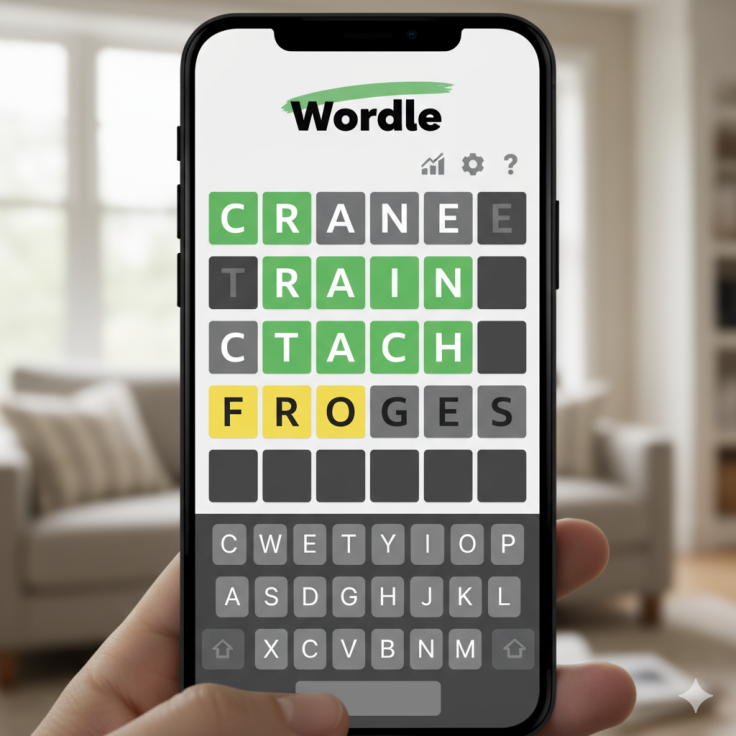
Wordle enthusiasts logging in after midnight in their time zones encountered a five-letter word that proved elusive for some, with official testers averaging 5.5 guesses out of six — classifying it as very challenging compared to easier daily puzzles. The answer, a verb meaning "to be suitable or proper for; be suited or becoming to," according to Webster's New World College Dictionary, rewarded those who combined letter frequency knowledge with contextual clues.
**Subtle Hints for Today's Puzzle**
Before diving into spoilers, here are spoiler-free hints designed to guide solvers without revealing the word:
- The word is a verb with no repeated letters.
- It contains two vowels.
- It starts with a hard "B" sound and ends with a hard "T" sound.
- It rhymes with "refit" and is often used to describe something appropriate or fitting for a situation, such as proper behavior or a suitable reward.
- Synonyms include "suit," "become" or "fitting."
These clues point toward a somewhat formal or literary term rather than everyday slang, which may explain why some players exhausted several attempts before landing on the correct combination.
**Today's Wordle Answer: BEFIT**
**Warning: Full solution ahead.**
The solution to Wordle No. 1,741 is **BEFIT**.
The word "befit" is a transitive verb commonly found in more formal writing or speech. Examples include: "The elegant gown befits the occasion" or "Such generosity befits a leader of his stature." It derives from the prefix "be-" combined with "fit," emphasizing suitability or appropriateness.
Many solvers who reached the final guesses narrowed it down to words ending in "-FIT" or starting with "B," with "BEFIT" emerging as the precise match once vowels and consonants aligned. Players who started with strong openers like "SLATE," "TRIAL" or "BEGAN" often picked up yellow or green tiles early, particularly the "B," "E," "I" and "T" letters, though positioning required careful testing.
**How Players Approached the Puzzle**
Typical solving paths began with high-frequency letter words to maximize information. Common starters such as "SLATE" (suggested by Wordle Bot) or "CRANE" helped eliminate or confirm vowels and popular consonants. One reported sequence involved guessing "TRIAL," which left 65 possible solutions and yielded two yellow tiles, followed by adjustments with words like "PIETY" and "CUTIE" before settling on "BEFIT" over close alternatives like "DEBIT."
Others started with "B" words to test the initial letter early, such as "BEGAN," "BITER" or "FIGHT," which quickly confirmed or ruled out key placements. The absence of repeated letters and the specific vowel placement (E and I) narrowed the field significantly by guess three or four for efficient players.
Community discussions on social media and forums highlighted the puzzle's deceptive simplicity. While the letters themselves are relatively common in Wordle solutions, the combination formed a less frequently used word, catching some off guard after yesterday's potentially more approachable answer. Average scores hovered higher than on easier days, with many reporting four- or five-guess solves and some needing all six attempts.
**Strategies for Mastering Wordle**
Successful Wordle players emphasize a mix of statistical knowledge and adaptability. Begin with a word containing multiple vowels and common consonants — "ADIEU," "AUDIO," "SLATE" or "TRACE" are popular choices that provide broad coverage. Avoid repeating letters in early guesses to gather maximum unique information.
Once feedback appears in green (correct letter and position), yellow (correct letter, wrong position) or gray (not in the word), prioritize testing remaining possibilities systematically. For instance, if "B" and "T" appear early, focus on five-letter verbs or adjectives that fit the emerging pattern.
Advanced strategies include maintaining a mental or noted list of eliminated letters and using process of elimination. Tools like the official Wordle Bot can analyze personal solves for efficiency, comparing them against optimal paths. Many recommend avoiding obscure proper nouns or overly technical terms unless clues strongly suggest them.
For today's puzzle, recognizing the "be-" prefix common in English verbs (befit, become, bestow) could have accelerated solutions for linguistically inclined players. The hard "T" ending further limited options to words like "befit," "debit" or similar, with context ruling out financial terms.
**Broader Popularity and Context**
Wordle, acquired by The New York Times in 2022, continues to captivate millions daily with its simple yet addictive formula. Released at midnight in each player's time zone, the game fosters global community through shared scores posted as emoji grids on social platforms. Hashtags like #Wordle and discussions in dedicated Reddit communities thrive as players compare streaks and commiserate over tough days.
Puzzle No. 1,741 fits into a week of varied difficulty, following Wednesday's solution and preceding Friday's fresh challenge. The New York Times publishes official reviews that provide definitions, tester averages and community conversation, helping players reflect on their performance.
Educators and linguists praise Wordle for building vocabulary, pattern recognition and deductive reasoning skills. It has inspired countless variants and classroom adaptations, proving its staying power beyond casual entertainment.
For those who missed today's word, remember that each new puzzle resets at midnight. Maintaining a streak requires consistent play, but occasional losses offer learning opportunities. Resources like hint guides, starter word lists and analysis tools abound online for those seeking to improve.
**Tips for Tomorrow and Beyond**
- Track common letter frequencies: E, A, R, I, O, T, N and S appear most often.
- Consider word families and prefixes/suffixes when patterns emerge.
- Take breaks if frustration builds — fresh eyes often spot connections missed under pressure.
- Use the built-in share feature responsibly to engage friends without spoiling for others.
- Explore related NYT Games like Connections or the Mini Crossword for a full daily brain workout.
Whether you solved "BEFIT" in three guesses or needed the full six, today's puzzle delivered a satisfying mental stretch. It underscored the balance Wordle strikes between accessibility and challenge, drawing on both common knowledge and occasional deeper vocabulary.
As players await the next grid, many will review their solve with Wordle Bot or discuss strategies in online forums. The game's enduring appeal lies in its blend of luck, skill and daily ritual — a small but consistent highlight in busy routines.
For the official experience, visit nytimes.com/games/wordle. Share your results, celebrate wins and prepare for whatever linguistic curveball Friday brings.
© Copyright 2026 IBTimes AU. All rights reserved.
- Recommended For You