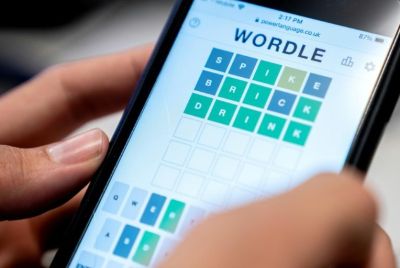
Wordle March 11, 2026 Answer: Hints, Clues and Full Solution for NYT Wordle Puzzle #1726
The New York Times' popular daily Wordle puzzle for March 11, 2026, challenged millions of players with the answer "TEDDY," a deceptively simple word that combined familiar letters with a tricky repeat and multiple meanings.
Puzzle No. 1,726 arrived on a Wednesday and quickly sparked conversations across social media as solvers shared their grids and debated whether the solution felt like a plush childhood memory or something more unexpected. With an estimated 2 million daily players still engaging with the game years after its explosive rise, the latest installment tested strategy and vocabulary in classic Wordle fashion.

For those still seeking guidance or reliving the solve, here is a complete, spoiler-light breakdown followed by the full reveal and analysis.
### Step-by-Step Hints for Wordle #1726 (March 11, 2026)
Players begin with six attempts to guess a five-letter word, receiving color-coded feedback: green for correct letter and position, yellow for correct letter in the wrong spot, and gray for letters not in the answer at all.
Subtle hint: Think of a soft, cuddly companion from childhood — or a piece of intimate apparel.
More targeted clues:
- The word starts with T.
- It ends with Y.
- Only one vowel appears (E).
- One letter repeats twice (D).
- The word is a noun with two common definitions in everyday English.
These hints narrow the field considerably without giving everything away. Starting words like "TRACE," "TRIED" or "TODAY" often helped players eliminate key letters early, but the double D proved a frequent stumbling block.
### The Full Solution and Why "TEDDY" Worked
**Spoiler alert: The complete answer for Wordle March 11, 2026, is TEDDY.**
The word refers most commonly to a stuffed toy bear, evoking images of childhood teddy bears, but it also describes a woman's one-piece undergarment combining a chemise top with panties, according to Webster's New World College Dictionary.
The New York Times' official Wordle Review noted that testers required an average of five guesses out of six, labeling the puzzle "very challenging" compared with the game's typical difficulty. The repeat of D in the third and fourth positions caught many off guard, as did the uncommon pairing of T-E-D-D-Y.
A typical solving path might look like this:
1. First guess: A strong starter such as "SLATE" or "CRANE" eliminates common vowels and consonants.
2. Second guess: Incorporating yellow or green feedback, something like "TRIED" might reveal the T, E and D while confirming the Y position.
3. Later attempts: Narrowing to words with double letters often led to "TEDDY" as the light-bulb moment.
The solution scored high on the game's internal metrics for difficulty because it avoided overly common letters after the initial T while featuring a double consonant that many solvers overlook until late.
### A Brief History of Wordle's Enduring Appeal
Created by software engineer Josh Wardle for his partner in 2021, Wordle exploded from a private hobby into a global phenomenon after The New York Times acquired it in 2022. What began as a simple web-based game with no ads or tracking has maintained its minimalist charm: one puzzle per day, shareable colored grids and no in-app purchases.
By early 2022, daily players peaked above 3 million before settling into a steady audience of roughly 2 million as of 2026. The average number of attempts to solve any given puzzle hovers around 3.8, though individual days vary wildly.
Wordle's staying power lies in its accessibility. No downloads are required, and the same puzzle appears simultaneously for every player worldwide, fostering a shared daily ritual. Families, coworkers and online communities bond over morning solves, with results posted on X, Reddit and group chats.
### Strategies That Help — and Why #1726 Tested Them
Veteran players recommend opening with words rich in vowels and common consonants: "AUDIO," "STARE" or "ROATE" remain popular openers. The key is information gathering rather than immediate guesses at the answer.
For March 11's puzzle, the repeated D was the hidden trap. Many solvers who reached "T _ D _ Y" on guess four or five still missed the double D, trying variations such as "TIDDY" or "TADDY" before landing on "TEDDY."
Community data sites tracking millions of games showed that March 11 ranked harder than average, with fewer players solving it in three guesses or fewer. The dual meanings added an extra layer — those thinking only of teddy bears sometimes hesitated on the lingerie definition, while others overthought obscure alternatives.
### How Players Reacted on Social Media
Across X (formerly Twitter), results poured in throughout the day. Many posted grids showing four or five attempts, with comments ranging from relief to mild frustration.
One user captured a clean 4/6 solve, while others in international versions, including Turkish Wordle, shared similar patterns. Reddit's r/wordle subreddit filled with threads titled "Wordle 1726," where players debated whether the puzzle felt fair or leaned too heavily on proper-noun associations.
The consensus: not impossible, but satisfying once cracked. Several noted it reminded them of easier puzzles from 2022, yet the repeat letter kept it fresh.
### Broader Impact: More Than Just a Game
Beyond entertainment, Wordle has been credited with boosting vocabulary, especially among non-native English speakers. Schools in some districts have incorporated it into morning routines, and therapists point to its low-stakes structure as a small daily win that can improve mood.
The game also generates economic ripple effects. The New York Times Games section, which includes Wordle alongside Connections and Spelling Bee, has helped drive subscriptions. Merchandise featuring classic Wordle grids remains popular.
Critics occasionally argue that the limited answer list (roughly 2,300 official solutions) makes later puzzles more predictable, yet the March 11 edition proved the selection still holds surprises.
### Tips for Future Puzzles and Improving Your Game
To boost success rates:
- Track your personal statistics in the game's built-in share feature.
- Maintain a mental list of common double-letter words: "LATER," "BERRY," "SASSY."
- Use elimination logic ruthlessly — if a letter turns gray, remove every instance immediately.
- Avoid guessing proper nouns or obscure slang early.
For those who missed "TEDDY," tomorrow brings a fresh start. The New York Times resets the puzzle at midnight local time, ensuring everyone competes on equal footing.
Wordle continues to prove that simple rules can create complex joy. Whether you solved No. 1,726 in three tries or needed all six, the daily ritual endures as one of the internet's most wholesome shared experiences.
As millions prepare for the next challenge, one thing remains certain: there will always be another five-letter word waiting to test wits, expand vocabularies and spark conversations around the globe. The streak continues — and so does the fun.
© Copyright 2026 IBTimes AU. All rights reserved.
- Recommended For You