(VIDEO) 'Euphoria' Season 3 Review: Zendaya Shines in Uneven, Noir-Tinged Return After Four-Year Wait
LOS ANGELES — HBO's long-awaited "Euphoria" Season 3 finally arrives Sunday, delivering a visually stunning but uneven evolution of its raw teen drama into a darker, more adult crime saga. Premiering April 12 at 9 p.m. ET on HBO and streaming on Max, the eight-episode final season jumps five years forward, trading high school chaos for the messy realities of young adulthood, faith, redemption and evil. Zendaya once again anchors the series with a magnetic, layered performance as Rue Bennett, but creator Sam Levinson's ambitious shift leaves some characters and plotlines feeling disjointed.

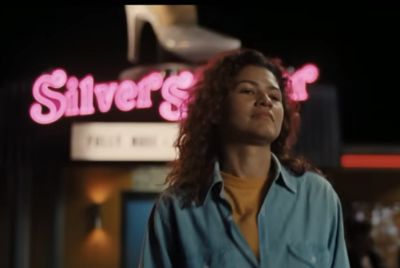
The season opens with Rue in an interrogation room, casually recounting her post-high school life south of the border in Mexico. Deep in debt to the menacing drug dealer Laurie (Martha Kelly, now a series regular), Rue has turned to smuggling as one of her "innovative ways" to settle scores. The trailer's glimpse of this new direction sets a gritty, almost noir tone that permeates much of the early episodes, blending Levinson's signature stylized visuals with crime-thriller elements reminiscent of "Fargo" or "Breaking Bad" filtered through a Gen-Z lens.
A major time jump allows the East Highland High School alumni to grapple with life beyond prom and parties. Cassie Howard (Sydney Sweeney) has pivoted to adult content creation, including an OnlyFans account, to fund an extravagant wedding to Nate Jacobs (Jacob Elordi), now an entrepreneur with his own ambitions and demons. Maddy Perez (Alexa Demie) navigates a Hollywood-adjacent lifestyle that feels both glamorous and hollow. Jules Vaughn (Hunter Schafer) explores art school and more complicated relationships, while Lexi Howard (Maude Apatow) continues observing the chaos from a safer distance.
The official logline — "A group of childhood friends wrestle with the virtue of faith, the possibility of redemption, and the problem of evil" — signals Levinson's intent to deepen the show's philosophical undercurrents. Religious imagery, moral dilemmas and consequences of past actions take center stage, moving away from the hormone-fueled intensity of Seasons 1 and 2. Colman Domingo returns as Ali, offering Rue moments of grounded wisdom, while Eric Dane's Cal Jacobs marks his final appearances before his real-life passing earlier in 2026, adding an unintended layer of poignancy.
New series regulars bolster the ensemble. Adewale Akinnuoye-Agbaje and Toby Wallace bring fresh intensity, while a large supporting cast including Natasha Lyonne, Danielle Deadwyler and others expands the world into adult spheres of crime, Hollywood and personal reckoning. Martha Kelly and Chloe Cherry have been promoted to regulars, giving Laurie and Faye more narrative weight.
Visually, "Euphoria" remains unmatched. Cinematographer Marcell Rév's work is hypnotic, with neon-drenched nights, dreamlike sequences and intimate close-ups that make every frame feel like a fashion editorial crossed with a fever dream. Labrinth's score pulses with emotional weight, elevating even slower moments. Levinson's direction leans into excess — long tracking shots, bold color palettes and unfiltered nudity or violence — but the style sometimes overshadows substance in the season's more meandering stretches.
Zendaya delivers what many critics call her career-best work as Rue. Now in her early 20s, the character carries the scars of addiction and loss with a jittery vulnerability that feels lived-in. Her scenes in Mexico crackle with tension, blending quiet desperation and dark humor. Sweeney and Elordi bring commitment to their roles, with Cassie's cam-girl storyline and Nate's evolution providing provocative if polarizing material. Schafer's Jules remains a highlight of emotional authenticity amid the ensemble's larger-than-life arcs.
Yet the season struggles with cohesion. Early episodes juggle multiple storylines — drug smuggling, adult content entrepreneurship, fractured friendships and budding criminal enterprises — sometimes at the expense of deeper character development. Some reviewers describe it as "entertaining but disjointed fan fiction," with tonal shifts that veer from poignant to absurd. The move away from high school allows for maturity, but the show occasionally feels like it's chasing relevance in a post-pandemic cultural landscape where its once-shocking elements have become more normalized.
Critics are divided. Early reviews give the season mixed scores, with some praising the bold evolution and Zendaya's anchoring presence while others call it indulgent or unhinged. One outlet labeled it an "unhinged disaster" that sacrifices depth for absurdity, while others hail the noir pivot as a refreshing reset that lets characters confront real adult stakes. Rotten Tomatoes and Metacritic scores reflect the polarization, hovering in the mixed-to-positive range after initial critic screenings.
The four-year gap since Season 2's February 2022 finale tested fan patience but allowed real-world aging that benefits the story. The cast, now in their mid-to-late 20s, convincingly portray characters navigating quarter-life crises rather than teenage rebellion. Production delays, creative shifts and Levinson's meticulous process contributed to the wait, but the result feels like a deliberate maturation rather than a rushed cash-in.
Themes of redemption resonate strongly. Rue's journey toward accountability, however halting, carries emotional heft, especially in scenes with Ali or when confronting the consequences of her actions. The show continues tackling mental health, addiction, sexuality and toxic relationships with unflinching honesty, though some storylines risk veering into exploitation territory. Levinson's writing remains provocative, sparking conversations about consent, ambition and the blurred lines between performance and reality in the social media age.
For longtime viewers, familiar Easter eggs and callbacks provide satisfaction, while newcomers may struggle with the dense backstory. The season's eight-episode run keeps pacing brisk, with weekly Sunday drops building anticipation through May 31. A Coachella screening of the premiere added to the cultural buzz, echoing the show's history of intersecting with music and fashion moments.
"Euphoria" Season 3 may not recapture the lightning-in-a-bottle shock of its debut, but it offers something more ambitious: a meditation on growing up when the stakes are no longer detention but real-world ruin or redemption. Zendaya's performance alone makes it essential viewing, carrying the series through its uneven patches with quiet power.
Whether the season sticks the landing in its later episodes remains to be seen as critics and audiences watch weekly. For now, the return of HBO's stylish, controversial drama reminds viewers why it became a cultural phenomenon — flawed, excessive and undeniably compelling.
As Rue asks in voiceover what she's been up to since high school, the answer unfolds in neon-soaked moral gray areas that feel both timeless and very much of this moment. "Euphoria" may have aged, but its ability to provoke and mesmerize endures.
© Copyright 2026 IBTimes AU. All rights reserved.
- Recommended For You