

Trump Demands Bombardier Build Jets in America or Lose U.S. Sales as Ottawa's Tariffs Take Effect
President Trump challenges Bombardier to manufacture jets in the U.S. as Canada retaliates with tariffs.
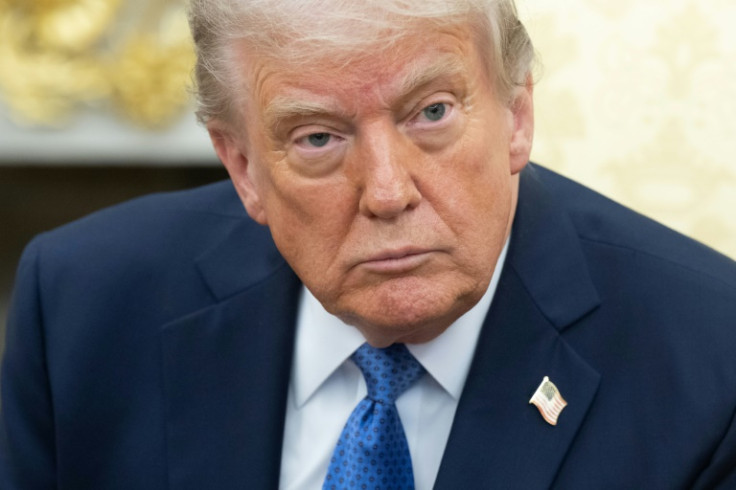
WASHINGTON — President Donald Trump said Canadian planemaker Bombardier should stop selling jets in the United States unless it builds them there, a threat issued hours before Ottawa's retaliatory tariffs on American goods took effect and without an accompanying executive order or tariff schedule.
"NO MORE SELLING BOMBARDIER IN THE UNITED STATES!" Trump wrote on Truth Social on Monday. "Their products aren't good enough! Over 50% of their revenue comes from the United States — They live off American Buyers, American Companies, American Airports, and American Service — All while Canada blocks our GREAT American Banks, and Companies, throughout the U.S.A." He added: "If they want our Market, they must build here, and stop treating America like a 'piggybank.'" The post closed with a string of slogans: "BUY AMERICAN. FLY ON AMERICAN AIRLINES. ENJOY AMERICAN LIQUOR AND BEVERAGES. SAIL ON LAKE AMERICA. AMERICA FIRST!"
The White House did not immediately describe how a sales ban would work. Civil aircraft already flying in the United States are certified by the Federal Aviation Administration on safety grounds, not by presidential social-media posts. No new duty on Bombardier airframes was published with the message. The gap between the all-caps line and a legal instrument is the first fact of the story.
The second is timing. Canada's counter-tariffs — 15% to 50% on hundreds of U.S. products, framed in Ottawa as a dollar-for-dollar answer to earlier U.S. levies — were set for 12:01 a.m. Tuesday. Prime Minister Mark Carney told CBC News there were no last-minute calls scheduled with Trump and no deal to announce. Talks had collapsed late last month. Trump's Bombardier post landed in that vacuum.
Bombardier answered without naming the president. "Bombardier values its great partnership with American companies and its U.S. employees," the Montreal company said. "Our plan is to continue to invest in our people, our customers and the communities in which we operate across the country." It said it employs workers in more than 20 states, with sites in Kansas, Texas, Arizona, Florida, Connecticut, Illinois, Delaware, California, Washington, D.C., and New Jersey. Wings for its Global-series business jets are built in Red Oak, Texas. Flight-control parts come from the Los Angeles area. The firm said about 2,800 American businesses in 47 states sit in its supply chain and that it spends more than $2.5 billion a year with those partners. A new facility in Fort Wayne, Indiana, is planned later this year. About 55% of Bombardier's $9.6 billion in 2025 revenue came from the United States, according to the company.
That U.S. footprint produced the first Republican pushback. Sen. Jerry Moran of Kansas, where Bombardier keeps its American headquarters and builds special-mission aircraft, said he contacted the administration. "The presence of Bombardier in Wichita supports a local workforce of more than a thousand employees, who contribute their talent and expertise to our nation's defense and aerospace capabilities," Moran wrote. He said he wanted the president aware of workers at the plant and in the Kansas supply chain.
Quebec's economy minister, Christopher Skeete Fréchette, took the opposite tack from Ottawa's silence in the first hours. "I will not respond to provocation with provocation," he wrote. "Quebec will not allow anyone to dictate where our companies must produce in order to access a market."
Trump has aimed at the same company before. On Jan. 29 he wrote that because Canada had "wrongfully, illegally and steadfastly refused to certify the Gulfstream 500, 600, 700 and 800 Jets," the United States was "hereby decertifying their Bombardier Global Expresses, and all Aircraft made in Canada" and would impose a 50% tariff on Canadian-built aircraft if the Gulfstream files were not cleared. Neither the blanket decertification nor the 50% aircraft tariff materialized in that form. Canada certified several Gulfstream models in February. A White House official told Reuters in January that Trump was not talking about stripping certificates from jets already in service.
The history is longer. In Trump's first term the Commerce Department imposed a nearly 300% duty on new Bombardier C Series airliners after Boeing alleged Canadian subsidies. The U.S. International Trade Commission unanimously rejected the tariff in 2018. Boeing did not appeal. Airbus later took a stake in the program, now the A220, and Bombardier left commercial aviation to concentrate on business jets — Globals, Challengers — whose customers are corporations and wealthy owners concentrated in the U.S. market Trump now says they must earn by moving final assembly.
Gulfstream, a General Dynamics unit based in Savannah, Georgia, is the American rival in that cabin. Certification delays in Canada were real; they were also temporary. U.S. banks and companies operate in Canada, contrary to the broadest reading of Trump's "blocks" line. The narrower, documented fight is over who signs off on which business jet, how fast, and whether that process is safety review or industrial policy.
Enforcement options, if the administration wants more than a post, run through familiar tools: tariffs under trade statutes, procurement rules for government and contractor fleets, or pressure on FAA bilateral processes that other countries would treat as politicizing airworthiness. Each has costs. A duty on completed Canadian jets would hit U.S. buyers who already order Globals with Texas-built wings. A ban on new deliveries would strand a service network at American airports that Bombardier says it staffs. Kansas and Texas workers are not an abstraction in that ledger.
For Canada the company is a national champion that no longer makes airliners but still anchors Montreal aerospace. For Trump it is a symbol in a wider argument that access to U.S. customers should require U.S. factories. He has applied that template to autos, steel and pharmaceuticals. Business jets are a smaller trade flow with a louder customer class. Owners who write checks for a Global 8000 also donate and vote in the states where Bombardier already pays people.
The midterm calendar sits behind the industrial one. Moran's note is a reminder that "build here" collides with "jobs already here" when the plant is in Wichita. Carney's tariffs are a reminder that Ottawa will answer sector by sector. Trump's January threat faded when Canada moved the Gulfstream files. Monday's threat arrived with no order attached.
What exists on the record is the post, the company statement, the Kansas senator, the Quebec minister, and a tariff war that started at midnight. Bombardier already builds wings in Texas and special-mission aircraft in Kansas. Trump says that is not enough. Until an agency publishes a rule, American buyers can still take delivery of a Canadian-branded jet that rolled through American shops — and Canadian customs can still collect on U.S. goods that crossed the same border the other way.
© Copyright 2026 IBTimes AU. All rights reserved.