Men 18-25 to Be Automatically Registered for Draft by December in Major Selective Service Overhaul
WASHINGTON — Nearly all young men in the United States will soon be automatically added to the military draft database without lifting a finger, as the Selective Service System prepares to shift from self-registration to government-driven enrollment using federal data sources by December 2026.
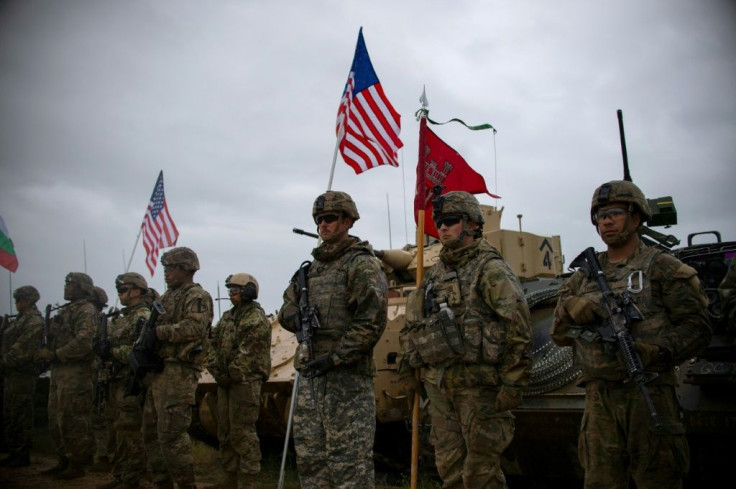
The change, mandated by the fiscal year 2026 National Defense Authorization Act signed by President Donald Trump on Dec. 18, 2025, transfers responsibility for registration from individuals to the agency. It aims to streamline the process, improve compliance and reduce administrative costs while maintaining the nation's standby conscription framework.
Under the new system, eligible males — primarily U.S. citizens and male immigrants residing in the country between ages 18 and 25 — will be registered automatically within 30 days of turning 18, drawing from databases maintained by other federal agencies such as the Social Security Administration, Department of Homeland Security and state motor vehicle departments.
The Selective Service System submitted a proposed rule to the Office of Information and Regulatory Affairs on March 30, 2026, and implementation is targeted for Dec. 18, 2026 — exactly one year after the NDAA became law. Until then, the current requirement for men to self-register remains in effect.
Selective Service officials say the move will result in "a streamlined registration process and corresponding workforce realignment" at the agency. Critics, including some privacy advocates, worry about expanded government data-sharing powers and potential inaccuracies in automated records.
Registration with Selective Service has been required since 1980, after President Jimmy Carter reinstated the system following the Soviet invasion of Afghanistan. It does not mean a draft is imminent or that registrants will be called to serve. No American has been drafted since the Vietnam War era, and the U.S. military remains all-volunteer.
The agency maintains a database of millions of names to ensure the country could rapidly mobilize manpower if Congress and the president authorize conscription during a national emergency. In such a scenario, registrants would receive induction notices, undergo physical and mental evaluations, and potentially be drafted based on age, skills and other factors.
Failure to register under the current system is a felony punishable by up to five years in prison and a $250,000 fine. More commonly, non-registrants face barriers to federal benefits: ineligibility for student loans, most federal jobs, job training programs and — for immigrants — naturalization. Men who turn 26 without registering lose the ability to correct the violation retroactively.
The automatic system is expected to boost compliance rates, which have historically hovered around 90% but dipped in some demographics. By pulling data from existing government records, Selective Service hopes to capture men who might otherwise forget or avoid the process, including those applying for driver's licenses or federal aid.
Women remain exempt from registration, despite repeated congressional debates about including them. Lawmakers have considered gender-neutral draft registration in recent years, particularly after court rulings questioning the male-only requirement, but the 2026 NDAA did not extend the obligation to females.
Certain groups are exempt or deferred even under a draft: active-duty military members, certain disabled individuals, those in prison or institutionalized, and men on nonimmigrant visas. The new automatic process will reportedly include mechanisms for eligible individuals to request removal if they qualify for exemptions.
The shift comes amid broader discussions about military readiness. The U.S. faces recruiting challenges across the armed services, with the Army, Navy and Air Force missing targets in recent years despite bonuses and relaxed standards. Some defense hawks view a robust Selective Service database as insurance against future manpower shortfalls in prolonged conflicts.
Privacy and civil liberties groups have raised concerns. One critic described the automatic registration push as a "fool's errand" that grants the Selective Service unprecedented authority to aggregate data across federal agencies. Questions remain about data accuracy, how address changes will be handled after December 2026, and whether individuals will receive confirmation of their registration status.
The Selective Service website currently urges men to verify their registration and notes that the agency will no longer require self-reporting of address updates once automatic registration is fully operational. Proposed regulations are under White House review, with additional rulemaking steps still needed before full rollout.
For young men turning 18 in the coming months, the immediate practical impact is minimal. They should continue self-registering online at sss.gov, at a post office or through many state driver's license applications until the automatic system activates. Those already registered do not need to take further action.
Immigrants and non-citizens face additional stakes. Undocumented men residing in the U.S. are required to register, and failure can complicate future immigration proceedings. Automatic registration could ease that burden for some while raising questions about data privacy for others.
The change also reflects evolving government efficiency efforts. Rather than relying on individuals to remember a one-time obligation, the system will proactively build the database — similar to how some states automatically register voters when issuing driver's licenses.
Defense analysts say maintaining Selective Service costs taxpayers roughly $25 million annually, a relatively small sum for the infrastructure it provides. Supporters argue that in an era of great-power competition with nations like China and Russia, having a ready mechanism for conscription preserves strategic flexibility without committing to an active draft.
Opponents counter that the all-volunteer force has served the nation well for more than 50 years and that automation could normalize the idea of compulsory service. Some have called for outright repeal of the Selective Service System, arguing it is an outdated relic of the 20th century.
Public reaction on social media has been mixed. Many young men expressed relief that they won't have to remember to register, while others voiced unease about government tracking. Parents of teenage boys debated whether the change signals heightened global tensions or is merely bureaucratic housekeeping.
The Selective Service System emphasizes that registration is not enlistment. Signing up — or being automatically enrolled — does not place anyone in the military. It simply ensures the government knows who is available if lawmakers ever decide a draft is necessary.
As the December 2026 deadline approaches, the agency plans public outreach campaigns to explain the transition. Men already past age 25 who missed registration can still face lifelong consequences for certain benefits, though the automatic system will not retroactively apply to them.
With geopolitical flashpoints from the Middle East to the Indo-Pacific, the quiet modernization of America's draft registry has sparked renewed conversation about national service, equity and preparedness. For now, the policy represents a procedural evolution rather than a policy shift toward conscription.
Defense Department officials have not linked the change to any specific conflict or recruiting crisis. Instead, they describe it as a long-overdue efficiency measure to ensure the standby system functions as intended in the digital age.
As implementation draws nearer, millions of American families will watch closely to see how the government balances administrative convenience with individual rights and privacy in one of the nation's oldest national security institutions.
© Copyright 2026 IBTimes AU. All rights reserved.
- Recommended For You