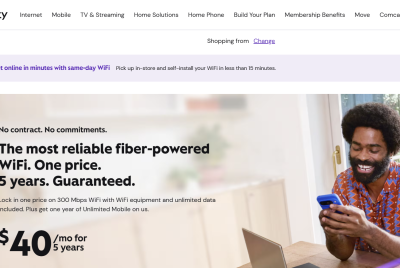
Spectrum Down? Thousands of Users Report Widespread Internet and TV Outages Across the US Monday Night
Spectrum customers experience widespread service disruptions; Downdetector reports surge in outage complaints.

NEW YORK — Thousands of Spectrum customers across the United States began reporting internet, television and mobile service disruptions Monday night, according to outage-tracking service Downdetector, which said user reports started climbing sharply at 8:13 p.m. EDT.
Downdetector, which aggregates self-reported outage data from users rather than official company statistics, flagged the spike on its social media account and pointed customers to its website for real-time updates. As of the report, thousands of users had logged issues, with the hashtag #SpectrumDown quickly gaining traction online as affected customers shared their experiences.
What we know so far
Spectrum, the retail brand used by Charter Communications for its internet, cable television and phone services, is the second-largest cable operator in the United States, serving more than 26 million customers across roughly 41 states. Because of its size, outages affecting Spectrum's network tend to generate a large volume of user reports in a short period, particularly during evening hours when internet and streaming usage typically peaks.
Downdetector's outage figures are based on user-submitted reports and social media chatter rather than confirmed data from the company itself, meaning the true scope of an incident can sometimes be larger or smaller than what shows up on the platform. The service tracks problem categories such as total blackouts, slow performance, sign-in failures and app malfunctions, and determines an "outage" when reports exceed a normal baseline for that time of day.
As of this report, Charter Communications had not issued a detailed public statement identifying the cause or scope of Monday night's disruption. The company has historically acknowledged major outages through its customer support account on X, formerly Twitter, once issues are confirmed internally, though response times can vary depending on the scale of the problem.
A pattern of past disruptions
Monday's reports are not the first time Spectrum has faced significant service interruptions. The company has dealt with a range of outage causes in recent years, from severe weather events to physical infrastructure damage. In one notable case, Charter confirmed that a major outage affecting the Los Angeles area was caused by a criminal act of vandalism, after fiber optic lines were deliberately cut in the Van Nuys area. That incident affected tens of thousands of customers across Los Angeles, Orange County and Ventura County, prompting the company to offer a reward for information leading to an arrest and to work directly with local police.
Other outages have stemmed from more routine causes, including localized power failures, network equipment issues and severe weather, particularly during hurricane season in states along the Gulf Coast and East Coast where Charter has a significant customer base. Cable and fiber networks remain vulnerable to physical damage from storms, construction accidents and, in some cases, deliberate sabotage, all of which can result in outages affecting anywhere from a single neighborhood to entire metropolitan areas.
What affected customers can do
Customers experiencing service issues are typically advised to first rule out equipment problems on their end before assuming a broader network outage is to blame. Standard troubleshooting steps include power-cycling modems and routers, checking cable connections, and confirming that outages aren't isolated to a single device or app rather than the underlying internet connection itself.
Spectrum maintains an official outage-checking tool through its website and mobile app, which allows customers to look up service status by address. During major outages, that tool is often the fastest way for a household to confirm whether a problem is isolated to their home or part of a wider network issue, since call center wait times can lengthen significantly during large-scale disruptions.
Customers who experience extended outages are generally entitled to service credits under Charter's policies, though the company typically requires customers to report the outage and reference the date and duration when requesting compensation. Multi-hour outages, in particular, are more likely to qualify for prorated billing adjustments than brief interruptions lasting only a few minutes.
Why outages spread quickly online
Downdetector has become one of the most widely used tools for tracking real-time service disruptions since its launch in 2012, now monitoring more than 12,000 services across 45 countries. Owned by network intelligence company Ookla, the platform relies on a combination of user-submitted reports, page traffic and social media signal to estimate when a company's service is experiencing broader-than-normal problems.
Because the tool surfaces data immediately and prominently on social media, reports of major outages — including Monday night's Spectrum disruption — tend to spread quickly, often before the company involved has confirmed the scope of the issue or its underlying cause. That dynamic has made services like Downdetector a go-to first stop for consumers trying to determine whether a problem is isolated to their own equipment or part of a broader network failure.
What happens next
Widespread outages involving major internet and cable providers typically resolve within a few hours in cases involving software or configuration issues, though outages tied to physical infrastructure damage — such as cut fiber lines or storm-related damage to cable networks — can take considerably longer to fully restore, sometimes stretching into the following day.
Charter Communications has not yet provided a timeline for full restoration of services affected by Monday night's reported outage. Customers seeking updates are encouraged to check Spectrum's official outage tool or its customer support channels for the latest information, as details are expected to become clearer as the company investigates the cause of the disruption.
This is a developing story, and further updates are expected as more information becomes available from Charter Communications and additional user reports are logged through outage-tracking services.
© Copyright 2026 IBTimes AU. All rights reserved.
- Recommended For You