Shanghai Composite Steadies Near 11-Month Low as Chinese Chip and AI Stocks Try to Find Their Footing
Chinese tech stocks face volatility amid global AI valuation concerns

Shanghai's benchmark stock index traded largely flat Monday, hovering near an 11-month low reached in the prior session as Chinese technology and semiconductor shares attempted to stabilize following one of the sharpest weekly selloffs the market has experienced this year.
The Shanghai Composite Index stood at 3,756.87 points as of early afternoon local time, down 7.29 points, or 0.19%, a relatively modest move compared with the steep declines that battered the index through much of last week. The muted trading suggested investors were pausing to assess the market's footing after a punishing stretch that saw the index tumble more than 3% on Friday alone, closing at 3,764.2, its lowest level in nearly 11 months.
A brutal week for Chinese tech stocks
Last week's selloff was concentrated heavily in technology and semiconductor names, extending a broader global reassessment of artificial intelligence-related valuations that has rattled markets from Tokyo to Seoul to New York. The Shanghai Composite fell 5.81% over the course of the week, while the Shenzhen Component, which tracks a broader range of growth and technology-oriented companies, tumbled 8.9% to a more than three-month low.
Chinese technology stocks bore the brunt of Friday's decline specifically, with semiconductor manufacturer SMIC falling 7.85%, optical component makers Zhongji Innolight and Eoptolink Technology dropping 7.73% and 7.17% respectively, and AI chip designer Cambricon Technologies sliding 6.93%. The declines came even as liquidity concerns intensified following memory chipmaker CXMT's planned $8.6 billion initial public offering, with investors growing increasingly concerned that a wave of upcoming major listings, including humanoid robotics company Unitree and memory chip producer Yangtze Memory Technologies, could siphon significant capital away from a market already grappling with stretched valuations across the AI sector.
Xi Jinping's AI conference appearance
The selloff unfolded against a striking backdrop: President Xi Jinping made his first appearance at the World Artificial Intelligence Conference in Shanghai last week, using the platform to highlight China's progress in developing lower-cost artificial intelligence systems and to call for a more open global technology ecosystem. That same week, Chinese AI startup Moonshot unveiled its Kimi K3 model, a 2.8 trillion-parameter open-weight system that has drawn comparisons to leading offerings from major U.S. AI developers and intensified global scrutiny of the sustainability of AI-related investment spending.
Rather than lifting sentiment, however, the high-profile developments coincided with a period of intense selling across Chinese technology shares, as investors weighed China's advancing AI capabilities against broader concerns that valuations across the sector, both in China and globally, may have run ahead of near-term earnings potential.
Global chip rout adds pressure
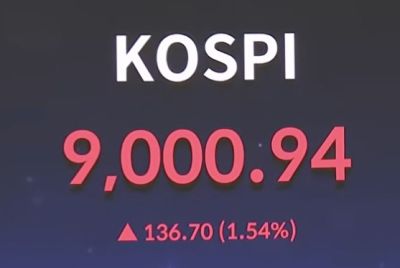
The pressure on Shanghai-listed technology names also reflected a broader global rout in semiconductor and AI-linked shares that has unfolded over the past two weeks. The Philadelphia Semiconductor Index in the United States confirmed a bear market last week, and major Asian markets including Japan's Nikkei 225 and South Korea's Kospi both fell sharply into correction and bear-market territory, respectively, amid the same wave of selling.
Adding to the uncertainty, escalating military conflict between the United States and Iran has weighed on global risk sentiment more broadly in recent sessions, pushing oil prices higher and prompting investors across Asian markets, including China, to adopt a more cautious posture even as domestic Chinese economic data has remained relatively constructive.
A market that had shown resilience earlier in the year
Monday's steadier trading follows a period earlier this year in which mainland Chinese equities had demonstrated notable resilience compared with sharper swings in global markets. As recently as early July, the Shanghai Composite had extended a three-session winning streak to close at its highest level in months, supported by a strong domestic manufacturing PMI reading, continued momentum in China's AI sector, and improving sentiment at the time around U.S.-Iran diplomatic efforts.
That earlier period of relative calm has since given way to renewed volatility, underscoring how closely intertwined Chinese equity markets have become with global sentiment toward artificial intelligence valuations, even as Beijing continues to promote its domestic AI industry as a source of economic growth and technological independence.
What comes next for Chinese markets
Market participants are likely to continue watching the pace of major technology listings on Chinese exchanges in the coming weeks, given concerns that additional large IPOs could further strain market liquidity at a time when investor appetite for growth and technology names remains fragile. Attention is also expected to remain focused on developments in the broader global AI investment cycle, particularly as major U.S. technology companies prepare to report earnings in the coming days that could shape sentiment toward chip and AI-related shares worldwide.
For now, Monday's relatively stable session offers a tentative sign that the sharpest phase of last week's selloff may have eased, though the underlying pressures, including stretched sector valuations, a heavy pipeline of upcoming listings, and continued volatility in global chip stocks, remain firmly in place as the Shanghai market works to find a more durable footing following one of its most difficult weeks of the year.
© Copyright 2026 IBTimes AU. All rights reserved.
- Recommended For You