Samsung Group Puts $1 Billion Into KKR-Backed Helix to Speed a Global AI Data Center Build
Samsung Electronics will provide half the investment, with five affiliates joining KKR, Nvidia, the Kuwait Investment Authority and Vistra as founding investors in Helix Digital Infrastructure.

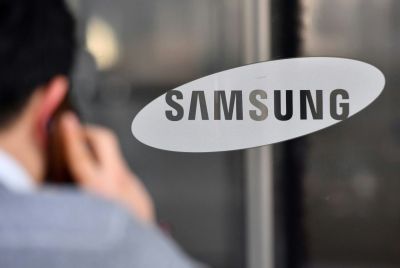
SEOUL — Samsung Electronics and five affiliates will invest a combined $1 billion in Helix Digital Infrastructure, the KKR-backed U.S. company building data centers and the power lines that feed them, the group said Tuesday.
Samsung Electronics will put in $500 million. Samsung C&T, Samsung SDS, Samsung SDI, Samsung Life Insurance and Samsung Fire & Marine Insurance will supply the other $500 million. The six companies will join as founding investors alongside KKR, the Kuwait Investment Authority, Nvidia and U.S. generator Vistra.
Helix said the money sits on top of more than $10 billion already committed to the strategy when the firm launched in June. It described itself as an investor, builder and operator of AI-enabling assets: hyperscale halls, baseload and flexible generation, transmission and distribution, and fiber. It said it expects to pair Nvidia's stack with Samsung technology and energy storage to speed delivery.
The structure is a group bet, not a single-chip wager. Electronics makes memory and logic that fill racks. C&T builds. SDS runs IT and data-center services. SDI makes batteries and energy storage. The life and property insurers bring long-duration capital. Samsung said the stake would help accelerate a global AI data-center rollout through Helix and open work among those affiliates in semiconductors, heating and cooling, construction, operations, power and batteries. Specific project lists were not released.
Helix is led by Adam Selipsky, the former chief executive of Amazon Web Services. KKR's infrastructure team, about 170 people, supports the company. Nvidia is listed as a strategic partner. Vistra is the preferred power partner. The pitch is that hyperscalers cannot wait for a developer to find land, then a utility to find megawatts, then a fiber vendor to light the route. Helix's public description is to package those pieces so large cloud operators can lock capacity faster.
That is the bottleneck the investment is written against. Training and inference clusters have outrun local grids in several U.S. and European markets. Interconnection queues stretch years. Cooling and backup power are now as scarce as GPUs in some sites. Samsung already sells into those rooms. The $1 billion is meant to put the group on the landlord and power side as well as the component side.
The check is small next to Helix's existing book and small next to a single hyperscale campus that can cost several billion dollars. It is large as a signal that Korea's biggest industrial group will fund infrastructure, not only ship HBM and foundry wafers. Samsung has spent the AI cycle defending memory share and expanding advanced packaging. This deal extends that cycle into real estate and electrons.
Reuters reported Helix's own statement that Samsung Electronics committed $1 billion through a long-duration capital fund. Samsung's newsroom split the same billion across six affiliates, with Electronics at half. Both accounts agree on the total and the founding-investor status. Neither named a first campus, a first gigawatt or a close date for the capital call.
KKR's June launch already framed Helix as more than a data-center developer. The addition of Samsung storage, construction and insurance capital fits that frame. Vistra's role is to bring generation that can be contracted while new plants and lines are permitted. Nvidia's role is the accelerator stack that determines how dense a hall must be. Samsung's role, on paper, is memory, batteries, buildings and balance-sheet time.
Competition for those same assets is crowded. Other private-equity funds, sovereigns and chipmakers have announced similar platforms this year. Power purchase agreements and transformer lead times, not press releases, will decide which platforms light up first. Helix has not published a megawatt target tied to the Samsung money.
For Seoul, the deal is also a hedge against being only a supplier. If AI demand stalls, memory prices fall first. If demand holds and grids fail, the constraint moves to sites Helix says it will own or control. The insurers in the syndicate are a reminder that the group is treating this as a long-hold infrastructure asset, not a two-year product cycle.
Tuesday's statements did not include on-record comments from Selipsky, KKR's infrastructure heads or Samsung's operating chiefs in the materials reviewed. The facts on the page are the commitment, the split, the June vintage, the $10 billion-plus already in, and the named co-founders.
What happens next is unannounced: which markets Helix enters with Samsung gear in the design, whether SDI storage sits behind Vistra peakers, and whether C&T pours concrete on a Helix site. Until those contracts appear, the news is a $1 billion founding check from six Samsung companies into a KKR vehicle built to sell time, power and floor space to the same customers who already buy Samsung chips.
© Copyright 2026 IBTimes AU. All rights reserved.
- Recommended For You