

Should You Run Your AC During Wildfire Smoke? Experts Offer Tips as Air Quality Turns Hazardous This Week
Expert Tips for Maintaining Indoor Air Quality Amidst Wildfire Smoke
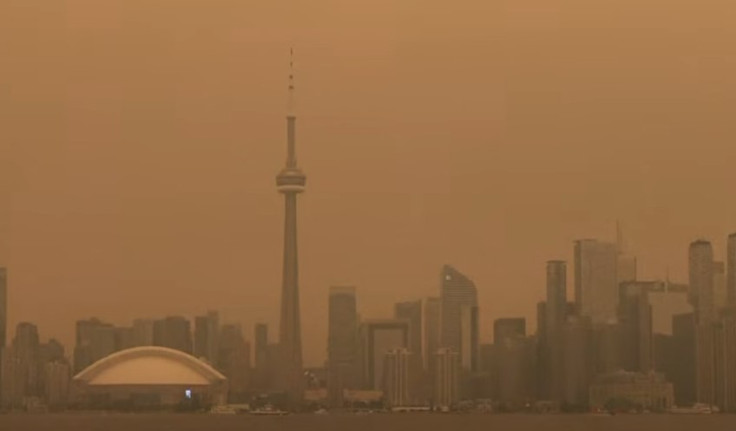
As Canadian wildfire smoke continued to blanket a wide swath of the United States on Friday, from the Midwest to the East Coast, many Americans found themselves asking a simple but important question: is it safe to run the air conditioner when the outside air is unhealthy to breathe?
Environmental Protection Agency officials are urging residents in affected areas to take several protective steps, including using a portable air cleaner or high-efficiency HVAC filter, wearing N95 respirator masks when outdoors, and properly adjusting HVAC systems and air conditioners to limit how much outside air enters the home.
Dr. Brian Christman, a professor of medicine at Vanderbilt University, told Nexstar's WJW that running an air conditioner during smoky conditions is generally safe, as long as it is set up correctly. Most standard air conditioning units work by cooling and recirculating the air already inside a home rather than pulling in fresh air from outside, making them relatively safe to run during smoke events. However, Christman cautioned that units equipped with a fresh air intake function should avoid using that specific setting while smoke levels remain elevated. "I wouldn't spend a lot of time outside," Christman said. "I would try to set your air conditioning on recirculate so that you're not breathing in as much of the outdoor air, and if you have good level filters on your air conditioner, make sure that they're in place and that you're using them."
The EPA has outlined several additional steps residents can take to keep indoor air as clean as possible during periods of heavy wildfire smoke. Homeowners are advised to check whether their system has a fresh air intake mode and, if so, switch it to "recirculate" rather than allowing outside air to enter. The agency also recommends ensuring HVAC filters are in good condition and considering an upgrade to a MERV 13 or higher-rated filter if the system can accommodate one, since higher-rated filters are more effective at capturing the fine particulate matter found in wildfire smoke.
Evaporative coolers, sometimes known as swamp coolers, should generally be avoided during smoky conditions, according to the EPA, since these systems work by pulling in and cooling outside air, which can actually draw more smoke into a home rather than filtering it out. Fans and traditional window air conditioning units are considered safer alternatives during smoke events. For those using window units specifically, the EPA recommends ensuring a tight seal between the unit and the window frame, and closing the outdoor air damper if the unit has one. If the damper cannot be closed, using a fan inside the home instead is recommended as a safer option.
Portable air conditioners that vent through a single hose out of a window should not be used during smoky conditions, the EPA warns, since these units can actually pull additional smoke into the home through gaps around the venting hose. A window air conditioning unit or a standard fan are considered better options in that scenario.
Air quality readings reached hazardous levels across multiple U.S. cities as of Friday afternoon, according to data from AirNow, the government's air quality monitoring service. The worst readings recorded were in Toledo, Ohio, at 489; Grand Rapids, Michigan, at 440; north central Minnesota, also at 440; Spokane, Washington, at 439; the Duluth area of Minnesota, at 411; Kalamazoo, Michigan, at 403; Northwoods West, Wisconsin, at 402; the Milwaukee-Ozaukee area of Wisconsin, at 389; Dayton, Ohio, at 387; and South Bend, Indiana, at 383.
The Air Quality Index measures pollution levels on a color-coded scale ranging from 0 to 500 or higher. A reading of 0 to 50, coded green, is considered good with little to no health risk. Yellow, spanning 51 to 100, indicates moderate air quality. Orange, from 101 to 150, is considered unhealthy for sensitive groups such as children, older adults and people with existing respiratory conditions. Red, spanning 151 to 200, is classified as unhealthy for the general public. Purple, from 201 to 300, is considered very unhealthy, and maroon, covering any reading of 301 or higher, is classified as hazardous, the most severe category on the scale. Several of Friday's readings, including those in Toledo, Grand Rapids and north central Minnesota, fell well within that hazardous maroon range.
The health consequences of prolonged wildfire smoke exposure extend well beyond short-term discomfort. A study published earlier this year found that long-term exposure to the fine particulate matter present in wildfire smoke contributes to an estimated 24,100 deaths annually across the lower 48 states. Health officials say long-term exposure can worsen existing medical conditions and contribute to a range of chronic and potentially fatal health issues, including respiratory illness, cardiovascular disease, neurological problems and premature death.
Looking ahead, National Weather Service meteorologist Jake Petr said that even as winds from the northwest are expected to help clear skies in some regions later this week, smoky conditions could continue returning intermittently until the underlying wildfires themselves are extinguished. Officials have said that full containment of the fires driving this summer's smoke events may not occur until months from now, when snowfall arrives in Canada and northern Minnesota later in the year, a timeline that suggests residents across the affected regions should be prepared for recurring smoke events well into the fall.
In the meantime, health officials continue to emphasize that the most effective protective measures remain relatively simple: limiting time spent outdoors during periods of poor air quality, keeping windows and doors closed, running air conditioning systems on recirculate mode rather than drawing in outside air, using properly rated air filters, and wearing an N95 mask when outdoor exposure is unavoidable. For households without central air conditioning or window units capable of proper sealing, portable air purifiers equipped with high-efficiency particulate air, or HEPA, filters offer an additional layer of protection for maintaining cleaner indoor air during extended smoke events.
With Canadian wildfires expected to continue burning for months and weather patterns remaining a major factor in determining which parts of the country experience the worst smoke on any given day, officials are urging residents across the affected regions to stay informed through local air quality alerts and to adjust their daily routines, including their use of air conditioning and ventilation systems, based on current conditions rather than assuming smoke exposure has fully passed once visible haze clears from a particular area.
© Copyright 2026 IBTimes AU. All rights reserved.