Robinhood App Down? App Goes Down for Some Users During a High-Stakes Market Rally, Sparking User Outrage
Service disruption leaves investors unable to trade during significant market movements
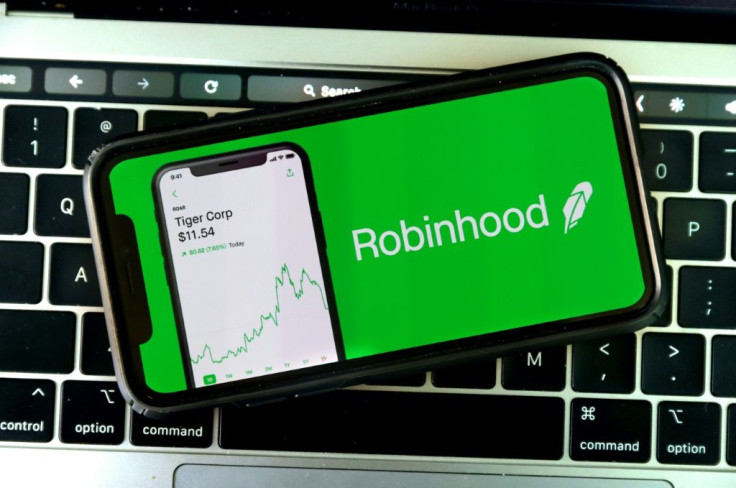
Robinhood, the popular commission-free trading platform with tens of millions of users across the United States, experienced a service disruption Thursday morning that left some investors unable to access their accounts, execute trades, or monitor positions — all during one of the most consequential trading sessions of the year, as tech stocks surged and chip stocks rocketed on the back of a landmark Intel-Apple semiconductor partnership announcement and the signing of a formal U.S.-Iran peace agreement.
Robinhood was having problems earlier Thursday and recovered — the incident lasted approximately 27 minutes, according to outage tracking data. Reports of users being locked out began circulating on social media around 9:48 a.m. Eastern Time, with the hashtags #Robinhood and #RobinhoodDown spreading rapidly on X as frustrated retail traders found themselves unable to act while the market moved sharply in their favor.
The timing could not have been more damaging. The S&P 500 and Nasdaq Composite each climbed 0.8%, while the Dow Jones Industrial Average rose by 271 points, as Intel led chip stocks higher following President Donald Trump's announcement that the company had agreed to partner with Apple on designing chips in the U.S. For Robinhood's user base — largely composed of retail investors, younger traders, and active options participants — missing even minutes of that window carried real financial consequences.
A Critical Moment to Be Locked Out
The disruption struck at the worst possible moment for traders who had spent the prior 24 hours watching the market plunge on hawkish Federal Reserve signals, only to see a powerful rebound materialize Thursday morning driven by geopolitical relief and a blockbuster domestic tech deal.
Intel surged 9% in the premarket after Trump said the company will partner with Apple on designing chips in the U.S., while fellow semiconductor names such as Nvidia and Micron Technology were also higher by more than 1% and more than 5%, respectively. The iShares Semiconductor ETF jumped more than 4%.
For traders who had been waiting to buy into the chip rally, or who held options positions with time-sensitive strike prices, the inability to log in and execute orders represented a direct financial harm — not merely an inconvenience. Social media posts during the outage window reflected a high degree of alarm. Users flooded social media with messages including "Why is Robinhood down today and when will the system be fixed?" and "IS ANYONES ROBINHOOD APP NOT WORKING PROPERLY ????"
A Recurring Pattern Under Pressure
Thursday's disruption, while brief, adds to a documented pattern of Robinhood experiencing service issues during periods of heightened market activity — precisely the moments when platform reliability matters most. According to outage tracking data, Robinhood's most recent logged incident before Thursday was on June 12, 2026, when an app disruption lasting 27 minutes was recorded. Prior to that, service disruptions were logged on October 20, 2025, lasting 1 hour and 19 minutes, and on October 6, 2025, lasting 27 minutes.
The company's most infamous outage remains a March 2020 incident that has become a cautionary tale in fintech circles. Robinhood saw a system-wide outage all day on a Monday amid a rebound from the prior week's selloff, with the Dow Jones Industrial Average closing 1,293.96 points higher that day — one of its biggest gains in years. The company's iOS, Android, and web apps were all down from Monday morning until the close of trading. Users called Robinhood's handling of that outage "absurd," criticizing its "lack of transparency" and "canned responses."
The Broader Stakes for Robinhood
The irony of Thursday's outage is sharpened by the fact that Robinhood itself has been on a strong run. The stock gained 6% in recent days on strong interest in its prediction markets tied to the 2026 FIFA World Cup, multiple bullish analyst actions from Deutsche Bank, Cantor Fitzgerald, and Goldman Sachs — all of which raised their price targets on the stock.
The rally was also supported by strong May operating data, which showed platform assets climbed to $377 billion and equity trading volumes rose 75%. An insider purchase of $20 million worth of shares in early June further reinforced market confidence in the company's trajectory. Robinhood also recently received approval to act as an underwriter for initial public offerings, expanding its capabilities well beyond its origins as a commission-free trading app.
That context makes the timing of Thursday's disruption particularly awkward. A platform boasting $377 billion in assets under management, positioning itself as a serious institutional-grade brokerage capable of underwriting IPOs, found itself unable to serve some users during one of the biggest single-session rallies in chip stocks in months.
The Retail Investor Problem
Robinhood's outages, whenever they occur, raise a pointed and recurring question about the obligations of retail-facing trading platforms to their users — particularly during volatile markets when milliseconds can determine whether a trade is profitable or disastrous.
Robinhood experienced a significant outage affecting user access and trading capabilities, causing frustration among investors during market hours. The outage adds to a series of recent technical challenges for financial technology providers, reinforcing the need for continuous investment in system reliability and customer communication.
The Financial Industry Regulatory Authority, known as FINRA, has previously sanctioned Robinhood over trading-related compliance failures. A history of outages during peak trading windows has drawn repeated scrutiny from regulators and consumer advocates who argue that retail investors deserve the same quality of execution reliability that institutional traders receive from their brokerages.
Robinhood has not issued a formal public statement about the Thursday morning disruption. The company's status page, which retired its traditional format, directs users to its @AskRobinhood account on X for real-time updates on system performance. The official status page listed no incidents reported for the day.
Markets Close Friday for Juneteenth
Thursday's session was the final full trading day of the week, with U.S. markets set to be closed on Friday, June 19, in observance of Juneteenth, a federal holiday. That closure means traders who were locked out of Thursday morning's rally have no immediate recourse to recapture positions before a three-day weekend, adding to the financial sting of the disruption.
For Robinhood, the episode is another reminder that as the platform scales in ambition — IPO underwriting, prediction markets, institutional services — the reliability of its core trading infrastructure remains the foundation on which all of those ambitions rest. When that foundation cracks, even briefly, the consequences land hardest on the retail investors the company built its brand on serving.
© Copyright 2026 IBTimes AU. All rights reserved.
- Recommended For You