(VIDEO) Record Rain Floods Nagoya Days Before Asian Games as Mayor Says the Competition Will Go On
Nagoya's Record Rainfall Challenges Asian Games Preparations
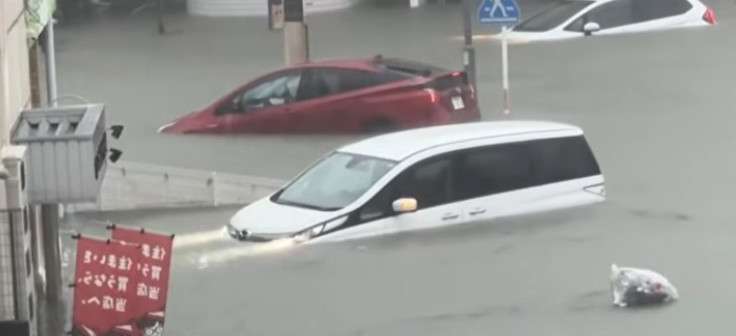
NAGOYA, Japan — A record burst of rain flooded Nagoya's streets, halted trains and briefly emptied temporary athlete housing this week, 10 days before the city is due to open the Asian Games.
About 104.5 millimeters fell in the hour to 4:53 p.m. Tuesday, the heaviest hourly total the Nagoya Local Meteorological Observatory has listed since records began in 1890. It surpassed the 97.0 millimeters that defined the Tokai flood of Sept. 11, 2000. Chikusa Ward logged 219.5 millimeters in the 24 hours to early Wednesday.
Mayor Ichiro Hirosawa told reporters the Games would still start on Sept. 19. "The situation is not severe enough to jeopardise the opening of the Games on the 19th," he said. "Based on the current situation, I don't believe there will be any problem to hold the Asian Games." He also said roofs leaked at several venues but that the damage was limited. "There has been limited impact like rainwater leaking from the roofs of some buildings, but the situation is not so serious that the opening on the 19th is in jeopardy for now," he said in remarks carried by multiple outlets. "Given the current circumstances, I believe there will be no obstacles to holding the Asian Games."
An Asian Games official told Reuters that about 400 athletes and staff were moved to higher ground from temporary housing at Garden Pier — converted shipping containers — and returned about two hours later when the highest alerts eased. No injuries were reported in that group.
The Japan Meteorological Agency issued a Level 5 overflow warning for the Shonai River system at 6:20 p.m. Tuesday and lifted it at 12:40 a.m. Wednesday. The city ordered emergency safety measures in parts of Chikusa, Moriyama and Meito wards. Fire-agency tallies Tuesday evening put the highest "protect your life now" order over Nagoya and neighboring Seto at about 1.17 million people. Broader evacuation instructions in the city were described as covering on the order of 2 million residents. About 3,500 people used designated shelters, according to municipal figures circulated with the recovery update.
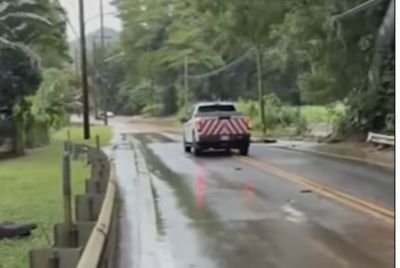
Rivers that drain the east side of the city — including stretches of the Yada, Ueda and Kanare — ran high. In Meito Ward the Ueda River overtopped, tearing fencing and peeling bank pavement. National underpasses flooded. The Tokaido Shinkansen stopped for about two hours on some sections. City buses and subway service shut down at the height of the commute. In the Sakae shopping district, water reached mid-calf. A 78-year-old woman in Showa Ward told Yomiuri she left a department store to find the road underwater. "When I finished shopping and went outside, the road was covered in water and I was shocked," she said. "I don't know when the bus will come. With global climate change, the way rain falls lately is extreme and frightening."
Jiji Press, citing local counts as of noon Wednesday, said 21 people in Nagoya and two in Kitanagoya were slightly injured. Two houses were partly damaged. Forty-five homes took water above floor level and 45 below. About 200 vehicles in Nagoya were stranded. No deaths were reported inside the city. A separate weather band along the Pacific coast was linked to a woman in her 60s found dead in a submerged vehicle in Iwaki, Fukushima Prefecture — outside the Games host's limits.
The government applied the Disaster Relief Act to speed aid. Advisories remained into Thursday as a front and low-pressure system kept the Tokai region unstable. Forecasts after the peak still called for tens of millimeters more.
Urban drains in Japanese cities are often designed around roughly 50 millimeters an hour. Tuesday's burst was about double that. Linear rainbands sat over western Aichi and Gifu's Mino area in the late afternoon, the setup that turns a city grid into a lake before pumps catch up.
The Games run Sept. 19 to Oct. 4, with some events earlier; basketball was listed to start Sept. 10. Banners for the Aichi-Nagoya Games stood in the same flooded streets. That is the political pressure behind Hirosawa's briefings: a multi-sport event cannot slip because an opening ceremony is already printed.
What receded overnight is water. What remains is silt in underpasses, insurance claims on cars and a test of whether leaked roofs dry before delegations fill the stands. The mayor's line is that they will. The rain gauge's line is that Nagoya has now seen an hour worse than the flood it still uses as a warning. Thursday's leftover showers will decide how much of that warning is still in force when the first tip-off is supposed to start.
© Copyright 2026 IBTimes AU. All rights reserved.
- Recommended For You