Mamdani's Free Child Care Plan in New York City May Need $5 Billion More a Year, New Report Shows
Mayor Mamdani's universal child care promise requires $5 billion more than anticipated, sparking debate over funding solutions.

NEW YORK — Mayor Zohran Mamdani's signature promise of universal free child care for New York City families is likely to cost significantly more than he pledged on the campaign trail, according to a new independent analysis that estimates the city may need to find roughly $5 billion in additional annual funding to fully realize the program.
The gap stems from a report released Monday by the Center for New York City Affairs, a nonpartisan research organization affiliated with The New School, which found that fully funding universal child care for children ages 6 weeks to 5 years would require between $8.7 billion and $9.3 billion annually, well above the roughly $6 billion figure Mamdani cited throughout his mayoral campaign.
A campaign promise meets fiscal reality
Mamdani ran on what was widely described as the most ambitious universal child care proposal in the country, pledging free day care for all children regardless of family income starting at just six weeks old. The plan built on New York City's existing universal pre-K programs for 3- and 4-year-olds, extending guaranteed access down to infants and toddlers for the first time.
According to the new report, much of the roughly $3 billion gap between Mamdani's original cost estimate and the center's updated projection is tied to staffing costs, particularly the mayor's pledge to bring child care worker pay in line with public school teacher salaries. The report estimates the city would need to hire approximately 23,000 new child care workers to meet the program's staffing requirements, with the bulk of that hiring concentrated in care for infants and children under age 3, the age groups that require the most intensive staffing ratios.
When accounting for the funding the city has not yet formally secured toward that expanded $8.7 billion to $9.3 billion target, the overall shortfall facing the administration climbs to roughly $5 billion beyond what has currently been committed through state partnerships and existing budget allocations.
Where funding stands so far
Mamdani's administration has already taken initial steps toward the broader goal, working in partnership with Gov. Kathy Hochul's administration to launch free child care for 2-year-olds in high-need areas of the city. The state has committed funding, in different reported amounts ranging from roughly $1.21 billion to $1.7 billion, to support the first two years of that rollout, which is set to offer 2,000 free seats for 2-year-olds beginning this fall in low-income neighborhoods, with another 12,000 seats planned for 2027. A similar expansion of roughly 2,000 new seats for 3-year-olds is also planned for the fall.
New York City already guarantees universal child care access for 4-year-olds under its existing pre-K program. Under the state agreement, funding for the 2-year-old expansion is guaranteed for its first two years, after which the state Legislature would need to approve continued funding to sustain the program going forward.
How Mamdani plans to pay for it
Throughout his campaign, Mamdani proposed funding his child care expansion primarily through tax increases on corporations and the city's highest earners, an approach that requires cooperation from the state government and the Legislature, since New York City does not have unilateral authority to raise many of those taxes on its own. The mayor's office has estimated that raising taxes on corporations and the top 1% of income earners could generate roughly $9 billion combined, though that revenue would need to cover other budget priorities beyond child care alone.
Separately, the Fiscal Policy Institute has proposed a new 0.43% child care payroll tax on workers earning more than $25,000 annually, an approach the group estimates could generate roughly $3.6 billion toward the program, in addition to its support for higher taxes on corporations and wealthy residents.
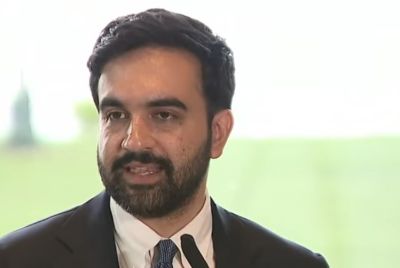
Speaking at a press conference announcing a related free child care center for city employees, Mamdani framed the broader investment in economic terms. "This is what Wall Street could call a good investment," Mamdani said, describing the rationale behind the city's child care spending.
Not everyone is convinced new taxes are the answer
The plan has drawn skepticism from some business and fiscal policy voices in the city, who argue that new revenue should not be the administration's first response to the funding gap. Kathryn Wylde, president and CEO of the Partnership for New York City, has cautioned against relying primarily on new taxes to close the shortfall. "While it would be great to offer families free childcare," Wylde said, arguing that the city and state should first look at spending cuts to free up existing resources before turning to new tax revenue.
The affordability backdrop driving the push
Supporters of the expanded program point to the steep cost of private child care in New York City as justification for the public investment. The average cost of private child care for infants and toddlers has climbed to roughly $18,200 annually for family-based care and $26,000 annually for center-based care, according to figures from the city comptroller's office. A typical family with an infant and a 4-year-old can end up spending nearly 40% of its annual income on child care, according to separate research cited by state officials.
That affordability crisis has also been linked to broader demographic shifts in the city. The number of New York City families with three or more children has dropped by nearly 17% over the past decade, while the city's under-20 population has declined by close to 200,000 in recent years, trends that advocates argue are partly driven by the high cost of raising young children in the city.
With the funding gap now more clearly quantified, Mamdani's administration faces the challenge of either scaling back elements of the original universal child care promise or securing significantly more revenue than initially projected, likely requiring extended negotiations with Hochul's administration and the state Legislature over new taxes or additional state funding commitments. How the city bridges that gap in the coming budget cycles is expected to shape not only the pace of the program's rollout to younger children, but also broader questions about the fiscal sustainability of one of the most ambitious social policy pledges of Mamdani's mayoralty.
© Copyright 2026 IBTimes AU. All rights reserved.
- Recommended For You