

Nvidia CEO Jensen Huang Declares 'We Have Achieved AGI,' Sparking Debate Over Definition
Nvidia Corp. CEO Jensen Huang stunned the technology world Monday by declaring that artificial general intelligence — long considered the holy grail of AI — has already been achieved, telling podcaster Lex Fridman "I think it's now. I think we've achieved AGI."
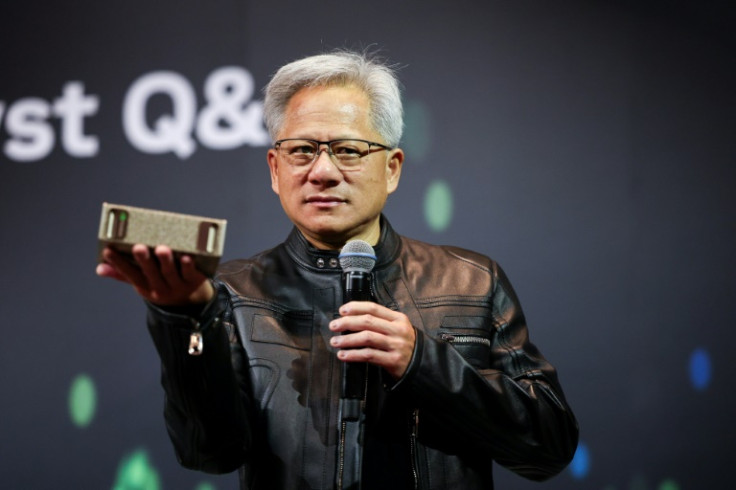
The comment, made during a wide-ranging interview released March 23, 2026, immediately ignited intense discussion across the AI community, with critics questioning Huang's narrow definition of the term while supporters hailed it as a pragmatic acknowledgment of rapid progress powered by Nvidia's chips.
Huang's statement came in response to Fridman's question about the timeline for AGI, framed specifically as an AI system capable of "essentially doing your job" — starting, growing and running a successful tech company worth more than $1 billion. When asked whether that milestone was five, 10, 15 or 20 years away, Huang replied without hesitation: "I think it's now."
He added a subtle qualification moments later, noting that Fridman had specified a billion-dollar company "but you didn't say forever." Huang pointed to OpenClaw, an open-source AI agent platform designed to run autonomously on behalf of users, as an example of technology that could theoretically launch and manage such a venture. OpenClaw is reportedly in the process of being acquired by OpenAI.
The Nvidia chief, whose company commands a market value near $4 trillion largely on the back of surging demand for its GPUs that power AI training and inference, has long argued that the definition of AGI is fluid and depends on the benchmark applied. In 2023 he suggested AI could reach human-competitive levels on certain tests within five years — a timeline that has now, in his view, been met under Fridman's framing.
Industry reaction was swift and divided. Some analysts viewed Huang's remarks as a savvy boost for Nvidia's business, underscoring the need for ever-more-powerful hardware to scale the very systems he claims have crossed the AGI threshold. Others cautioned that the statement risks inflating expectations and distracting from ongoing limitations in current large language models, which still struggle with consistent reasoning, long-term planning and true understanding.
Sam Altman, CEO of OpenAI, has previously described achieving AGI as the company's "biggest goal," without specifying an exact timeline. Other leaders, including those at Google DeepMind and Anthropic, have generally placed full AGI further out, often emphasizing the need for systems that match or exceed human performance across virtually all cognitive tasks, not just narrow entrepreneurial simulations.
Huang's comments arrive as Nvidia continues its extraordinary run. The company projects at least $1 trillion in cumulative chip sales across its Blackwell and upcoming Vera Rubin architectures. Data center revenue has exploded, driven by hyperscalers racing to build AI infrastructure. During the podcast, Huang also discussed geopolitics, energy demands for AI and the future of robotics, painting an optimistic picture of an AI-augmented economy.
Nvidia shares dipped modestly in after-hours trading following the podcast release, reflecting perhaps investor caution amid the broader debate rather than any fundamental shift in the company's outlook. The stock remains one of the best performers of the past several years, fueled by the AI boom it has helped create and sustain.
The definition of AGI has long been a moving target. Traditional academic views describe it as AI that can understand, learn and apply intelligence across a wide range of tasks at a level equal to or beyond humans. Fridman's podcast framing — an AI that could autonomously build and operate a billion-dollar business — represents a more practical, economic benchmark that aligns with Huang's hardware-centric worldview.
Critics were quick to note the distinction. "Huang is using a very generous interpretation," one AI researcher commented on social media. "Current systems can generate impressive outputs, but they lack the robust agency, reliability and generalization needed for true general intelligence." Others pointed out that even advanced agents still require significant human oversight, prompting questions about whether "achieved" accurately captures the state of the technology.
Supporters countered that dismissing Huang's view ignores the transformative capabilities already emerging. AI agents are increasingly handling complex workflows in software development, customer service and scientific research. If such systems can generate billions in economic value — as some startups claim — then perhaps, under certain definitions, AGI has indeed arrived in pockets of the economy.
The timing of Huang's remarks is notable. Nvidia is preparing for its annual GTC conference, traditionally a platform for unveiling new hardware and software breakthroughs. The company's dominance in AI accelerators has made Huang one of the most influential voices in technology, and his words carry weight with investors, policymakers and competitors alike.
Beyond the semantic debate, Huang's assertion highlights deeper questions about the societal impact of advanced AI. If systems capable of running billion-dollar enterprises exist today, what does that mean for employment, regulation and economic inequality? Huang has consistently advocated for accelerated development, arguing that the benefits — from scientific discovery to productivity gains — far outweigh the risks when managed responsibly.
Nvidia itself benefits enormously from any narrative that positions current AI as sufficiently advanced to require massive computational resources. Every leap in capability drives demand for more GPUs, more data centers and more energy. Huang's comments could be seen as both philosophical reflection and strategic positioning.
As the AI community digests the interview, attention turns to how other leaders respond. Will OpenAI, Google or Meta adopt similar language, or will they push back to manage expectations? Regulators worldwide are already grappling with AI governance; a high-profile declaration that AGI has arrived could accelerate calls for oversight.
For now, Huang appears unconcerned with the controversy. In the podcast he spoke enthusiastically about the future, envisioning AI that augments human creativity and solves intractable problems. His company's technology underpins much of that vision, from training frontier models to deploying them at scale.
Whether history will judge March 23, 2026, as the day AGI was declared achieved — or merely the day the definition shifted once again — remains to be seen. What is clear is that Jensen Huang, the visionary behind the chips powering the AI revolution, believes the era of general intelligence is no longer a distant dream. It is, in his estimation, already here.
© Copyright 2026 IBTimes AU. All rights reserved.