Nancy Guthrie Update: Realistic Chances Fade for Finding Nancy Guthrie Alive After Nearly 3 Months Missing
TUCSON, Ariz. — As the search for Nancy Guthrie entered its 88th day Monday, law enforcement officials and experts acknowledged the realistic odds of finding the 84-year-old alive are growing increasingly slim, even as new DNA evidence heads to the FBI lab in a high-stakes bid to crack the suspected abduction case that has gripped the nation.

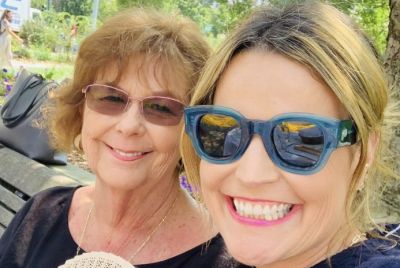
Guthrie, the mother of NBC "Today" show co-anchor Savannah Guthrie, was last seen around 9:45 p.m. on Jan. 31 after family members dropped her off at her Catalina Foothills home following dinner. She was reported missing the next day when she failed to appear at church. Authorities quickly shifted from a missing-person search to a criminal investigation after finding drops of her blood on the front porch and surveillance video showing an armed, masked intruder at the door.
No suspect has been named, and no arrests have been made in connection with the abduction itself. The family offered a $1 million reward for information leading to her safe return, with additional incentives exceeding $200,000 for details resulting in arrests and convictions. Despite extensive searches involving drones, dogs, aerial teams and multi-agency coordination, no trace of Guthrie has been located.
The case took a notable turn in mid-April when the FBI began analyzing new evidence, including hairs recovered from inside Guthrie's home. Sources close to the investigation told NewsNation the samples were forwarded to the bureau's Quantico lab for advanced forensic testing, potentially including genetic genealogy. A leading genetic genealogist, CeCe Moore of Parabon NanoLabs, told Fox News Digital that such testing typically takes months but could be fast-tracked given the case's profile and the FBI's involvement.
Retired Pima County homicide detective Kurt Dabb and former FBI profiler Jim Clemente have publicly assessed the evidence. Both noted the absence of a match in the national CODIS database for DNA recovered earlier from gloves found nearby and material at the scene. Clemente suggested the hair could prove pivotal, describing it as potentially "making the case solvable" through advanced genealogy techniques that have cracked other cold cases.
Yet experts across law enforcement caution that time is not on Guthrie's side. In stranger abductions of elderly victims, survival rates plummet sharply after the first 48 to 72 hours, according to national missing-persons data and FBI statistics. After nearly three months, the realistic probability of a live recovery falls below 10 percent in similar cases, retired FBI agents and private investigators have estimated. Many believe Guthrie likely died within days of the abduction due to her age, possible health issues and lack of access to critical medications she was not carrying when taken.
Private investigator Martin Holmes told reporters in late March that cases like this often result in the victim never being found if the perpetrator disposes of remains in remote desert terrain surrounding Tucson. "The desert doesn't give up its secrets easily," Holmes said, noting the vast search area and Arizona's challenging geography.
Pima County Sheriff Chris Nanos has repeatedly described the investigation as active and ongoing, refusing to declare it cold. He has emphasized that tips continue to pour in — more than 4,000 in the early weeks alone — and that every credible lead is pursued. However, he has also acknowledged the absence of a clear person of interest or second crime scene complicates progress. Family members, including Guthrie's adult children and their spouses, were cleared early through DNA exclusion.
A separate development involved Derrick Callella, a California man charged with sending a fake ransom text to Savannah Guthrie demanding payment. His federal trial date was set recently as the search hit Day 84, underscoring how the case has attracted opportunists seeking to exploit the family's anguish. No verified ransom demand from actual abductors has been confirmed, though unverified notes and communications have surfaced.
Savannah Guthrie has maintained a low public profile on the matter while returning to the "Today" show in early April. In emotional interviews, she and family members have pleaded for anyone with information to come forward, stressing their desperate need for answers. "We need to know without a doubt that she's alive and that you have her," Savannah Guthrie said in one early video appeal. The family has visited the home, now released from crime-scene status, and continues to cooperate fully with investigators.
The high-profile nature of the case — amplified by Savannah Guthrie's national platform — has shone a spotlight on missing-persons investigations involving seniors. Advocates note that elderly victims often receive less initial attention than younger ones, yet cases like this highlight vulnerabilities in suburban homes and the critical role of doorbell cameras and rapid DNA processing. Neighbor concerns have grown, with some residents expressing unease about security in the upscale Catalina Foothills area.
Forensic experts point to several factors that could still yield a breakthrough. The FBI's use of a private lab with a track record in high-profile resolutions, combined with genetic genealogy, offers a modern tool unavailable in older cases. Surveillance footage from the home and nearby properties continues to be reviewed, and investigators have focused on two specific dates in the days before the disappearance, suggesting possible surveillance or casing by perpetrators.
Still, the passage of time weighs heavily. Retired FBI Supervisory Special Agent Lance Leising told CBS News that after 45 days the investigation "becomes much harder" without meaningful leads. At nearly 90 days, the focus increasingly shifts toward long-term resolution — potentially locating remains or identifying perpetrators through circumstantial and forensic evidence rather than a live rescue.
Broader statistics from the National Center for Missing & Exploited Children and FBI databases show that while the vast majority of missing adults are located quickly, stranger abductions of elderly individuals are rare and often end tragically. When victims are not found within the first week, the likelihood of recovery alive drops dramatically, especially without proof-of-life communications.
Pima County authorities and the FBI task force continue to urge the public to report any information, no matter how small. The reward remains active, and officials stress that verified tips have driven progress in similar cold cases. Savannah Guthrie and her family have expressed gratitude for ongoing public support while asking for privacy as they await answers.
As April draws to a close, the realistic path to discovery appears tied more to forensic science than immediate rescue. Whether the FBI lab yields a match through genetic genealogy or new tips surface, the investigation remains one of the most closely watched missing-persons cases of 2026. For now, Nancy Guthrie's whereabouts and condition stay unknown, leaving her family, investigators and the public hoping that advanced technology and persistent effort will eventually bring closure.
© Copyright 2026 IBTimes AU. All rights reserved.
- Recommended For You