

Lenovo Confirms Legion Go BIOS Update Can Cause Blank Screens and Pulls the File
BIOS V42 Update Withdrawn After Causing Display Failures in Legion Go Devices
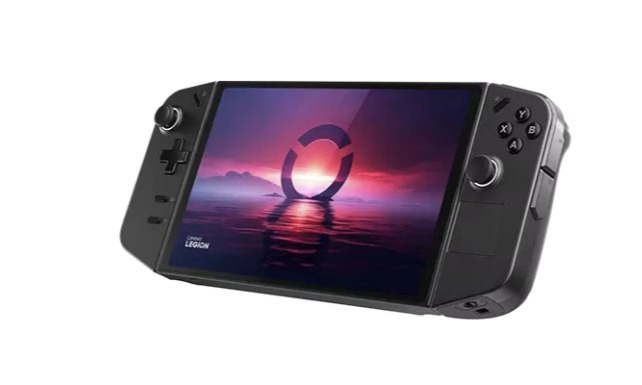
Lenovo has confirmed that a recent BIOS update for its Legion Go handheld gaming devices can leave some units with a blank screen during installation, rendering them temporarily or permanently unusable until repaired.
The company acknowledged the problem in a statement provided to media outlets after weeks of user reports. BIOS version V42, also identified in community discussions as N3CN42WW, was intended to address power-button behavior related to standby modes. Instead, a portion of original Legion Go models equipped with AMD Ryzen Z1 or Z1 Extreme processors failed to display any image after the update process began or completed.
In its official response, Lenovo stated: "Lenovo is aware that some Legion Go devices may experience a blank screen during installation of BIOS version V42. BIOS V42 was not distributed through Windows Update or Legion Space, and Lenovo has removed the update from its support website while we continue our validation work. Users who have successfully completed the V42 update should not need to take further action at this time."
The company added recovery guidance for affected devices: "If a device encounters a blank screen during V42 installation, users may try pressing and holding the power button for approximately 10 seconds, waiting approximately one minute, and then powering the device on again. If the device does not resume normal operation, customers should contact Lenovo Support for further assistance."
The update had been available for manual download from Lenovo's support site for roughly two months before it was withdrawn. It was never pushed automatically through Windows Update or the Legion Space companion application, meaning only users who actively sought out and installed the file encountered the risk.
Reports of the issue began circulating in mid-to-late July, with owners describing devices that powered on—LEDs and fans activating—yet produced no image on the built-in display or external monitors. Standard recovery procedures recommended by Lenovo for BIOS updates often failed to restore functionality. Some owners who sent units in for service received repair quotes approaching $300, even though the failure followed installation of an official firmware package.
Lenovo later confirmed through forum communications that its European laboratory had successfully reproduced the blank-screen condition on multiple test units. Other internal teams were able to install the same BIOS without incident. The company indicated the problem may be linked to specific motherboard components used in certain production batches or to particular conditions present during the update process. The precise root cause remained under investigation at the time of the public statement.
Forum posts attributed to a Lenovo representative stated that the failure should not be treated as user error. Affected devices under warranty were to be handled accordingly, and the same posts indicated that even units outside the standard warranty period should receive free repairs, subject to local consumer-protection laws. The formal media statement itself did not explicitly guarantee free service for every case, directing customers to contact support for individual assessment.
The original Legion Go, launched as an 8.8-inch Windows handheld, competes in a growing market of portable gaming PCs that includes devices from Asus, Valve and others. Firmware updates are common for these machines as manufacturers refine power management, controller behavior and compatibility with new games. In this instance, an update meant to improve reliability instead introduced a critical failure for a subset of owners.
Users who have not yet installed V42 are advised to avoid downloading any residual copies circulating online. Those whose devices updated successfully appear to face no ongoing risk, according to Lenovo. Owners experiencing a black screen are encouraged to attempt the power-button recovery sequence before escalating to formal support channels.
The episode highlights the challenges of delivering low-level firmware to diverse hardware configurations. Even limited distribution of a BIOS file can affect enough units to generate significant customer frustration and repair costs when validation gaps exist. Lenovo's decision to remove the file and provide a public acknowledgment represents an effort to contain further incidents while technical teams continue examining the failure mode.
Handheld gaming devices occupy a middle ground between traditional PCs and dedicated consoles. Their compact design, detachable controllers and Windows operating system give users flexibility but also expose them to the full complexity of PC firmware management. A bricked unit cannot simply be reset through a simple menu option; recovery often requires specialized tools or factory-level intervention.
Community discussions have focused on the uneven experience of owners who sought service. Some reported smooth warranty handling once the connection to the official BIOS became clear. Others described initial resistance or charges that only later were reconsidered. The laboratory reproduction of the fault strengthened the case that the problem originated with the update rather than user mishandling.
Lenovo continues to support the first-generation Legion Go with driver and BIOS updates scheduled through at least 2029, according to earlier company statements. The current incident is therefore occurring within an active support window rather than at the end of a product's life cycle. Future firmware packages will presumably undergo additional scrutiny before public release.
For now, the practical advice remains straightforward. Successful V42 installations require no further steps. Devices that went dark during or after the process should first attempt the extended power-button reset. Persistent failures should be reported to Lenovo Support with documentation of the BIOS version involved. Owners of later Legion Go variants, such as the S or subsequent models, appear unaffected, as the problematic file targeted the original 8APU1 hardware.
The situation underscores the importance of cautious firmware management on specialized devices. While most users install updates without incident, the minority who encounter a critical failure can face significant inconvenience and expense. Lenovo's removal of the file and provision of recovery guidance aim to limit additional cases while the company works to identify and correct the underlying trigger.
© Copyright 2026 IBTimes AU. All rights reserved.