

SpaceX Investors Turn To Warren Buffett's Playbook As Volatile Stock Continues Wild Ride Since Record IPO
Exploring Buffett's Circle of Competence in the Context of SpaceX's Complex Business Model
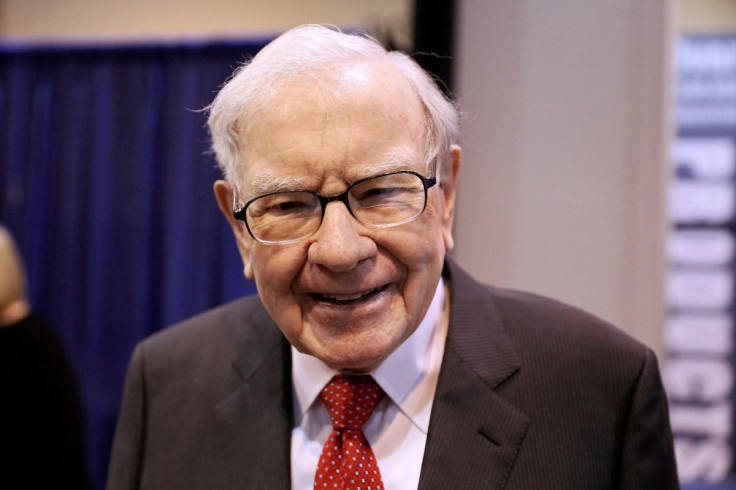
Investors weighing whether to buy shares of Space Exploration Technologies, better known as SpaceX, are increasingly turning to Warren Buffett's decades-old investing principles for guidance, even though the legendary Berkshire Hathaway chairman has never publicly commented on the stock and has historically steered clear of technology and space-related businesses.
SpaceX went public in June, immediately becoming the seventh-largest company traded on a U.S. stock exchange following what analysts described as a record-setting initial public offering. The listing briefly made SpaceX CEO Elon Musk the world's first trillionaire, according to reporting from The Motley Fool. Shares now trade on the Nasdaq under the ticker SPCX, and the stock has since experienced substantial volatility, including a notable price crash in the weeks following its debut.
Buffett has long emphasized the importance of investors staying within what he calls a "circle of competence," meaning individuals should generally limit their investments to businesses and industries they genuinely understand. Buffett himself was famously slow to embrace technology investments throughout most of his career, though Berkshire Hathaway did eventually take a significant stake in IBM after watching the company for decades, an investment that ultimately did not perform particularly well for the conglomerate.
Investment writer Christopher Ruane, writing for The Motley Fool's UK operation, said he has applied that same framework to his own thinking about whether to invest in SpaceX.
"Buffett stuck to industries and companies he felt he properly understood before investing," Ruane wrote. "He talked about staying inside his 'circle of competence.' Importantly, he also noted that it is possible for someone to grow their circle of competence over time. That matters when it comes to thinking about SpaceX stock. I try to stay inside my circle of competence in the way Buffett discussed. I do not fully understand all of the business, but I feel comfortable that I have a strong enough handle on it to decide whether or not to invest."
Buffett has repeatedly stated that his aversion to investing in businesses he cannot fully understand is a firm rule rather than a loose guideline. In comments cited by The Motley Fool, Buffett has said in no uncertain terms, "Never invest in a business you cannot understand," a standard that presents a particular challenge for investors evaluating SpaceX given the company's increasingly complex corporate structure.
That complexity stems in part from SpaceX's business spanning multiple distinct operations under one corporate umbrella, including rocket construction and launch services, satellite-based internet provision through its Starlink network, and, following a merger with Musk's separate company xAI, artificial intelligence and social media operations as well. According to SpaceX's revised regulatory filing ahead of its IPO, the company estimates it is targeting a combined total addressable market of $28.5 trillion, which it has described as "the largest in human history," with $22.7 trillion of that figure stemming specifically from enterprise applications rather than its traditional space launch business.
Adding further to the complexity, SpaceX's filing warned that the company "may issue a significant amount of equity in connection with future transactions," language that fueled speculation Musk could eventually seek to combine Tesla with SpaceX in some form, a prospect that would further complicate efforts by outside investors to project the company's future earnings and overall business trajectory.
Beyond the circle-of-competence framework, Buffett has also long emphasized investing in companies with proven, resilient business models and durable competitive advantages, a principle reflected in his historical investments spanning insurance companies and consumer staples businesses such as Coca-Cola. Applying that lens to SpaceX, Ruane pointed to the company's strong and growing revenue, along with what he described as resilient underlying demand for satellite launches and Starlink's Wi-Fi provision, both markets he expects to remain substantial over the long term. He also pointed to SpaceX's proprietary space launch and recapture technology, established customer base and strong brand as factors helping differentiate the company from potential competitors.
Buffett has separately weighed in more directly on how he generally approaches newly public companies, even without commenting specifically on SpaceX. In a 2019 interview referenced by The Motley Fool, Buffett said Berkshire Hathaway had never purchased shares in a company's initial public offering, reflecting his longstanding skepticism that IPOs are typically structured to benefit the company and its early investors rather than new public shareholders. Buffett has also expressed public admiration for Musk personally, even as he has historically avoided investing in companies carrying the kind of elevated risk and lofty valuation many analysts have attached to SpaceX following its public debut.
The Motley Fool has separately noted that SpaceX continues to report financial losses despite having raised and invested billions of dollars, a pattern the publication compared to the kind of unprofitable, heavily capitalized businesses that Buffett and his late longtime investing partner, Charlie Munger, historically viewed with considerable suspicion. Buffett has offered investors a simple mental exercise for evaluating any potential stock purchase: writing down a clear, specific answer to the prompt "I'm buying this stock because," and treating an inability to complete that sentence convincingly as a warning sign against making the investment.
Since its June debut, SPCX shares have continued trading with significant volatility, reflecting the broader uncertainty among investors and analysts over how to properly value a company spanning such a wide and rapidly evolving range of business lines. As of recent trading, SpaceX shares were down more than 1% on the day, according to Yahoo Finance UK market data, continuing a pattern of day-to-day price swings that has characterized the stock since its listing.
For everyday investors weighing whether SpaceX belongs in their own portfolios, the recurring conclusion among those applying Buffett's principles has generally been one of caution rather than outright avoidance, with some, including Ruane, describing SpaceX as sitting close to the edge of their personal circle of competence, but not entirely outside it. Whether that framework ultimately proves useful for evaluating a company as complex and fast-evolving as SpaceX remains an open question that individual investors will likely need to continue weighing for themselves as the stock's post-IPO volatility continues to play out in the months ahead.
© Copyright 2026 IBTimes AU. All rights reserved.