FIFA's Mandatory Hydration Breaks Could Generate Over $1 Billion in Global Ad Revenue
Mandatory hydration breaks at the 2026 World Cup are set to generate significant advertising revenue, with Fox Sports alone eyeing up to $250 million in the U.S.
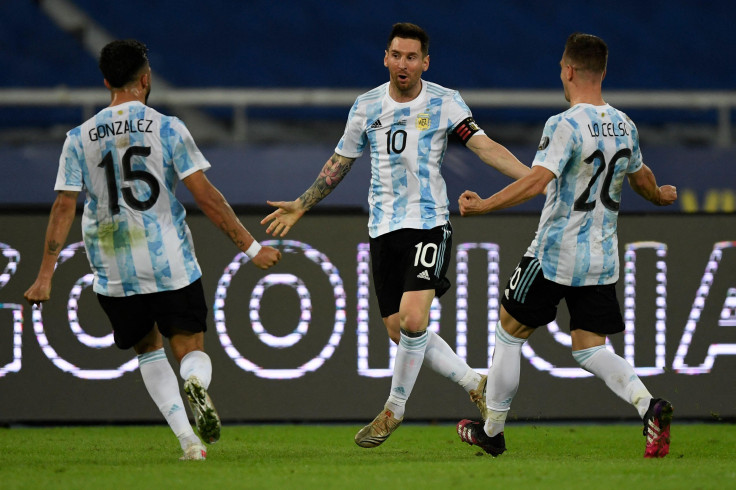
Mandatory three-minute cooling pauses at the 2026 World Cup are turning into a broadcasting goldmine, with Fox Sports eyeing up to $250 million in new commercial inventory from the breaks alone in the United States — and global estimates running considerably higher once every broadcast market is factored in.
What the Hydration Breaks Actually Are
Every match at the 2026 World Cup features a mandatory three-minute hydration break at the 22nd minute and another at the 67th minute. FIFA announced the policy in December 2025, framing it as a player welfare measure for a tournament being held across the U.S., Canada, and Mexico during the summer heat. Manolo Zubiria, chief tournament officer of the World Cup, explained the rationale at the time: "For every game, no matter where the games are played, no matter if there's a roof, or temperature-wise, there will be a three-minute hydration break. It will be three minutes from whistle to whistle in both halves."
Fox Sports' Estimated U.S. Windfall
The clearest and most consistently cited figure across multiple outlets centers on Fox Sports' domestic broadcast revenue. Industry experts estimate that Fox Sports alone could generate more than $250 million in advertising revenue in the United States through the extra stoppages. With 104 matches on the schedule and two breaks per game, that's more than 800 potential commercial slots, each reportedly priced at an average of $300,000.
That figure represents an extraordinary return relative to what Fox paid for the tournament's broadcast rights in the first place. This financial windfall represents a huge return on its reported $485 million investment for exclusive U.S. broadcast rights to the tournament.
A Range of Estimates, Not a Single Confirmed Number
It's worth noting that the precise dollar figure varies depending on the source and methodology used. One detailed analysis from The Hollywood Reporter pegged the realistic total even higher than the commonly cited $250 million figure. Multiplied by the 104 games played and factoring in that most buyers are buying packages that can run into the tens of millions of dollars, not single spots, this puts a plausible total above $500 million. Fox paid less than that for the entire rights to the tournament. The same outlet placed the broader plausible range "at least $250 million, with a plausible value of $500 million-600 million" for Fox's hydration-break-specific ad revenue alone.
Global Revenue Estimates Run Into the Billions
Beyond the U.S. market, broadcasters in other countries are also capitalizing on the same advertising windows, pushing the worldwide total considerably higher than any single country's figure. Worldwide revenue from hydration-break commercials could reach well beyond $1 billion across all broadcast markets, as per the BBC. Financial analysts have separately estimated that the global advertising impact of hydration breaks could exceed $1 billion when combined across all international networks.
Advertising Rates by Match Type
The specific cost of individual ad slots varies considerably depending on which teams are playing and how far the tournament has progressed. The network charges around $200,000 for a standard group-stage 30-second spot, while the price climbs up to $750,000 for matches involving the United States Men's National Team. A separate report from Al Jazeera cited nearly identical figures, noting that a 30-second World Cup advertisement slot on Fox Sports costs between $200,000 and $300,000, and can go as high as $750,000 during USA matches and later stages of the tournament.
Not Every Broadcaster Is Cashing In the Same Way
The financial windfall has not been distributed evenly across every network carrying the tournament. Not all broadcasters are cashing in. Telemundo doesn't run full-on ads during the hydration breaks, instead kicking it back to the studio, with anchors thanking sponsors for allowing them not to cut away. While the big sponsors are buying on both Fox and Telemundo, some smaller brands are choosing one or the other.
FIFA's Official Justification
Despite the obvious commercial benefit, FIFA has consistently maintained that player welfare, not advertising revenue, was the driving force behind the policy. FIFA has consistently maintained that the mandatory hydration breaks are designed solely to protect player welfare. The governing body has argued that applying identical rules across every fixture ensures fairness and competitive integrity throughout the tournament, and that introducing breaks only in selected matches could create inconsistencies between teams playing under different conditions.
Skepticism From Weather Experts and Players
That official justification has drawn pointed criticism from meteorologists and players alike, who have questioned why the breaks apply even in air-conditioned, climate-controlled venues. "New York, California and Miami, as well as the Mexican stadiums, have been hot enough, but there's no justification for breaks at the air-conditioned arenas like Dallas, Houston, Atlanta or Vancouver," senior meteorologist Everton Fox told Al Jazeera. "I know FIFA claim to have done this across all games to be consistent, but it's hard to see it as anything other than a commercial venture worth millions of dollars in advertising to the US TV channels, if not billions, globally."
Players have echoed similar sentiments. Canadian right-back Alistair Johnston put it bluntly: "It's probably making some more money for FIFA. Hydration break turned into a commercial break."
UEFA Takes a Different Approach
The controversy has already shaped policy decisions at other major football organizations weighing whether to adopt similar rules. UEFA has now made its own stance clear ahead of its upcoming competitions, explaining that match delegates already monitor conditions using a Wet Bulb Globe Temperature thermometer, with mandatory cooling breaks only required when temperatures exceed specific thresholds for senior competitions. Below those limits, any drinks break remains entirely at the referee's discretion — a clear distinction from FIFA's blanket policy at the 2026 World Cup, where every match has featured two compulsory breaks regardless of temperature or stadium conditions.
Some Coaches See a Tactical Upside
Not every voice within the sport has been critical of the breaks, with some coaches embracing the additional opportunity to communicate with players mid-match. "For me, it's a coaching break more than a cooling break, so to me, it's very important," Belgium coach Rudi Garcia said. France coach Didier Deschamps similarly described it as an opportunity to speak to his players and "adjust a couple of things" before the restart, noting, "It's four quarter times we've got, basically" — a comparison to the structured stoppage patterns common in American sports like the NBA and NFL.
The Bottom Line on the Revenue Figures
Pulling together the most consistently cited estimates: Fox Sports alone is projected to generate approximately $250 million in the United States from hydration-break advertising, with some analysis suggesting that figure could realistically run as high as $500 million to $600 million once full sponsorship packages are factored in. Globally, across all broadcast markets carrying the tournament, total hydration-break-related advertising revenue is estimated to exceed $1 billion.
With the tournament continuing through its knockout rounds and viewership typically increasing as the competition narrows toward the final, advertising rates tied to the hydration breaks are likely to climb even further during the most-watched matches of the World Cup's closing stages. Given UEFA's decision to take a more conditional approach to cooling breaks at its own upcoming competitions, FIFA's blanket policy at this tournament may ultimately be remembered as much for its commercial impact as for its stated player-safety rationale, regardless of how the final global revenue figures are ultimately tallied once the tournament concludes.
© Copyright 2026 IBTimes AU. All rights reserved.
- Recommended For You