10 Fun Facts About Tour of Flanders 2026: Cobbled Chaos, Superstar Showdown and Flemish Glory Await
Belgium — As the peloton rolls out from Antwerp on Sunday, April 5, 2026, cycling fans worldwide are gearing up for the 110th edition of the Tour of Flanders, known locally as the Ronde van Vlaanderen or simply "De Ronde." This brutal one-day Monument promises 278 kilometers of bone-rattling cobblestones, steep "hellingen" climbs and a star-studded field that could produce fireworks on the legendary Oude Kwaremont and Paterberg.

Here are 10 fun facts that capture the magic, history and quirks of this year's race — and why it remains one of the most beloved spectacles in professional cycling.
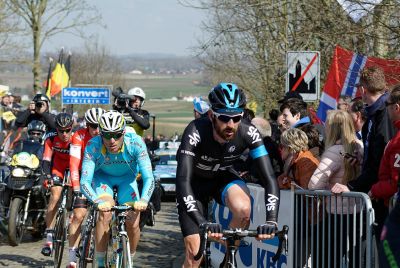
- It's the 110th edition of a race born in wartime ingenuity. The Tour of Flanders was first held in 1913, created by journalists from the newspaper Sportwereld to boost circulation. The inaugural 330-kilometer edition was won by Belgian Paul Deman, who balanced racing with his day job as a carpet maker. Despite interruptions for the World Wars, the race has grown into Belgium's unofficial national holiday, drawing hundreds of thousands of roadside fans waving flags and ringing cowbells.
- The 2026 route is longer and strategically tweaked for drama. This year's men's race covers 278.2 km from Antwerp to Oudenaarde, featuring 16 climbs and six flat cobbled sectors. Organizers removed the Steenbeekdries and Stationsberg from the finale, giving riders a slightly easier final 55 km before the decisive triple threat of Taaienberg, Oude Kwaremont and Paterberg. The early flat sections include the lengthy Paddestraat (2,300 meters of cobbles) and the dreaded Koppenberg, with its 22% maximum gradient that has broken many dreams.
- A dream superstar quintet could clash like never before. This edition marks only the third time Tadej Pogačar, Mathieu van der Poel, Wout van Aert, Mads Pedersen and debutant Remco Evenepoel line up together in a one-day classic. Their previous meetings came at the 2021 and 2023 UCI Road World Championships. Pogačar, the defending champion after solo victories in 2023 and 2025, is the clear favorite, but van der Poel (three-time winner) and a resurgent van Aert are ready to challenge.
- Winning a fourth Flanders title would rewrite the record books. Seven riders currently share the mark of three victories, including legends Johan Museeuw, Tom Boonen and Fabian Cancellara, plus van der Poel. A fourth win for van der Poel or women's star Lotte Kopecky would make them outright record holders. Pogačar could join the three-win club with another triumph, equaling van der Poel's tally.
- The Koppenberg remains the race's most feared climb. This short, brutally steep cobbled monster (600 meters at an average 11.6%, max 22%) often decides the race. Riders must stay near the front or risk being forced to walk when the pack slows to a crawl. In past editions, crashes and mechanicals here have eliminated contenders in seconds.
- Flemish fans treat the race like a religious pilgrimage. On race day, the roadsides transform into a sea of orange (for Dutch fans) and Belgian flags. The "Flemish Ardennes" region comes alive with beer tents, food stalls and live music. The event is so embedded in local culture that many businesses close early, and families camp out overnight for prime viewing spots on climbs like the Oude Kwaremont.
- Women's Tour of Flanders adds its own high-stakes drama. Running a shorter but equally punishing 164 km course, the women's race features three-time winner Lotte Kopecky aiming for a record fourth victory. She faces stiff competition from Demi Vollering, Pauline Ferrand-Prévot, Elisa Longo Borghini and Marlen Reusser. The women's peloton tackles many of the same iconic sectors, including the final Oude Kwaremont-Paterberg combo that often crowns the champion.
- The race has produced some of cycling's most legendary solo attacks. From Pogačar's long-range masterclass in 2025 to van der Poel's 45 km solo in 2024, the Ronde rewards boldness. In 2023, Pogačar dropped everyone on the Oude Kwaremont with more than 50 km remaining — a move many still call one of the greatest in modern Monument history.
- Weather and "Flandrien" toughness are part of the legend. April in Flanders often brings cold rain, crosswinds and slippery cobbles that turn the race into a war of attrition. Riders must master bike-handling skills honed on these rough farm tracks. The term "Flandrien" — describing riders with gritty determination — was practically invented for those who excel here.
- The finish in Oudenaarde offers a hero's welcome — and a party. After hours of suffering, the winner crosses the line on the Minderbroedersstraat to roaring crowds. Post-race celebrations spill into the town's cafes and breweries, where fans toast with local beers like Tripel or Westmalle. The event also includes the We Ride Flanders sportive the day before, letting amateur riders tackle similar cobbles and climb the same legendary bergs.
Beyond the fun facts, the 2026 edition arrives with sky-high expectations. Pogačar enters as the rider to beat after dominating recent Monuments, yet van der Poel has looked sharp in early classics, and Evenepoel's Flanders debut adds intrigue — the Belgian phenom has never raced the full Ronde as a professional. Wout van Aert, chasing his first Flanders title, showed strong form in recent weeks.
The men's race starts at 10:20 CET from Antwerp's Ernest Van Dijckkaai, with an expected finish around 16:30-17:00 CET in Oudenaarde. The women's race begins later from Oudenaarde and finishes around 16:35 CET.
Cobbles, climbs and rivalries — the ingredients that make the Tour of Flanders cycling's greatest one-day spectacle — are all present in 2026. Whether a new name emerges or a superstar cements their legacy, fans can expect drama, courage and the unmistakable sound of thousands of cowbells echoing across the Flemish hills.
The race is broadcast live on major networks worldwide, including FloBikes in North America, Sporza in Belgium and various platforms elsewhere. For those unable to attend, the atmosphere is best experienced through the raw footage of riders bouncing over ancient stones while tens of thousands cheer them on.
As the 110th Ronde approaches, one thing is certain: on the cobbles of Flanders, legends are made and hearts are broken — often in the same afternoon.
© Copyright 2026 IBTimes AU. All rights reserved.
- Recommended For You