

Wordle #1769 Answer Revealed: TWEET Sends Players Into Social Media Frenzy on April 23 2026
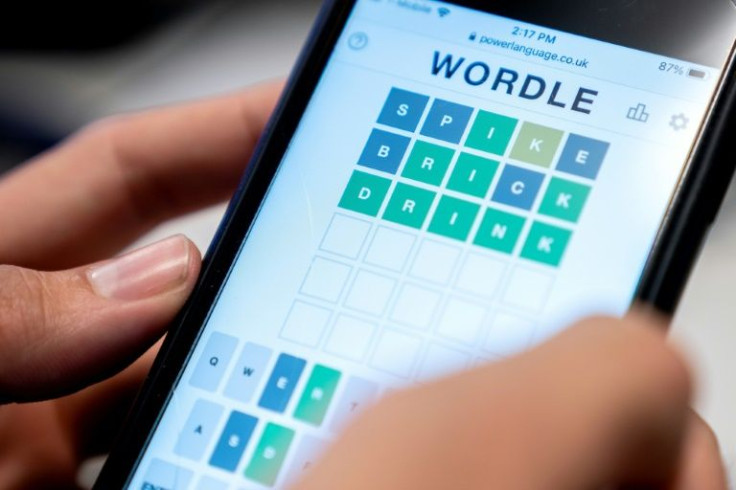
NEW YORK — Millions of daily Wordle players woke up Thursday to a timely twist as the New York Times' popular word puzzle delivered "TWEET" as the solution for puzzle No. 1769 on April 23, 2026, sparking a wave of online reactions that blended bird chirps, nostalgia for old Twitter and fresh debates about the platform now known as X.
The five-letter answer, which doubles as both a noun describing the thin chirping sound of a small bird and a verb meaning to make such a sound or post a short message online, proved moderately challenging for many. According to early data shared by WordleBot, the average solver needed about 4.2 guesses in easy mode and 4.1 in hard mode, placing it near the middle of recent difficulty rankings.
Players who opened the game on Thursday morning encountered a fresh grid with no prior letters revealed. Common opening guesses such as "SLATE," "RAISE," "CRANE" or "AUDIO" quickly narrowed options. The double "E" in positions three and four, combined with the starting "T," tripped up solvers who fixated on words like "TREAT," "SWEET" or "FLEET" before landing on the correct choice.
Hints circulating on social media and puzzle sites proved especially helpful. Subtle clues included "a bird's sound" or "avian speech," while others noted the presence of a repeated vowel in the middle and the absence of certain common consonants. One popular hint warned that the word had no relation to snoring — a playful nod to the previous day's answer, "SNORE," for puzzle No. 1768 on April 22.
For those still hunting when the clock struck midnight in their time zone, the solution arrived with a satisfying green-tile sweep: T-W-E-E-T. The word's dual meaning fueled immediate commentary. Bird enthusiasts celebrated the ornithological accuracy, while longtime social media users reminisced about the original Twitter "tweet" feature that once defined short-form posting before character limits expanded and the platform rebranded.
Wordle's enduring appeal lies in its simple yet addictive formula. Created by Josh Wardle and acquired by the New York Times in 2022, the game limits players to six guesses per day for a single five-letter word. Tiles turn green for correct letters in the right spot, yellow for correct letters in the wrong spot and gray for letters not in the word at all. The shared daily puzzle fosters a global community that swaps results via emoji grids without spoilers.
On April 23, those emoji grids flooded timelines with patterns showing everything from lucky two-guess solves to frustrating six-guess near-misses. Some players admitted starting with "BIRD" or "CHIRP" only to watch yellow and gray tiles pile up before pivoting. Others praised starting words like "PLAID" or "TOUCH" that efficiently eliminated possibilities.
Puzzle No. 1769 arrived amid a busy spring for word-game fans. Recent answers included "CLUMP" on April 21 and "WEAVE" on April 20, showing the NYT editors' mix of everyday vocabulary with occasional curveballs. "TWEET" fits neatly into the game's preference for common English words that avoid overly obscure or offensive terms.
Difficulty metrics suggest the puzzle was fair but not trivial. The presence of repeated letters — the two E's — added a layer many solvers overlook on early attempts. WordleBot analysis indicated that optimal openers like "SLATE" left roughly 579 possibilities after one guess for some players, requiring careful elimination in subsequent turns.
The answer also sparked lighthearted cultural commentary. With "tweet" once synonymous with rapid online sharing, some users joked that solving it in fewer than four guesses qualified as "going viral." Others noted the irony of posting about "TWEET" on the very platform that retired the term. One Reddit thread in r/wordlegame filled quickly with users sharing streaks and debating whether the word felt too on-the-nose for a Thursday morning.
For newcomers or those rebuilding a streak, experts recommend starting with words rich in vowels and common consonants. Popular strategies include "ADIEU" or "AUDIO" for vowel placement, followed by consonant-heavy guesses like "STERN" or "CLAMP." Hard-mode players must reuse confirmed letters, which can sharpen focus but sometimes prolong solves.
Wordle's streak feature continues to motivate millions. Players who maintain daily solves build impressive runs, with some boasting hundreds of consecutive days. Losing a streak because of a tricky word like Thursday's "TWEET" can sting, but the game's forgiving nature and lack of penalties keep most coming back.
Beyond the daily puzzle, the New York Times offers an archive for subscribers, allowing replay of past challenges. On April 23, casual solvers could look back at recent winners while preparing for Friday's puzzle No. 1770. Community sites and apps provide spoiler-free hints, statistics and companion games such as Connections, Spelling Bee and Strands.
Parents and educators have embraced Wordle as a low-pressure way to build vocabulary and logical reasoning. Teachers report using the puzzle in classrooms to discuss letter frequency, word patterns and deductive thinking. For families, the shared evening ritual of tackling the day's word has become a screen-time bright spot.
The game's accessibility helps explain its staying power. No downloads or subscriptions are required for the basic daily puzzle, though NYT Games subscribers gain extras like the full archive and ad-free experience. Since its explosion in popularity in late 2021 and early 2022, Wordle has inspired countless clones and variations, yet the original remains the gold standard.
As April 23 unfolded, reaction threads highlighted the puzzle's clever timing. One solver posted, "Solved TWEET in 3 — feeling like I just posted the perfect thread." Another lamented, "Got stuck between SWEET and TWEET until the final guess. Classic Wordle trap."
WordleBot, the NYT's official analysis tool, praised efficient solvers while gently ribbing those who burned guesses on unlikely candidates. Its suggested starting word for the day was "SLATE," which many found effective at clearing multiple vowels and consonants early.
Looking ahead, the Wordle team maintains a careful balance in selecting answers. Words must be valid, reasonably common and free of proper nouns or offensive connotations. "TWEET" meets all criteria while carrying enough cultural resonance to generate buzz without alienating international players for whom the social-media meaning may be secondary to the literal bird sound.
By late Thursday morning in U.S. time zones, thousands had already shared their results, with green-heavy grids dominating feeds. The puzzle's solution reinforced Wordle's role as a daily mental palate cleanser — a brief, satisfying escape amid busy schedules and endless scrolling.
Whether you nailed "TWEET" on the first try or needed all six guesses, the game once again delivered its signature mix of challenge and delight. For many, it provided the perfect excuse to pause, think and maybe even tweet — or post — about the experience.
As players reset for tomorrow's puzzle, the collective conversation around Wordle #1769 served as a reminder of the game's simple genius: one word, six chances and a worldwide community united by colored tiles and friendly competition.
© Copyright 2026 IBTimes AU. All rights reserved.
- Recommended For You


