

Wordle Answer for May 27, 2026 Revealed in Popular Daily Puzzle
The New York Times' Wordle puzzle continues to captivate with its blend of simplicity and strategy.
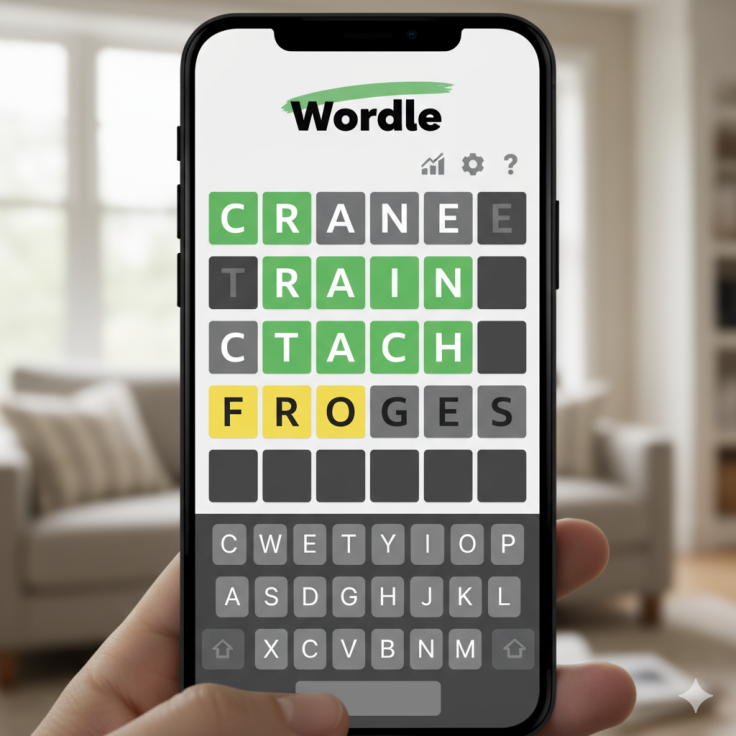
NEW YORK — The New York Times' Wordle puzzle for Wednesday delivered "STUFF" as the solution for game No. 1,803, offering millions of players a moderately challenging test built around common letters and a repeated consonant.
The five-letter noun, which can refer to material, personal belongings or miscellaneous items, fits neatly into the game's emphasis on everyday vocabulary. Official testers averaged about 4.4 guesses to crack it, according to the New York Times review.
Wordle remains a global staple years after its creation by Josh Wardle and its 2022 acquisition by the New York Times. The simple rules — six attempts to identify a hidden five-letter word with color-coded feedback — continue to draw dedicated fans who tackle the same puzzle each day regardless of location.
For many in Seoul and across Asia, the puzzle drops during evening hours, creating a shared moment with players in the Americas and Europe. Green tiles indicate correct letters in the right spot, yellow shows correct letters in the wrong position, and gray marks absent letters.
"STUFF" featured a double "F" at the end, a pattern that tripped up some solvers who overlooked repeated letters. Many started with strong openers such as "SLATE," "CRANE" or "RAISE," which efficiently tested common vowels and consonants. The word's balanced mix of frequent letters kept it accessible without being overly obvious.
Social media filled with shared grids as the day unfolded. Some celebrated extended streaks, while others noted the puzzle as a fair midweek test that rewarded logical deduction over obscure knowledge.
The game's lasting appeal lies in its balance of simplicity and strategy. No downloads are required for core play, though subscribers gain access to tools like the Wordle Bot for performance analysis.
Wordle's Continued Cultural Footprint
Since bursting onto the scene in late 2021, Wordle has influenced a wave of digital word games. Its minimalist interface and daily rhythm turned it into a ritual for individuals, families and office groups.
The New York Times has integrated it into a broader puzzle ecosystem that includes Connections, Spelling Bee and others. Puzzle No. 1,803 continues the unbroken daily sequence that fosters a sense of global community.
"STUFF" aligns with the publication's careful curation process. Editors select words that avoid offensive content while maintaining variety in difficulty. The solution's definition, per Webster's New World College Dictionary, covers "the material or substance out of which anything is or can be made; raw material," along with more casual uses for things or belongings.
Players who struggled often missed the repeated "F" or tested incorrect vowel placements early. Online hints encouraged focusing on common endings and versatile nouns.
Effective Strategies Shared by Veterans
Experienced players stress the value of opening guesses rich in vowels and high-frequency consonants. This approach gathers maximum information quickly. Popular choices include "STARE," "AUDIO" and "SLATE."
Subsequent guesses build on feedback, eliminating impossible letters and testing new placements. Many track personal metrics — win rate, average guesses and streak length — to measure improvement over time.
Community discussions on forums and social platforms dissect patterns, though randomization helps preserve freshness. The game's design prevents overly rare words while occasionally introducing subtle tricks like double letters.
Educational observers highlight benefits for vocabulary, pattern recognition and deductive reasoning. The puzzle's low-pressure format makes it suitable for all ages and skill levels.
Broader Context in Puzzle Gaming
Wordle's success has inspired variants such as Dordle and Quordle, which multiply the challenge with simultaneous puzzles. The original's single daily solution, however, preserves its unique communal aspect.
As puzzle No. 1,803 concludes, attention turns to future editions. The New York Times refreshes the game at midnight Eastern Time, ensuring consistency worldwide.
For players seeking more engagement, companion activities like the Mini Crossword provide additional daily mental exercise. Families and colleagues often compare results, turning individual solves into social exchanges.
The phenomenon demonstrates the enduring power of simple, well-designed games in the digital era. What started as a personal project evolved into a cultural touchstone that offers brief, satisfying accomplishment amid daily routines.
"STUFF" tested adaptability and attention to detail without alienating casual participants. Whether it sustained a streak or prompted a reset, the puzzle reinforced Wordle's core strength: delivering consistent, shareable enjoyment.
Millions will return Thursday for the next challenge, continuing a tradition that bridges time zones and backgrounds through the universal appeal of language and logic.
© Copyright 2026 IBTimes AU. All rights reserved.
- Recommended For You

