10 Proven Tips to Overcome Flight Anxiety, According to Aviation and Mental Health Experts and Frequent Flyers
Conquer Aerophobia with Proven Strategies from Aviation Experts and Therapists

Fear of flying affects a significant share of travelers worldwide, with some estimates suggesting up to 25% of adults experience aerophobia to some degree. For many, that anxiety can disrupt vacation plans, limit career opportunities, or lead people to avoid air travel altogether. But according to aviation professionals, therapists and frequent flyers who have worked through their own fears, the condition is manageable with the right combination of strategies. Here are 10 expert-backed tips for easing flight anxiety.
1. Identify the root cause of your fear
Understanding where flight anxiety comes from is often the first step toward addressing it. Jenny Maenpaa, a licensed therapist and founder of the New York City Psychotherapy Collective, has said the condition can be deeply difficult to manage precisely because of how personal its origins are. "Fear of flying can be a deeply uncomfortable condition to live with," Maenpaa told Travel + Leisure, noting that the fear can stem from past trauma, generalized anxiety, or simply unfamiliarity with how flight actually works. Pinpointing which factor applies to you can help determine the most effective coping strategy.
2. Learn how planes actually work
Basic knowledge about aviation mechanics — how planes stay in the air, why turbulence occurs, and how thoroughly aircraft are maintained and inspected — can help reframe anxious thoughts with more concrete information. Aviation experts note that flight crews receive extensive training in aviation safety and emergency procedures, and understanding that level of preparation can ease some of the uncertainty that fuels anxious thinking during a flight.
3. Regulate your body, not just your mind
Neuroscientists studying flight anxiety emphasize that managing physical responses can be more effective than trying to talk yourself out of fear. Dr. Brian Ramos, a neuroscientist trained at Yale School of Medicine and a certified stress specialist, has pointed out that anxious travelers often overestimate their ability to reason their way out of fear while underestimating their control over physical stress responses. "We have a lot more control over our chemistry than we realize," Ramos said, pointing to breathing techniques and other body-based interventions as effective tools during moments of heightened anxiety.
4. Practice gradual exposure
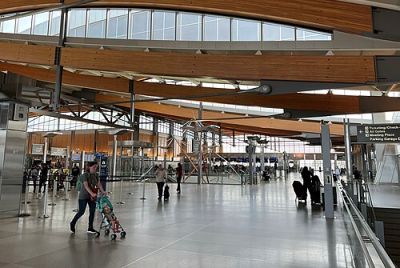
For travelers whose anxiety extends beyond the flight itself, easing into aviation environments step by step can help build tolerance over time. Therapists recommend starting small, such as spending time at an airport without the pressure of catching a flight, observing the normal rhythms of travelers and staff, before eventually working up to shorter flights and, eventually, longer ones.
5. Skip the alcohol and stay hydrated
While it might seem like a drink could take the edge off pre-flight nerves, aviation health experts caution against using alcohol as a coping mechanism. Not only does it fail to reduce underlying anxiety, it can intensify discomfort related to cabin pressure changes and accelerate dehydration, both of which can make flying feel worse rather than better. Drinking water consistently throughout the flight is generally recommended instead.
6. Talk to the flight crew
Letting flight attendants know about your anxiety before takeoff can provide meaningful reassurance during the flight. Crew members are trained to help passengers understand normal in-flight phenomena, including turbulence, and can offer context that helps separate expected sensations from genuine cause for concern.
7. Choose your seat strategically
Where you sit can meaningfully affect how a flight feels. According to flight attendant advice shared with Travel Bulletin, thinking through seating in advance is a simple but effective step nervous flyers can take. "Taking a few minutes to make a seating strategy for yourself can definitely help ease," one flight attendant said, noting that some travelers feel calmer with an aisle seat's extra space and easier access, while others on shorter flights prefer a window seat to visually track the flight's progress.
8. Prepare for turbulence in advance
Because unexpected turbulence often triggers acute anxiety, knowing what to expect ahead of time can reduce the shock factor. Some travelers use apps designed to forecast turbulence along a specific flight path, allowing them to mentally prepare for bumpy stretches rather than being caught off guard mid-flight.
9. Focus on the destination, not the journey
Shifting mental focus away from the mechanics of flying and toward the purpose of the trip can help reduce in-flight anxiety. As one travel expert put it in comments to CNN Underscored, "Focus on the destination, not the journey," a reframing technique that redirects attention toward the positive experience awaiting at the end of the flight rather than the discomfort of the process itself.
10. Consider professional therapy if self-help strategies aren't enough
For travelers whose anxiety persists despite trying relaxation techniques and other self-directed strategies, mental health professionals recommend seeking therapy specifically focused on flight-related fears. Structured approaches such as cognitive behavioral therapy and exposure-based treatment, including virtual reality exposure therapy, have become increasingly accessible in recent years and are designed to help travelers address the underlying psychological patterns driving their fear, rather than simply managing symptoms in the moment.
A manageable, common condition
Experts stress that fear of flying, while common, does not have to be permanent or untreatable. With a combination of practical strategies, physical coping techniques and, when necessary, professional support, many travelers who once avoided air travel entirely have found ways to manage their anxiety enough to fly comfortably. As mental health professionals who specialize in the condition often note, the goal isn't necessarily to eliminate all discomfort, but to build enough tools and self-awareness to make air travel accessible again — opening the door to destinations and experiences that flight anxiety might otherwise put out of reach.
© Copyright 2026 IBTimes AU. All rights reserved.
- Recommended For You