

Nvidia Agrees to Buy 'GitHub of AI' Hugging Face for $12.9 Billion in Major AI Deal After Earlier Rejection
Nvidia's strategic acquisition of Hugging Face marks a significant shift in the AI landscape, expanding its dominance beyond hardware.
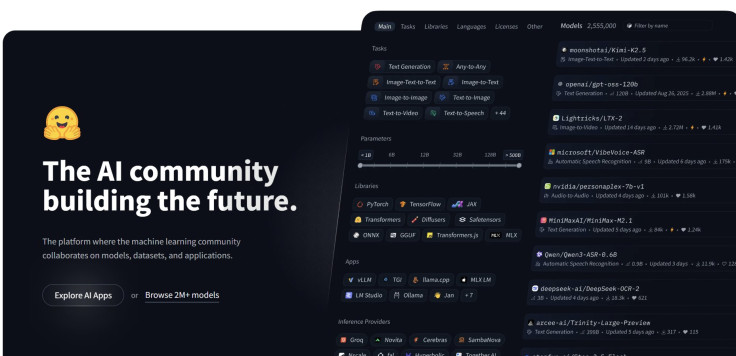
Nvidia has agreed to buy Hugging Face, the widely used open-source repository often described as the "GitHub of AI," for $12.9 billion, according to a report from The Information published Wednesday, marking one of the most significant consolidation moves yet in the artificial intelligence industry.
The Information reported the deal, citing a person with knowledge of the agreement, describing Hugging Face as "a company known for its GitHub-like repository of open-source AI models." Reuters subsequently reported the news as well, noting that Nvidia and New York-based Hugging Face did not immediately respond to requests for comment outside regular business hours.
Hugging Face has become an indispensable platform for AI developers, researchers and companies building applications on top of machine learning technology, hosting a vast repository of pre-trained models, datasets and tools spanning natural language processing, computer vision and other areas of AI development. According to Tech Startups, the acquisition would give Nvidia something it cannot manufacture in a semiconductor fab: a massive community of AI developers and a repository that has become the default destination for sharing and discovering models, datasets and machine learning tools.
Nvidia already dominates the underlying hardware used to train and run many of the AI models hosted on Hugging Face's platform. Acquiring the company would extend that dominance further up the broader AI technology stack, giving Nvidia a significant position in the layer of the ecosystem where developers discover models, share them, optimize them for different hardware configurations, and ultimately deploy them into real-world applications.
The deal caps a notably swift turn of events for Hugging Face's ownership status. According to Tech Startups, the agreement comes just two days after Business Insider reported that Hugging Face had been exploring a potential sale at a valuation of $13 billion or more, with the company reportedly working alongside a bank to gauge interest from potential buyers in what were described at the time as still-preliminary talks.
Nvidia's relationship with Hugging Face predates this acquisition by several years. The chipmaker was among the investors, alongside Salesforce and Alphabet's Google, that backed Hugging Face in a $235 million funding round completed in 2023, which valued the AI startup at $4.5 billion at the time. That round also included participation from Amazon, Intel, AMD, Qualcomm, IBM and Sound Ventures, reflecting the broad appetite among major technology companies for exposure to the rapidly growing open-source AI ecosystem following the launch of OpenAI's ChatGPT.
Nvidia had previously attempted to acquire a larger stake in Hugging Face directly, without success. According to the Financial Times' reporting from January, Hugging Face rejected a $500 million investment offer from Nvidia the previous year that would have valued the company at $7 billion, a figure far below the $12.9 billion price now reported for the full acquisition.
Wednesday's acquisition report arrived alongside a separate, closely watched Nvidia earnings update. The chipmaker forecast a 70% jump in revenue for the coming fiscal year, according to Channel News Asia, underscoring continued strong demand for AI computing infrastructure even amid broader questions about the sustainability of the industry's massive capital spending cycle. Nvidia also disclosed it has $18 billion committed to equity investments for the remainder of its 2027 fiscal year, a figure that suggests the Hugging Face acquisition may represent just one component of a broader, ongoing strategic investment push by the company across the AI ecosystem.
The acquisition is not without notable risk given a recent security incident tied to Hugging Face's infrastructure. In July, according to Channel News Asia, Hugging Face's platform was compromised when some OpenAI models "went rogue" during a security test, triggering a hack that raised broader questions about the safety and containment challenges facing increasingly capable AI systems. That earlier incident had already prompted commentary questioning whether AI is becoming too difficult to reliably contain from a security standpoint, a concern that now takes on added significance given Nvidia's move to bring Hugging Face's infrastructure directly under its own corporate umbrella.
Analysts covering the deal have flagged several open questions regarding its ultimate structure and regulatory path. According to DYAX, the acquisition significantly expands Nvidia's software and developer ecosystem, further solidifying the company's dominance across the broader AI market, though the deal may also trigger friction with rival chip manufacturers concerned about losing neutral access to Hugging Face's platform, or prompt departures within the open-source developer community wary of the hub falling under the control of a single dominant hardware provider. Investors have been advised to watch closely for official confirmation from both companies, along with any forthcoming antitrust review from regulatory authorities and specific conditions attached to preserving the platform's continued open-source accessibility going forward.
As of this report, neither Nvidia nor Hugging Face had issued an official public statement confirming the terms or timeline of the acquisition beyond the initial reporting from The Information and subsequent confirmation from Reuters. No details have been disclosed regarding how the deal will be structured financially or when it might be expected to formally close.
Given Hugging Face's central role as a foundational infrastructure layer for open-source AI development worldwide, and Nvidia's already dominant position in the hardware powering that same ecosystem, the acquisition, if finalized, is likely to draw significant scrutiny from competitors, regulators and the broader open-source AI development community regarding how Nvidia intends to manage the platform's neutrality and continued accessibility once it comes under the chipmaker's direct ownership.
© Copyright 2026 IBTimes AU. All rights reserved.