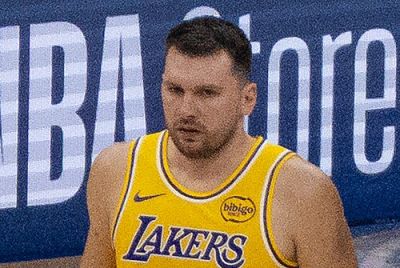
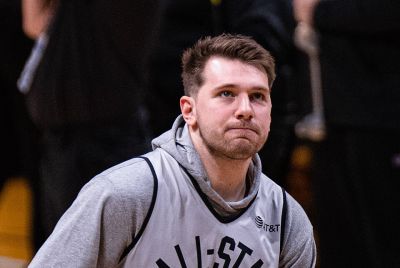
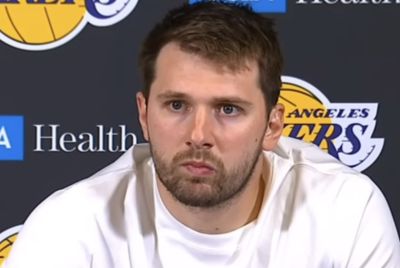
Luka Doncic Injury Update: Start Hamstring Rehab Enters Key On-Court Phase as Lakers Push for Playoff Survival
LOS ANGELES — Nearly four weeks after suffering a Grade 2 left hamstring strain, Los Angeles Lakers superstar Luka Doncic continues a cautious rehabilitation protocol focused on controlled on-court movement and progressive loading, with no firm timetable for return as the team battles through its first-round playoff series against the Houston Rockets.

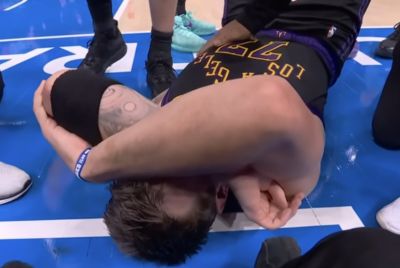
The Slovenian guard, who injured his hamstring late in a blowout loss to the Oklahoma City Thunder on April 2, remains listed as out indefinitely. Coach JJ Redick confirmed this week that Doncic has advanced beyond standstill drills to light on-court activity, marking a significant step in his recovery from the partial muscle tear.
Medical experts describe a Grade 2 hamstring strain as involving noticeable fiber disruption without a complete rupture, typically requiring four to six weeks for full recovery. Doncic's aggressive approach included traveling to Madrid shortly after the injury for specialized regenerative treatments, including platelet-rich plasma and stem cell injections under the care of physicians linked to his former club, Real Madrid.
Those interventions aimed to accelerate healing, potentially compressing the standard timeline. As of late April, sports medicine specialists like Dr. Jesse Morse estimated a possible return window of 10 to 14 days from the point when meaningful on-court movement begins, placing a potential comeback in mid-to-late May if progress holds.
Redick provided the most recent public update, noting Doncic "was able to move today a little bit on the court. Most of the stuff has been standstill. He's progressing." The coach stressed there is still no timeline, echoing reports from ESPN's Shams Charania that the recovery path remains slow. Doncic has not yet progressed to one-on-one work or full-speed scrimmaging.
The protocol follows a standard phased return-to-play model for hamstring injuries in elite athletes. Phase one emphasized protection and controlled mobility, including rest, compression, physical therapy and the European injections. Phase two has introduced light jogging, directional changes and basketball-specific movements at sub-maximal effort. Subsequent phases will incorporate sprinting, jumping, cutting and contact before clearance for game play.
Lakers medical staff monitor metrics such as muscle strength symmetry, flexibility and pain-free range of motion. Hamstring strains carry high re-injury risk — often 20-30% in professional sports — if athletes return prematurely, particularly in a high-usage player like Doncic who relies on explosive first steps and deceleration.
Doncic rejoined the team in Los Angeles ahead of the playoffs but has not traveled with the squad for road games against Houston. His presence on the bench has provided intangible leadership, yet the Lakers have leaned heavily on LeBron James, Austin Reaves (also recovering from an oblique strain) and supporting cast members.
Expectations point to Doncic missing the entire first-round series. Even if the Lakers advance, multiple reports indicate he is unlikely to be available for the start of the Western Conference semifinals, with a more realistic target around Games 3 or 4 of a potential second-round matchup. Six weeks from the April 2 injury date would land in mid-May.
The injury occurred at a critical juncture. Doncic had been playing at an MVP-caliber level, powering the Lakers to a strong late-season surge. His absence has reshaped playoff dynamics in the Western Conference, forcing Los Angeles to adapt without its primary playmaker and leading scorer.
Team officials and medical experts weigh the long-term risks against short-term playoff ambitions. Rushing a return could jeopardize Doncic's availability for future seasons or lead to chronic issues. Hamstring injuries have historically sidelined stars for extended periods, with re-aggravation often extending timelines significantly.
Doncic's work ethic and competitive drive have been highlighted throughout the process. Sources describe him attacking rehab aggressively while remaining in good spirits. His agent, Bill Duffy, confirmed the European trip was a collaborative decision involving Lakers doctors and independent specialists.
Broader implications extend to the Lakers' roster construction and future planning. The team traded for Doncic earlier in the season in a blockbuster move, banking on his superstar talent to elevate the franchise. His prolonged absence tests depth and underscores the fragility of championship contention when key pieces go down.
Fans and analysts track every update closely. Social media buzzes with speculation about potential return dates, fueled by optimistic interpretations of practice footage and vague coaching comments. Yet insiders maintain patience is essential.
For a 27-year-old in his prime, full recovery remains highly probable with proper management. Modern sports medicine, including the biologics Doncic received, has improved outcomes for soft-tissue injuries. Strength and conditioning programs tailored to basketball movements will play a pivotal role in the final rehab stages.
As the Lakers navigate the playoffs without their All-NBA talent, focus shifts to collective resilience. James has shouldered a heavier load, while younger players step into expanded roles. A deep run without Doncic would be impressive; his eventual return could provide a massive boost for later rounds.
Looking ahead, the Lakers' medical staff will continue daily assessments. Progression to non-contact 3-on-3 or 5-on-5 work will signal the next major milestone. Only after clearing sport-specific testing, including sprint times and change-of-direction drills, will Doncic receive medical clearance.
The organization emphasizes a conservative approach. "We're going to do what's best for Luka long-term," Redick has reiterated in various forms. That philosophy prioritizes sustainable health over rushed availability.
Doncic's injury serves as a reminder of basketball's physical demands. Even superstars face setbacks, and recovery protocols balance science, patience and individual response. For now, the focus remains on incremental gains — more fluid movement, greater confidence in the hamstring and steady buildup toward basketball activities.
Whether Doncic returns this postseason or begins the 2026-27 season fully healthy, his current protocol reflects best practices in elite athlete care. The basketball world watches, hoping the star's dedication yields a strong comeback when the moment is right.
© Copyright 2026 IBTimes AU. All rights reserved.
- Recommended For You