Luka Doncic Injury Update: How Well Can Doncic Play in the Playoffs After Hamstring Injury?
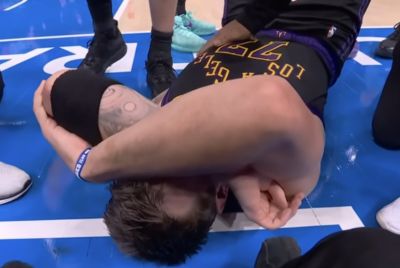
LOS ANGELES — Luka Doncic remains sidelined with a Grade 2 left hamstring strain suffered on April 2, casting uncertainty over whether the Los Angeles Lakers superstar can return to form quickly enough in the 2026 NBA playoffs to deliver his trademark dominance after missing the end of the regular season and the start of the first-round series against the Houston Rockets.

The Slovenian guard, averaging 33.5 points, 8.3 assists and 7.7 rebounds this season, exited a blowout loss to the Oklahoma City Thunder in visible discomfort and was diagnosed via MRI with a partial tear of muscle fibers. A Grade 2 strain typically requires four to six weeks of recovery, though aggressive treatment protocols, including specialized injections received in Spain, have fueled cautious optimism for a potential return in early to mid-May if the Lakers extend their series.
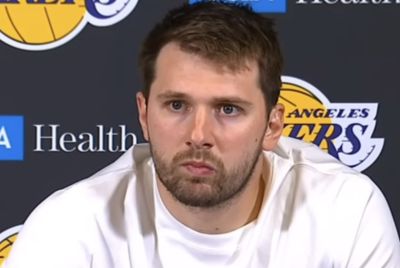
As of April 20, Doncic has not resumed running and continues rehabilitation in Los Angeles after returning from Europe, where he sought advanced regenerative care. Lakers coach JJ Redick described him as "out indefinitely" with no firm timeline, and the team has no expectation of his availability during the opening round against the Rockets. Re-evaluation is expected in the coming week, but sources indicate a realistic target around May 1 at the earliest — roughly four weeks post-injury.
The timing poses a significant challenge. The Lakers, seeded No. 4 in the West, opened their series without Doncic and co-star Austin Reaves, who is dealing with an oblique injury. Historical data on similar hamstring strains in the NBA shows an average absence of about 35-40 days, with elevated re-injury risk upon premature return. Players rushing back from Grade 2 strains have faced recurrence rates as high as 70 percent in some analyses, potentially sidelining them for the remainder of the postseason.
Medical experts caution that hamstrings play a critical role in explosive movements, deceleration and knee stability — all essential to Doncic's game of step-back threes, drives to the rim and relentless playmaking. A non-contact injury like this often stems from fatigue or compensatory mechanics, and Doncic had previously missed time with left hamstring issues earlier in the season. Rushing his return could compromise not only the current playoffs but long-term durability for a player who has carried heavy minutes throughout his career.
Despite the setback, encouraging signs have emerged. After consulting with Lakers doctors and his personal medical team, Doncic pursued treatment in Spain aimed at accelerating healing. He was spotted courtside at a Real Madrid EuroLeague game alongside Novak Djokovic and spent time with family in Slovenia before returning to Los Angeles. Redick noted that Doncic was "in good spirits" upon landing, though on-court activity remains limited.
The question lingers: Can Doncic play well in the playoffs right after a hamstring injury? History suggests caution. Recent cases show players returning from similar strains often need several games to regain full explosiveness, rhythm and confidence. Reduced burst can limit lateral quickness on defense and finishing ability at the rim, areas where Doncic already compensates with elite basketball IQ and craftiness rather than pure athleticism.
In past postseasons, Doncic has elevated his game dramatically, posting historic scoring and playmaking numbers even while managing various ailments. His ability to process the floor at high speed and manipulate defenses with pace changes has masked physical limitations before. However, a fresh hamstring strain demands careful load management. Minutes restrictions, monitored explosiveness testing and progressive on-court work would likely precede any return, with medical staff prioritizing avoidance of re-tear over immediate impact.
Lakers fans and analysts debate the risk-reward. Pushing Doncic back for a potential Game 6 or 7 against Houston could swing a tight series, but re-injury might end his postseason entirely and affect future campaigns. Conservative management — targeting a second-round return if Los Angeles advances — aligns with long-term championship aspirations, especially given the physical toll of deep playoff runs.
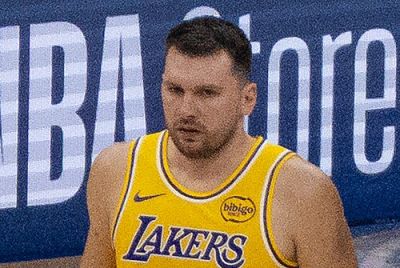
Without Doncic, the Lakers have leaned on LeBron James, who continues defying age with strong play, alongside supporting pieces. Yet the drop-off in creation and scoring punch is evident. Houston, led by a young core and potentially Kevin Durant if healthy, presents a tough matchup with athletic wings capable of exploiting any Lakers vulnerabilities.
Doncic's playoff pedigree remains elite. In previous appearances, he has delivered signature moments, including deep runs with the Dallas Mavericks before his trade to Los Angeles. His ability to perform at an MVP level even when not 100 percent stems from mental toughness and skill versatility. If cleared, expect initial minutes restrictions ramping up as comfort grows, with focus on protecting the injury through smart positioning rather than explosive drives.
Broader context highlights hamstring strains as notoriously tricky in the NBA. Recovery involves not just tissue healing but rebuilding strength, flexibility and neuromuscular control. Advanced therapies like the injections Doncic received can promote faster regeneration, but they do not eliminate the need for gradual ramp-up. Sports scientists emphasize that returning too soon often leads to compensatory injuries elsewhere, such as the opposite leg, lower back or knee.
For a player of Doncic's stature and usage rate, the stakes are magnified. At 27, he sits in his prime, with MVP-caliber production and leadership that transformed the Lakers' outlook after arriving via trade. Missing significant playoff time would sting, yet protecting his future remains paramount for a franchise chasing another title.
As the series unfolds, all eyes remain on daily updates from the Lakers' medical staff. Re-evaluation will assess range of motion, strength symmetry and pain-free movement before any on-court progression. Optimistic scenarios point to a mid-to-late first-round cameo if the series extends; realistic projections lean toward second-round availability with full health.
Doncic's competitive fire suggests he will push boundaries to return as soon as safely possible. Teammates and coaches have praised his work ethic in rehab, echoing past comebacks from injury. Whether he can recapture All-NBA form immediately after clearance depends on how the hamstring responds to playoff intensity — the speed, physicality and emotional demands that separate regular-season basketball from the postseason.
In the interim, the Lakers must find ways to compete without their primary offensive engine. Adjustments in scheme, increased roles for others and defensive focus will define their early playoff survival. Should they advance, a healthy or near-healthy Doncic could dramatically shift momentum in later rounds.
The broader NBA landscape watches closely. Hamstring management has become a league-wide priority as schedules intensify and stars log heavy minutes. Doncic's case adds to ongoing conversations about player load, recovery science and the balance between short-term gains and long-term health.
For now, the Lakers proceed with caution. Doncic's return, whenever it occurs, will be measured against medical benchmarks rather than calendar pressure. Fans hope the superstar's basketball genius and resilience allow him to contribute meaningfully once cleared, but experts stress patience to avoid turning a manageable strain into a season-ending ordeal.
As April 20 updates confirm ongoing rehab without running, the narrative remains fluid. The coming days and potential series extension will determine if Luka Doncic can indeed play — and play well — in these playoffs after his hamstring setback. For a player who has repeatedly risen to the moment, the opportunity to do so again hangs in delicate balance between ambition and anatomy.
© Copyright 2026 IBTimes AU. All rights reserved.
- Recommended For You