

Fervo Energy Stock Jumps 12 Percent After Securing Its Largest Ever Power Deal With Google
Fervo Energy's Largest-Ever Supply Agreement with Google Boosts Stock Amid Market Struggles
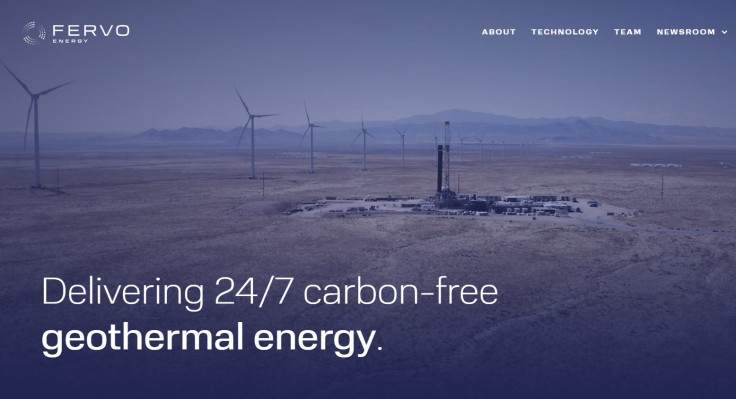
Shares of Fervo Energy surged more than 12% Tuesday after a report revealed the geothermal power developer has struck its largest-ever supply agreement with Google, a deal that stands as a direct rebuttal to investor concerns raised following the company's most recent earnings report.
The stock traded at 17.32 dollars, up 1.94 dollars, or 12.62%, as of 9:42 a.m. Eastern time on the Nasdaq, having climbed as much as 14.3% in pre-market trading. The rally came even as the broader U.S. market struggled Tuesday, with the S&P 500 down about 0.5%, the Dow Jones Industrial Average off roughly 0.6%, and the Nasdaq Composite declining about 1%, according to Investing.com, underscoring that Fervo's move was driven by company-specific news rather than a broader sector rotation.
According to a Wall Street Journal report cited by Investing.com, Fervo has agreed to supply nearly 400 megawatts of electricity to Google from its Cape Station project in southwestern Utah, with deliveries to the technology giant beginning in 2028. The Houston-based company is spending more than 2 billion dollars to build out Cape Station, which it has positioned as what it expects to become the world's largest next-generation geothermal development.
The agreement builds on an already deepening relationship between the two companies. Fervo had previously disclosed a broader 3-gigawatt framework agreement with Google, and the company now holds a contracted backlog totaling 7.2 billion dollars across utilities and corporate energy buyers, according to Investing.com's reporting. Notably, peer renewable energy companies including Ormat Technologies did not share in Tuesday's rally, further reinforcing that the catalyst was specific to Fervo's newly announced deal rather than a broader lift for the geothermal or clean energy sector.
Tuesday's rally comes at a technically significant moment for the stock, which had fallen roughly 26% over the prior 20 trading sessions heading into the announcement. That decline followed Fervo's second-quarter earnings report, released Aug. 12, in which the company posted a net loss of 55.9 million dollars alongside capital expenditures of 226.5 million dollars for the quarter. Despite the loss, Fervo reported adjusted earnings per share of a positive 38 cents, sharply ahead of the 7-cent consensus estimate analysts had projected, according to data compiled by TipRanks.
The company has continued to attract largely positive coverage from Wall Street analysts even amid the stock's recent volatility. J.P. Morgan reiterated a buy rating on Fervo on Aug. 17, and Bernstein separately maintained its own buy rating the same day, according to TipRanks. Baird has taken a more cautious stance on valuation specifically, lowering its price target on the stock to 35 dollars from 50 dollars following the second-quarter results while still maintaining an outperform rating, according to StockAnalysis.com.
Fervo, founded in 2017 by Jack Norbeck and Timothy Latimer, builds and operates geothermal power facilities using enhanced geothermal system technology, an approach that uses techniques including horizontal drilling and distributed fiber optic sensing to generate electricity from geothermal resources in locations that would not traditionally support conventional geothermal development. The company went public earlier this year, raising roughly 2.2 billion dollars in its initial public offering to help fund the Cape Station project and expand what it has described as a broader 42-gigawatt development pipeline.
Fervo has separately partnered with Nvidia and the Pacific Northwest National Laboratory on a digital twin platform designed to accelerate geothermal development using artificial intelligence and accelerated computing, part of a broader push by the company to position itself at the intersection of clean energy development and the surging electricity demand tied to AI data center growth. Tuesday's Google agreement adds another major technology company to that growing list of corporate energy customers as demand for reliable, around-the-clock power sources continues to climb alongside AI infrastructure buildout across the industry.
© Copyright 2026 IBTimes AU. All rights reserved.