Will Chipotle Succeed in Korea? Hours-Long Lines Greet Its First Asian Store, but the Real Test Lies Ahead
The US fast-casual chain is relying on a local joint venture, a largely unchanged menu and planned expansion to turn launch-week curiosity into repeat business.

SEOUL — Chipotle Mexican Grill's first restaurant in Asia has drawn hours-long lines and a wave of social media attention since opening in Seoul's Gangnam district on September 2, but whether the U.S. chain will succeed in South Korea is still an open question that early crowds alone cannot answer.
The 96-seat restaurant sits at 423 Gangnam-daero in Seocho District, a short walk from Exit 10 of Gangnam Station. It is run through S&C Restaurants Holdings, a joint venture in which Big Bite Company, an affiliate of Sangmidang Holdings, holds 51% and Chipotle holds 49%, according to the Korea Herald. Sangmidang, formerly SPC Group, is the conglomerate behind Paris Baguette and Korean operations of Baskin-Robbins, Dunkin' and Shake Shack. The deal is Chipotle's first-ever joint venture for international expansion and gives S&C exclusive rights to run the brand in Korea and Singapore.
Demand at the start was intense. Nearly a week after the opening, customers were still being told to expect waits of up to two or three hours, and about 150 people were counted in line by 11 a.m. on one Sunday, stretching more than 50 meters, according to local reporting. For some in the queue, novelty was a large part of the draw. "We've got to keep up with what's trending," said university student Kim Min-ju, who had never tried Chipotle before. "So we thought, why not give it a try? We were curious."
The build-your-own ordering process itself became a talking point. The Korea Times reported that Korean social media quickly filled with explainers on how to order without slowing the line, and with comparisons to Subway. "More nerve-racking than Subway," one blogger wrote. Some commenters asked Chipotle to introduce kiosks, reflecting discomfort with ordering while staff and other customers wait, the newspaper reported.
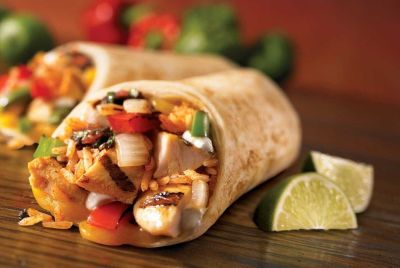
Chipotle is betting that its formula travels. The Seoul menu matches the U.S. operation, with burritos, bowls, tacos, quesadillas and salads built from a choice of proteins and a line of about 50 ingredients, according to Korea JoongAng Daily. Main meals are priced from 12,800 won to 14,800 won depending on the protein, Stripes Korea reported. Standard additions such as rice, beans, salsa, cheese and lettuce carry no extra charge. Sangmidang executive Hur Hee-soo said prices will not vary by menu format, so a burrito, bowl, tacos or salad with the same protein cost the same. Most ingredients are sourced in Korea, Chipotle Chief Executive Scott Boatwright told reporters at a press event. "Most of the ingredients that you'll have in this restaurant today were sourced here in Korea," he said.
Hur said the operator deliberately resisted the urge to adapt the brand for local tastes. "When we review a new brand, the first question we ask is whether it can survive in Korea while keeping its originality," he said. "With Chipotle it was clear. The ingredients, the cooking methods and the experience delivered through them are the core of the brand." On the pricing model, he added, "Chipotle is not a brand that presents the right answer. We show the ingredients transparently and leave the choice to the customer."
The market backdrop is favorable. According to the research firm Mintel, 42% of South Korean consumers had eaten Mexican food in the previous three months, and another 37% said they had not but were interested in trying it, TIKR reported. A Mintel analyst noted that South Korea, along with Singapore, Chipotle's next planned stop, attracts well-traveled consumers open to international food brands. Boatwright described the Korean customer in similar terms. "We know that this is a very sophisticated market, a very dynamic consumer, consumers who care deeply about what they put in their bodies," he said. "They want to understand the quality of the ingredients, where those ingredients are sourced, how those ingredients are prepared."
Chipotle will not have the field to itself, however. South Korea already has a Mexican-inspired fast-casual chain, Cuchara, and Korea JoongAng Daily noted that Seoul is a market where domestic operators already sell build-your-own bowls at lower price points. Social media reviewers have offered mixed impressions. One posted that a portion at around 15,000 won felt reasonable for the location, while noting that some online commenters say portions are smaller than in the United States. Such posts are individual opinions rather than measured consumer data.
Chipotle itself has been careful to frame success in terms other than one store's crowds. Nate Lawton, the company's chief business development officer, said Korea's importance lies in building a template. "Korea is important because we're not simply opening restaurants — we're building a model for how Chipotle can enter and ultimately scale in a new region while protecting what makes the brand special," Lawton said. "The real measure of Korea's success won't be the performance of a single restaurant," he said, but "whether we can build a repeatable, scalable model." Boatwright echoed that view. "Korea is really more than just our first market in Asia. It will help establish a standard in how we grow across the region," he said.
The next steps will show more. S&C plans a second and third Seoul restaurant, both directly operated, by the end of the year, followed by a Singapore location in 2027, the Korea Herald reported. Those openings, and whether traffic holds once the initial excitement fades, will be a better gauge than the first weeks of lines. None of the coverage reviewed cited sales figures for the Gangnam restaurant, and opening-week queues on their own do not show how demand will hold over time.
For now, the honest answer is that the early signs are strong but the verdict is not in. Chipotle has drawn the attention and the crowds a brand launch dreams of, and it has a well-resourced local partner and a receptive market. Whether it can turn curiosity into repeat business at a price point that competes with cheaper local rivals, while expanding beyond a single high-profile address, is what will determine if Korea becomes the reference market Chipotle hopes for. This article is a report on business developments and is not investment advice.
© Copyright 2026 IBTimes AU. All rights reserved.
- Recommended For You