

Kate Middleton Had To Teach Prince William How To Give Their Kids A Piggyback, New Royal Book Claims
New book reveals Catherine's influence on William's parenting style and royal family dynamics
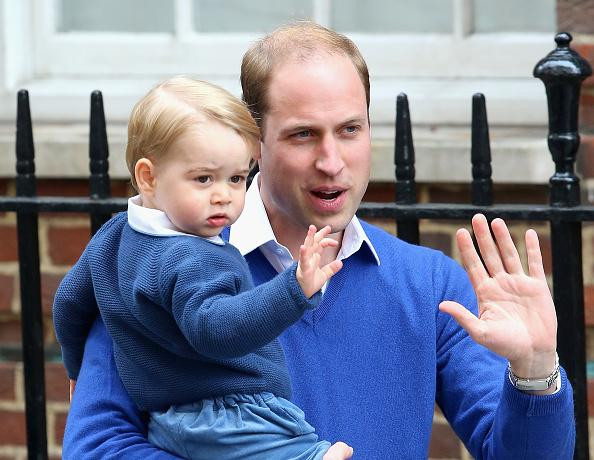
LONDON — Prince William had to be taught by his wife, Catherine, Princess of Wales, how to give his children a piggyback because he never received one himself growing up, according to new claims from former royal household staff featured in an upcoming book.
The details are included in "Yes Ma'am: The Secret Life of Royal Servants," a book by author Tom Quinn that draws on interviews with people who worked inside royal households, offering a rare glimpse into the private family dynamics behind palace walls.
According to a former Kensington Palace maid quoted in the book, Catherine had to walk her husband through basic parenting gestures that many families take for granted, including something as simple as carrying a child on his shoulders.
"Kate had to explain many of the things that parents outside the royal family do with their children as a matter of course," the former maid told Quinn. "She had to show him how to give the children a piggyback, for example. William said very quietly, 'My father never gave me a piggyback.'"
The remark, if accurate, offers a window into the emotional distance that has long been described in accounts of William's own childhood, when royal duties and public appearances often took precedence over conventional family life. William and his younger brother, Prince Harry, were raised under near-constant public scrutiny, accompanying their parents, King Charles III and the late Princess Diana, on numerous official tours from an early age.
That upbringing, according to the accounts gathered in Quinn's book, appears to have shaped both William's approach to fatherhood and his temperament more broadly. An extract published in The Times cited another former staff member describing both Charles and William as prone to impatience.
"[King Charles and William] both get irritated very quickly. They are very picky. It comes naturally to them," the former staff member said.
In such moments, according to the same account, it is Catherine who often serves as a stabilizing presence within the family. A source close to the household suggested that role has become an essential part of the couple's dynamic since their 2011 wedding.
"I don't know where William would be without Kate — she hasn't had everything done for her throughout her life, so she calms him down when he gets a bit fractious," the insider said, adding that "she sometimes has to be treated as her fourth child."
The claims add to a broader portrait offered throughout the book of Catherine as someone who navigated the unfamiliar customs and rigid hierarchies of royal life with patience and discretion, rather than attempting to immediately reshape them to her own preferences. A former Kensington Palace employee described her approach to adapting to palace culture in similar terms.
"Kate is someone who slowly and carefully absorbs the atmosphere of a place, the relationship between people and the rules," the employee told Quinn. "She doesn't jump in straight away and try to change everything to suit her way of thinking. She bides her time and is very intelligent and intuitive about other people, what they do and how they behave."
That same source said Catherine received guidance not only from William, who reportedly wanted to help her avoid some of the difficulties his mother, Diana, faced after marrying into the royal family, but also from household staff themselves.
"She was also coached — not just by William, who wanted Kate to avoid the problems his mother had encountered, but also by the staff," the source said. "Kate was always happy to accept advice both from the lower staff, with whom she got on very well, and from the courtiers, even though some of them were initially very snooty about her."
The dynamic described in the book reflects a period of significant adjustment for Catherine, who began her relationship with William in 2003 while both were students at the University of St Andrews in Scotland. The couple married on April 29, 2011, at Westminster Abbey in a ceremony watched by a global television audience, after which Catherine took the title Her Royal Highness The Duchess of Cambridge. William, meanwhile, was granted the titles Duke of Cambridge, Earl of Strathearn and Baron Carrickfergus by his grandmother, the late Queen Elizabeth II.
The couple's titles changed again more than a decade later. On September 9, 2022, following the death of Queen Elizabeth II and Charles's accession to the throne, William was formally invested as Prince of Wales, a title that made Catherine the Princess of Wales — a title previously held by William's mother, Diana, until her death in a car crash in Paris in August 1997 at the age of 36.
William and Catherine now have three children together: Prince George, Princess Charlotte and Prince Louis, all of whom have grown up largely out of the harsh media spotlight that defined their father's own early years, a shift widely attributed to the couple's deliberate efforts to shield their children from the level of public exposure William and Harry experienced as boys.
Quinn's book joins a growing body of published accounts from former royal staff members offering insight into life inside Britain's royal households, a genre that has proliferated in recent years as former employees, biographers and royal commentators continue to produce detailed portraits of the family's private dynamics. Buckingham Palace and Kensington Palace do not typically comment on individual claims made in such books, and neither William nor Catherine has publicly addressed the specific anecdotes attributed to them in "Yes Ma'am: The Secret Life of Royal Servants."
The book adds to renewed public interest in the Wales family's private life this year, amid continued scrutiny of the broader royal family's internal relationships following years of public tension between William and his brother, Prince Harry, who has separately made a series of claims about their upbringing and relationship in his own memoir and subsequent interviews.
© Copyright 2026 IBTimes AU. All rights reserved.