Wordle No. 1756 Solved: 'CAROM' Emerges as April 10 2026 Answer in Tricky Billiards-Themed Puzzle
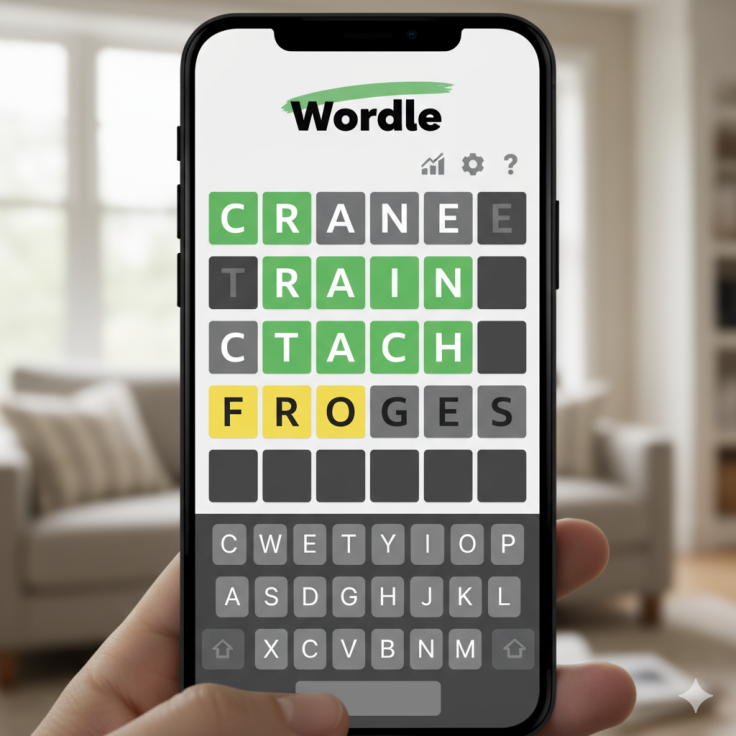
NEW YORK — Wordle fans faced a moderately challenging test Friday as The New York Times' popular daily word game delivered puzzle No. 1756, with the answer "CAROM" — a term from billiards describing a shot where the cue ball ricochets off two others — leaving many players scratching their heads before securing the win in four to six guesses.
The solution, revealed at midnight in each time zone on April 10, 2026, continued the game's streak of mixing everyday vocabulary with occasional niche or less-common words that test solvers' knowledge of synonyms and specialized terms. "Carom" functions as both a verb meaning to bounce or rebound at an angle and a noun for the billiards maneuver itself, according to Webster's New World College Dictionary. It contains two vowels (A and O), no repeated letters, and starts with C while ending in M — details that proved helpful only after several strategic guesses narrowed the field.
Many players described the puzzle as harder than average. Wordle Review editor notes and community discussions on platforms like Reddit highlighted that while the word includes relatively common letters, its specific meaning tripped up those unfamiliar with cue sports or ricochet terminology. Hints circulating online included "ricochet," "bounce off," or references to a billiards shot, steering solvers away from more obvious five-letter candidates.
One solver recounted starting with "RAISE" and "TOUCH," then progressing through "CARGO" and "CAROL" before landing on "CAROM" in five guesses. The grid showed early yellow hits on the A and R, with greens locking in the C, A, R, O and M positions progressively. Others who opened with strong starters like "SLATE" or "CRONE" reported narrowing possibilities quickly to just a handful of options, including "CAROM" as the sole remaining fit.
The New York Times' official Wordle Review for puzzle No. 1756 noted the word's relative obscurity outside certain contexts, yet praised its fit within the game's guidelines of common English words without proper nouns or obscure slang. Solver statistics shared in community threads suggested an average of around 4.2 to 4.8 guesses, slightly above the typical 3.8 to 4.0 for easier days, confirming the "moderately challenging" label many applied.
Wordle, created by Josh Wardle and acquired by The New York Times in 2022, has maintained massive popularity into 2026 with its simple premise: guess a five-letter word in six attempts, with color-coded feedback — green for correct letter and position, yellow for correct letter in the wrong spot, and gray for letters not in the word at all. The game resets daily at midnight and allows only one puzzle per day, encouraging streaks and sharing of colored grid results on social media.
For April 10's puzzle, effective strategies included prioritizing common consonants and vowels early. Starting words rich in E, A, R, I, O, T, N, S and L often provided strong information. Players who tested "C" early or explored billiards-related vocabulary gained an edge. Common pitfalls included fixating on words like "CAMEO," "CAROL" or "CARGO," which shared several letters but failed on the final M or the precise arrangement.
"Carom" joins a long list of Wordle answers that blend accessibility with occasional curveballs. Recent puzzles have featured words like "LADEN" on April 9 (No. 1755), evoking a sense of being weighed down or loaded, which many found more intuitive due to its everyday usage in phrases such as "laden with gifts." The back-to-back solutions illustrated the game's balance — one day testing common adjectives, the next venturing into verbs with sporting origins.
Community reaction on Reddit's r/wordle and r/wordlegame subreddits mixed frustration with appreciation. Some celebrated three-guess solves, posting grids with efficient letter elimination. Others vented about burning guesses on near-misses before the billiards connection clicked. One player noted using "PARSE" followed by "MARCH" to isolate "CAROM" in three attempts, calling it a satisfying brute-force finish.
The puzzle arrived amid broader discussions about Wordle's enduring appeal. With millions of daily players worldwide, the game has spawned variants, analysis tools like Scoredle, and even competitive leagues. Its accessibility — no app download required, playable directly on the NYT site or via links — has helped it remain a morning ritual for many, offering a quick mental workout alongside coffee.
Tips for future puzzles shared in light of Friday's challenge emphasized flexibility. Avoid repeating gray letters, track possible vowel placements, and consider less-common meanings of familiar letter combinations. For "CAROM," recognizing synonyms like "ricochet" or "glance" proved key for those who solved it without exhaustive trial and error.
Wordle's design limits answers to a curated list, preventing overly obscure or offensive terms while allowing occasional gems like "CAROM" that expand players' vocabularies. The April 10 solution highlighted this educational aspect, as many looked up the precise definition post-solve and discovered its roots in French "carambole," referring to the red ball in billiards.
As streaks continued or reset on Friday, players looked ahead to the weekend puzzles, wondering if the difficulty would ease or maintain the mid-week momentum. The game's anonymous nature means no global win percentages are officially published, but anecdotal evidence from hint sites and forums suggested Friday's puzzle stumped a higher-than-average percentage on early guesses.
For those who missed "CAROM," the standard advice applies: tomorrow brings a fresh start with puzzle No. 1757. Sharing results without spoilers remains a cherished etiquette, with many posting emoji grids that convey triumph or near-miss without ruining the experience for late solvers.
Wordle continues to thrive in 2026 as part of The New York Times' expanding games portfolio, which includes Connections, Spelling Bee and Strands. Its simple interface and daily cadence have made it a cultural touchstone, referenced in everything from casual conversations to late-night comedy bits when particularly tough words appear.
Whether "CAROM" landed as a quick win or a hard-fought battle, it exemplified why the game endures: a perfect mix of logic, luck and linguistic discovery packed into six rows and five columns. Players who added the billiards term to their mental dictionary walked away a bit smarter, ready for whatever five-letter challenge awaits next.
In a world of endless digital distractions, Wordle's quiet daily invitation to pause, think and guess remains refreshingly analog in spirit. Friday's moderately challenging puzzle reminded millions that sometimes the answer bounces just out of obvious reach — much like the carom shot itself.
© Copyright 2026 IBTimes AU. All rights reserved.
- Recommended For You