Scientists Map Path of Totality for August 12 Solar Eclipse Across Greenland Iceland and Spain
Explore the Path of Totality and the Science Behind Solar Eclipses
GREENLAND — Eclipse cartographer Michael Zeiler is aboard the expedition ship Ocean Explorer heading toward the fjords of Greenland, where he hopes to witness Wednesday's total solar eclipse under clear skies. His personal ambition for the event includes attempting the first observation of an aurora during totality while also watching for meteors from the ongoing Perseid shower.
Zeiler has chased total solar eclipses since 1991 and has spent more than two decades creating detailed maps that show the narrow path where the Moon's umbral shadow will completely block the Sun. "My personal mission is to combine scientific accuracy with cartographic beauty," he said. "So, I think that for an eclipse map to really work, the first requirement is it has to be correct, has to be accurate, but it also has to effectively communicate the important information."
On August 12, the Moon's shadow will sweep from the Arctic across the eastern tip of Greenland, western and northern Iceland, the North Atlantic and northern Spain before ending near the Balearic Islands around sunset. Greatest eclipse occurs over the North Atlantic west of Iceland, where totality can last up to 2 minutes and 18 seconds. The path of totality is roughly 180 to 190 miles wide at its broadest point and stretches more than 5,000 miles in length.
In Reykjavik, Iceland, partial phases begin in the late afternoon, with totality expected around 5:48 p.m. local time and lasting about one minute. In León, Spain, totality is forecast to begin near 8:28 p.m. local time and last roughly two minutes, with the Sun low in the sky. Other Spanish locations inside the path, including areas near Zaragoza, Valencia and parts of the northern coast, will experience similar late-afternoon or early-evening totality. A small section of northeastern Portugal also falls inside the path for a brief period.
Outside the narrow corridor of totality, a partial eclipse will be visible across much of Europe, parts of North Africa and portions of North America. Nearly one billion people could see at least some of the Sun covered, while roughly 15 million live within or near the path of complete coverage.
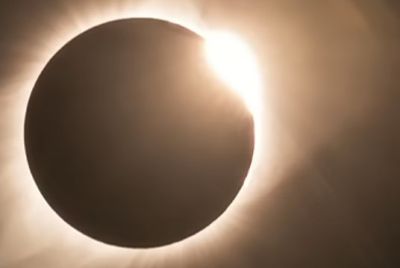
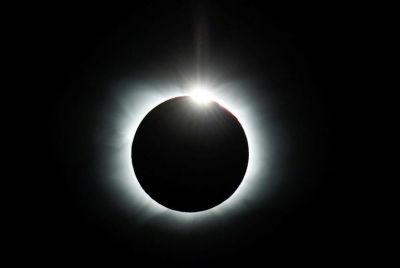
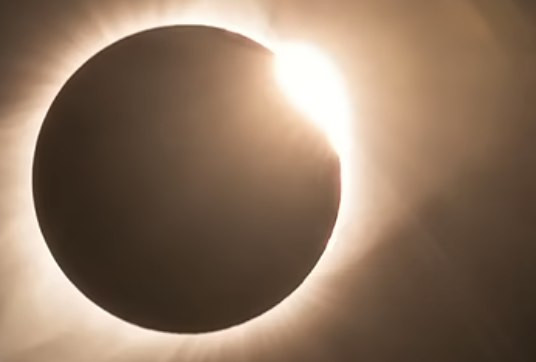
A total solar eclipse occurs when the Moon passes directly between the Sun and Earth, casting its darkest central shadow, the umbra, onto the planet's surface. Because the Moon is far smaller than Earth, that shadow is only a few hundred kilometers wide. As the Moon orbits, the umbra races across the surface, creating the moving path of totality. Viewers standing inside it experience a brief period of daytime darkness, during which the solar corona becomes visible around the black disk of the Moon.
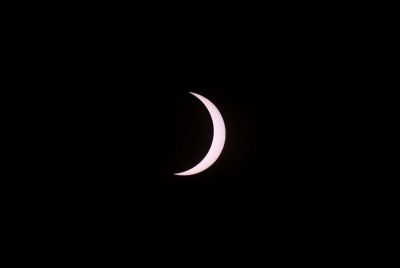
Outside the umbra, the lighter outer shadow known as the penumbra produces a partial eclipse. Even a 99 percent partial eclipse is fundamentally different from totality; the corona and the sudden darkness that define the total phase remain hidden.
Modern maps of the path rely on centuries of astronomical observation, precise measurements of the Earth-Moon-Sun geometry and computer models that incorporate the Moon's distance from Earth, its orbital position and Earth's rotation. The ancient Babylonians first recognized a repeating cycle of eclipses, now called the saros cycle, that brings similar alignments roughly every 18 years. Earth's rotation shifts the path slightly with each recurrence.
Solar physicist Alex Young, associate director for science communication in the heliophysics science division at NASA's Goddard Space Flight Center, noted that current predictions are accurate to within about a kilometer to a kilometer and a half. "We haven't gotten down to the meter scale yet," Young said. "But I think that we perhaps will eventually get down to that scale."
Refinements continue. Data from the April 2024 total solar eclipse across Mexico, the United States and Canada showed the Sun's radius was slightly different from earlier estimates, shifting the predicted edges of the path in some places. Ongoing solar missions are expected to supply additional measurements that can further tighten the calculations.
Philippe Escoubet, a space plasma scientist and spokesperson with the European Space Agency, said current models can predict the timing of an eclipse to within a minute. Only a major disruption to the orbit of the Moon or Earth, such as a large asteroid impact, would significantly alter the path, an event he described as extremely improbable.
Astronomers also account for a correction known as Delta T, which measures the small difference between Earth's predicted rotation and its actual spin over time. Earth's rotation slows gradually because of tidal interaction with the Moon and fluctuates unpredictably from year to year. That uncertainty limits highly precise predictions to roughly 3,000 years into the future and about 2,000 years into the past.
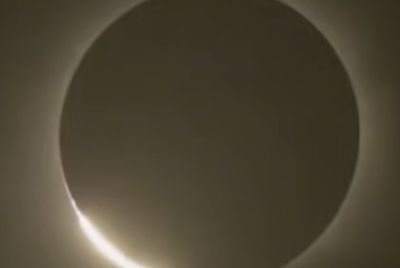
Even with these sophisticated tools, small uncertainties remain at the edges of the path. Some eclipse observers deliberately position themselves near the northern or southern limit of totality to view phenomena such as Baily's Beads, the bright points of sunlight that shine through valleys along the Moon's uneven limb just before and after totality.
Zeiler and other cartographers produce maps that highlight the central line, the northern and southern limits, and the changing duration of totality along the track. These resources help both casual viewers and dedicated eclipse chasers choose locations that balance weather prospects, accessibility and the length of the total phase.
The August 12 eclipse will be the first total solar eclipse visible from mainland Europe since 1999 and the first in Iceland since 1954. After this event, the next total solar eclipse is scheduled for August 2, 2027, when the path will cross parts of North Africa and the Middle East. A total eclipse will not return to the contiguous United States until August 23, 2044.
For those who travel into the path, the experience remains the primary draw. "It's for everyone," Zeiler said, "because during the precious moments of totality, darkness suddenly rushes over you, and in a blink of an eye, you see the sun's corona around the moon, and you see an amazing light show all around you. That's why people like us go."
Safety remains essential. Proper ISO-certified eclipse glasses are required for all partial phases. Only during the brief interval of totality, when the Sun is fully covered, is it safe to look with the unaided eye, and protective filters must be replaced the moment the bright solar surface reappears.
As the Moon's shadow approaches on Wednesday, the maps refined over decades of observation and calculation will guide observers to the places where the sky is expected to darken and the corona to appear. The science that makes those maps possible continues to improve, yet the fundamental spectacle they locate has drawn people for centuries.
© Copyright 2026 IBTimes AU. All rights reserved.
- Recommended For You