Australia Won't See a Solar Eclipse in 2026 — Here's Where to Watch the Next One in 2028 Over Sydney
Australians won't see a solar eclipse in 2026, but a major event is set for 2028.

SYDNEY — Skywatchers hoping to catch a solar eclipse in Australia in 2026 are set to be disappointed: neither of this year's two solar eclipses passes anywhere near the continent, according to eclipse-tracking data from timeanddate.com, EclipseWise and NASA.
The mix-up appears to stem from a handful of eclipses happening around the world this year — and from confusion with a much bigger event still to come. Here's what's actually happening in the sky in 2026, and where Australians should look if they want front-row seats to the next total solar eclipse.
What's really eclipsing in 2026
According to timeanddate.com's eclipse tracker, 2026 contains exactly four eclipses worldwide: two solar and two lunar. The first solar eclipse of the year, an annular eclipse on Feb. 17, sweeps across the far south of Africa, the southern tip of South America, and stretches of the Pacific, Atlantic and Indian oceans, along with Antarctica. None of that path comes close to Australian territory.
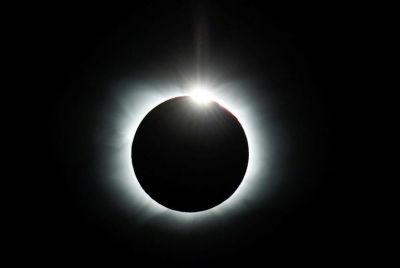
The second, and by far the more talked-about, is the total solar eclipse of Aug. 12 — the first total eclipse to cross mainland Europe since 1999. According to NASA, the path of totality runs through Greenland, Iceland and Spain, with observers in those countries able to watch the sun go completely dark for up to roughly two and a half minutes near the center of the path. Broader partial phases of that eclipse will be visible across Europe, northern Asia, North and West Africa, much of North America, and the Arctic — but again, nowhere in the Southern Hemisphere, let alone Australia.
Neither of this year's solar eclipses touches Australian skies in any form, partial or otherwise.
What Australia did get in 2026: a lunar eclipse
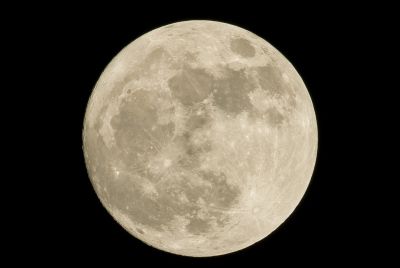
Australians weren't shut out of every celestial event this year. A total lunar eclipse — often nicknamed a "Blood Moon" for the reddish hue the moon takes on when fully shadowed by Earth — occurred on March 3, 2026. According to AccuWeather, that eclipse was visible across parts of western North America, Australia, New Zealand and eastern Asia, weather permitting, with observers in Auckland and other Southern Hemisphere cities capturing striking images of the reddened moon during the predawn hours.
Lunar eclipses, unlike solar eclipses, are safe to view with the naked eye and don't require special glasses, since viewers are simply watching Earth's shadow pass across the moon rather than looking anywhere near the sun.
Where the confusion may be coming from
Some online eclipse guides have circulated claims of a partial solar eclipse over Western Australia's Pilbara region in July 2026, but that date does not appear in any of the major, peer-referenced eclipse databases — including NASA, timeanddate.com and EclipseWise — which list only the Feb. 17 and Aug. 12 events for the entire year. Those authoritative sources instead confirm Australia's next brush with a solar eclipse, in any form, won't come until 2028.
Circle 2028 on the calendar instead
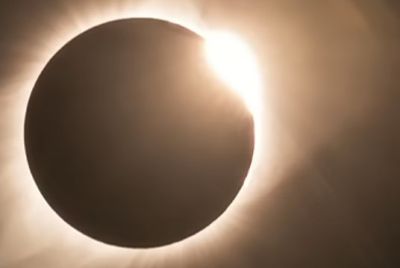
The next total solar eclipse to grace Australian soil is set for July 22, 2028, and it's shaping up to be a landmark event. According to Wikipedia's eclipse records and analysis from Museums Victoria astronomer Tanya Hill, the path of totality will make landfall in the Kimberley region of northwestern Western Australia before sweeping southeast through the Northern Territory, southwestern Queensland and New South Wales — passing directly over the city of Sydney, where totality is expected to last more than three minutes.
Hill, senior curator of astronomy at Museums Victoria, has noted that the 2028 eclipse marks the first of five total solar eclipses to sweep across Australia over a 15-year stretch. Follow-up events include a total eclipse crossing South Australia, northwest New South Wales and southern Queensland on Nov. 25, 2030, and another passing directly over Brisbane and the Gold Coast on July 13, 2037.
For those unable to wait until 2028, the path of totality for that eclipse is also expected to cross near the towns of Wyndham and Kununurra in Western Australia, and Tennant Creek in the Northern Territory, along with Birdsville and Bourke further along the route, according to Wikipedia's compiled eclipse path data — giving eclipse chasers several inland options beyond the Sydney corridor.
Eye safety, regardless of the wait
Whenever the next solar eclipse does arrive in Australian skies, astronomers stress that safe viewing requires certified eclipse glasses meeting the ISO 12312-2 international safety standard — regular sunglasses, no matter how dark, do not offer sufficient protection. Observers should never look directly at the sun without proper eyewear except during the brief moments of full totality, when the moon completely blocks the solar disk.
For now, Australians will have to make do with memories of March's Blood Moon and start planning ahead for 2028, when Sydney Harbour itself will sit squarely within the path of totality for what promises to be one of the most-watched eclipses in the country's history.
© Copyright 2026 IBTimes AU. All rights reserved.
- Recommended For You