Solar Eclipse Tracker Reveals Exact Times for Totality Path Across Iceland Spain and Partial Views
Experience the August 12 Solar Eclipse: Totality in Iceland and Northern Spain, Partial Views Across Europe and North America

Millions of people across the Northern Hemisphere will have the chance to witness a solar eclipse on August 12, with a narrow path of totality crossing remote Arctic regions, Iceland and northern Spain while a much broader partial eclipse stretches across Europe, parts of North Africa and northeastern North America.
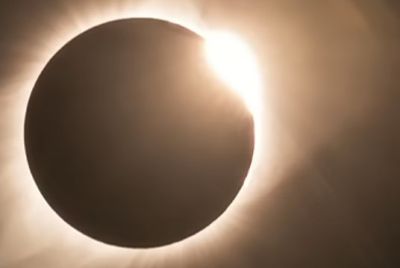
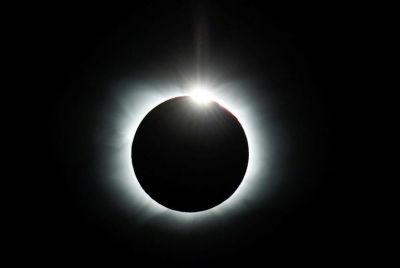
The total solar eclipse occurs when the Moon completely covers the Sun's disk, briefly darkening the sky and revealing the solar corona. Greatest eclipse takes place over the North Atlantic near Iceland, where totality is expected to last up to 2 minutes and 18 seconds. The path of totality is relatively narrow, roughly 180 to 190 miles wide at points, and will sweep from the Arctic across eastern Greenland, western and northern Iceland, then southeast across the Atlantic to make landfall in northern Spain before ending near the Balearic Islands around sunset.
Approximately 15 million people live within or near the path of totality. Nearly one billion people could potentially see at least a partial eclipse, according to visibility estimates.
In Iceland, Reykjavik sits near or within the path. Partial phases are expected to begin in the late afternoon, with totality around 5:48 p.m. to 5:49 p.m. local time lasting roughly one minute, followed by the end of partial phases near 6:47 p.m. Western coastal areas of Iceland may experience slightly longer periods of totality. Viewers there will see the event in the late afternoon under typically cool summer conditions.
In northern Spain, the eclipse arrives later in the day. In León, partial phases begin around 7:32 p.m. local time, with totality from approximately 8:28 p.m. to 8:30 p.m. Similar timing applies to Zaragoza and other cities along the path. In Valencia and areas toward the Mediterranean coast, totality occurs shortly after 8:30 p.m., with the Sun low in the sky and, in some locations, setting while still partially eclipsed. A small northwestern corner of Portugal also falls inside the path for a brief period of totality near sunset.
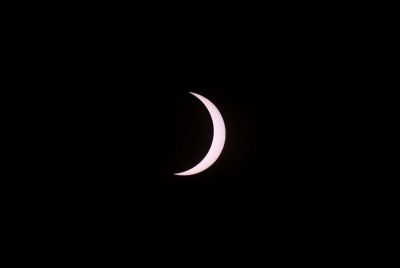
Outside the path of totality, a deep partial eclipse will be visible across much of Europe. In many western and central European cities the Moon will cover 85 to 95 percent or more of the Sun's disk in the evening. London, Paris and other major cities will experience significant coverage before or around sunset. Further east, the Sun may set while still partially eclipsed, limiting the deepest phase for some observers.
In North America, no locations will see totality. A partial eclipse will be visible across parts of Alaska, much of Canada and the northeastern United States. Coverage is greater in Atlantic Canada, where more than half the Sun may be obscured in places such as Newfoundland. In New England and nearby areas, the percentage is lower, typically in the teens or less in major cities such as Boston and New York, occurring in the early to mid-afternoon local time. Western and southern portions of the continent will see little or none of the event.
Safety remains the top priority for any viewing. Looking directly at the Sun without proper protection can cause serious and permanent eye damage. Certified solar eclipse glasses that meet the ISO 12312-2 international safety standard are required for the partial phases. Only during the brief period of totality, when the Sun is completely covered, is it safe to look with the naked eye—and only then. As soon as the bright photosphere begins to reappear, protective filters must be used again. Ordinary sunglasses, homemade filters or unfiltered cameras and binoculars are not safe.
Many observers plan to use indirect viewing methods as well, such as pinhole projectors or projecting the Sun's image through binoculars onto a white surface. Weather will play a major role. Coastal and northern locations along the path can experience variable cloud cover in August. Spain's interior and Mediterranean regions often offer clearer skies in late summer, though evening haze or local conditions can affect the view of a low Sun.
The eclipse belongs to Saros series 126. Because it occurs near perigee, the Moon appears relatively large in the sky, supporting a longer maximum duration of totality than some other eclipses in the cycle. The entire event, from first partial contact to last, spans roughly four hours globally, though any single location experiences a shorter sequence of phases.
Astronomers and space agencies have prepared detailed maps and local timing calculators so people can determine exact contact times for their coordinates. Greatest eclipse occurs at approximately 17:46 UTC. The shadow's journey across Earth lasts a little more than 90 minutes from the first appearance of the umbra to its final departure.
For those outside the path, live broadcasts from locations in Iceland and Spain are expected to provide real-time views of totality. Local astronomy clubs, science centers and tourism organizations in the path countries have organized viewing events, with safety briefings and equipment checks emphasized.
The August 12 eclipse offers a relatively accessible total solar eclipse for residents of Iceland and northern Spain compared with more remote polar paths. It also provides a widespread partial experience for large populations across Europe. Clear skies, proper eye protection and accurate local timing will determine how much of the celestial alignment any individual observer is able to witness.
© Copyright 2026 IBTimes AU. All rights reserved.
- Recommended For You