San Ramon Earthquake: Magnitude 3.4 Earthquake Rattles San Ramon Area Late Sunday Night
A preliminary magnitude 3.4 earthquake struck near San Ramon in the East Bay late Sunday night, shaking homes and waking residents across parts of the San Francisco Bay Area, but authorities reported no immediate damage or injuries from the minor temblor.

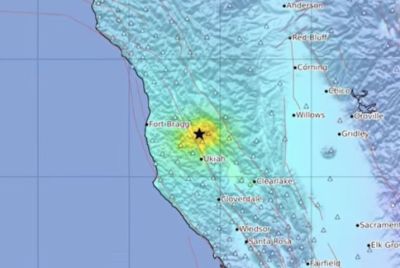
The U.S. Geological Survey (USGS) said the quake hit at 11:21 p.m. PST on March 1, 2026, with its epicenter about 4 kilometers (2.5 miles) southeast of San Ramon, near the border with Dublin. The tremor occurred at a shallow depth of approximately 8.4 to 9.3 kilometers (5.2 to 5.8 miles), according to initial USGS data from the Northern California Seismic Network.
Residents in San Ramon, Dublin, Danville, Pleasanton and parts of Walnut Creek and Livermore reported feeling the shake, with many describing a brief jolt or rolling motion typical of moderate local events. The USGS "Did You Feel It?" page began receiving reports within minutes, though numbers remained low compared to stronger quakes in the region.
San Ramon police and fire departments fielded a handful of calls from concerned residents checking on the event, but no structural damage, gas leaks or injuries were confirmed by early Monday morning. Contra Costa County emergency services echoed that assessment, urging people to check for hazards like fallen objects but confirming the area remained safe.
The quake registered as a light event on the Modified Mercalli Intensity scale, likely reaching III (weak) to IV (light) in the immediate vicinity—enough to be felt indoors by many but rarely causing damage. Seismologists noted it occurred along or near the Calaveras Fault zone, a seismically active strand of the broader San Andreas system that runs through the East Bay.
This latest tremor follows a pattern of seismic activity in the San Ramon-Dublin area. A swarm of small to moderate quakes rattled the region in January 2026, including a magnitude 3.4 event on Jan. 30 centered roughly 4 km southeast of San Ramon at 10:33 a.m. That quake and its 2.9 aftershock were felt widely but caused no reported issues. Earlier clusters, including over 30 events in one day with a peak of 4.2 magnitude, occurred in prior months, part of ongoing low-level activity along East Bay faults.
Experts emphasize that such swarms are common in California and do not necessarily signal an impending larger earthquake. The USGS and UC Berkeley Seismological Laboratory monitor these sequences closely, noting that while the Hayward-Rodgers Creek-Calaveras fault system poses long-term risk for a major event, isolated magnitude 3-4 quakes are routine and help relieve minor stress.
Sunday night's event drew quick social media attention, with residents posting about the shake on platforms like X and Nextdoor. "Felt that one roll through San Ramon—short but noticeable," one user wrote. Others shared videos of swaying lights or rattling dishes, though no widespread panic ensued.
Local officials used the occasion to remind residents of earthquake preparedness. The City of San Ramon and Contra Costa County urged people to secure heavy furniture, store water and food supplies, and know their evacuation routes. The Great ShakeOut drills and USGS resources remain key tools for building resilience in the Bay Area, which sits atop some of the nation's most active fault lines.
The quake's timing—late on a Sunday night—meant many were already home, amplifying the number who felt it despite its modest size. No power outages or infrastructure issues were reported, and BART and other transit systems operated normally Monday morning.
Seismologists continue analyzing data to refine magnitude, depth and location details. Preliminary USGS maps show the epicenter in a rural-ish area southeast of San Ramon, away from dense urban cores, which likely minimized any potential impacts.
For Bay Area residents accustomed to frequent small quakes, the event served as another reminder of living on shifting ground. While magnitude 3.4 quakes rarely cause harm, they contribute to the region's cumulative seismic energy release and keep preparedness top of mind.
As of Monday afternoon, no aftershocks above magnitude 2.0 had been reported from the Sunday night event, though minor tremors often follow such quakes. Authorities advised checking homes for minor shifts and staying alert for updates from official sources like USGS or Cal OES.
The San Ramon area, part of the rapidly growing Tri-Valley region, has seen increased monitoring in recent years due to its proximity to active faults. Sunday's shake, while minor, underscores why California invests heavily in early warning systems like ShakeAlert, which provides seconds of notice before stronger shaking arrives in populated areas.
No tsunami risk existed from the inland quake, and air quality or other secondary hazards remained unaffected. Residents can report their experiences via the USGS Did You Feel It? page to aid scientific understanding.
As the Bay Area heads into another week, the brief jolt serves as a low-stakes drill for what could one day be a much larger event. For now, life in San Ramon and surrounding communities returned to normal, with the earth quiet once more.
© Copyright 2026 IBTimes AU. All rights reserved.
- Recommended For You