Nobel Laureate David Gross Warns Humanity May Not Survive 50 Years to See Unified Theory of Physics
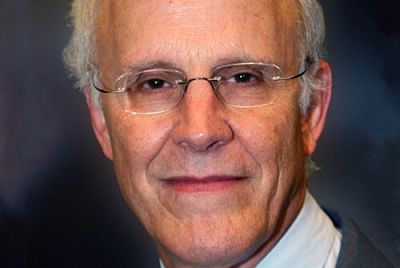
SANTA BARBARA, California — Nobel Prize-winning physicist David Gross has issued a stark warning that humanity stands a slim chance of surviving another 50 years, citing the grave risk of nuclear war as the primary barrier preventing scientists from achieving a unified theory of all fundamental forces.

Gross, who shared the 2004 Nobel Prize in Physics for his work on the strong nuclear force and asymptotic freedom, made the comments in a recent interview with Live Science while discussing the long quest for a "theory of everything" that would reconcile quantum mechanics with gravity. When asked whether physicists might complete such a unification within 50 years, the 83-year-old researcher replied bluntly that the chances of humanity lasting that long are "very small."
"Currently, I spend part of my time trying to tell people ... that the chances of you living 50 [more] years are very small," Gross said. He pointed specifically to nuclear war as a potential civilization-ending catastrophe that could arrive within 35 years, emphasizing that geopolitical tensions and the persistence of thousands of warheads worldwide make the threat immediate and existential.
The remarks, which quickly spread across scientific and popular media outlets, highlight a growing pessimism among some leading thinkers about humanity's long-term prospects amid multiple overlapping risks. Gross, who also received the $3 million Special Breakthrough Prize in Fundamental Physics, has devoted decades to string theory and efforts to unify the four fundamental forces — gravity, electromagnetism, and the strong and weak nuclear forces. Yet he now sees human self-destruction, rather than scientific obstacles, as the greatest hurdle.
Nuclear war remains a central concern. With Russia's ongoing conflict in Ukraine, tensions over Taiwan, and the proliferation risks involving nations such as North Korea and Iran, the probability of escalation to nuclear exchange has drawn renewed attention. Gross suggested that without dramatic progress in arms control and diplomacy, civilization could collapse long before physicists resolve the deep mathematical and conceptual challenges of quantum gravity.
His comments echo broader warnings from other Nobel laureates and scientists. Geoffrey Hinton, often called the "godfather of AI" and a 2024 Nobel Prize winner in Physics for foundational work on neural networks, has raised the odds of artificial intelligence causing human extinction to 10-20 percent within the next 30 years. Michel Mayor, the 2019 Nobel laureate who discovered the first exoplanet orbiting a sun-like star, has stated that humanity is not eternal but simply another animal species destined for extinction, potentially within a million years from natural causes alone, and far sooner if human folly intervenes.
Gross's perspective stands out for its focus on the intersection of fundamental physics and human survival. A unified theory has eluded physicists since Einstein's unsuccessful attempts at a unified field theory. String theory, loop quantum gravity and other approaches offer promising frameworks, but experimental verification remains extraordinarily difficult because the energies required to probe quantum gravity effects are far beyond current particle accelerators. Gross noted that even optimistic timelines for theoretical breakthroughs could be rendered moot by humanity's inability to avoid catastrophe.
The physicist did not dismiss all hope. He expressed a desire for international cooperation to reduce nuclear arsenals and mitigate other existential risks, including climate change, pandemics and uncontrolled artificial intelligence. "If you don't [address these risks], there's always some risk an AI 100 years from now [could launch nuclear weapons]," he observed, underscoring how multiple threats compound one another.
Public reaction to Gross's interview has been swift and polarized. On social media platforms and science forums, some users praised the laureate for speaking candidly about uncomfortable truths, arguing that complacency about existential risks has become dangerous. Others criticized the comments as overly alarmist or defeatist, suggesting they could undermine efforts to solve pressing problems by fostering fatalism. Science communicators noted that such warnings from respected figures often serve to galvanize action rather than induce despair.
Experts in existential risk studies have long catalogued the threats Gross referenced. The Bulletin of the Atomic Scientists maintains its Doomsday Clock, which in recent years has stood close to midnight due to nuclear dangers, climate disruption and emerging technologies. Organizations such as the Future of Humanity Institute and the Centre for the Study of Existential Risk at Cambridge University have modeled scenarios in which nuclear winter, engineered pandemics or misaligned superintelligent AI could lead to human extinction or civilizational collapse.
Gross's career lends weight to his assessment. As a towering figure in theoretical physics, he has witnessed firsthand how scientific progress depends on stable societies capable of sustaining long-term research. Particle physics collaborations such as those at CERN involve thousands of scientists across dozens of nations and require decades of funding and political support. A major war or societal breakdown could shatter that infrastructure, halting progress indefinitely.
Yet the quest for unification continues. Researchers are exploring connections between string theory and holography, advances in quantum computing that might simulate quantum gravity effects, and new observational windows through gravitational wave astronomy and cosmic microwave background studies. Gross himself remains active in the field, though he now balances theoretical work with public advocacy for risk reduction.
The broader context includes accelerating technological change. Artificial intelligence is transforming scientific discovery, potentially speeding up theoretical breakthroughs while simultaneously introducing new dangers. Climate models warn of tipping points that could render large parts of the planet uninhabitable within decades. Biodiversity loss and resource depletion compound these pressures.
Gross stopped short of predicting exact timelines or probabilities beyond his qualitative assessment, but his message was clear: humanity's greatest obstacle to scientific immortality may be its own mortality as a species. He urged greater investment in diplomacy, arms control, sustainable development and ethical governance of emerging technologies.
For physicists dreaming of a final theory that explains the universe from the smallest scales to the largest, the warning carries particular poignancy. The unification of forces has been called the holy grail of physics. Achieving it would represent one of humanity's crowning intellectual achievements, potentially unlocking new technologies and deeper understanding of reality itself. Gross suggested that realizing that dream may depend less on brilliant equations than on collective wisdom and restraint.
As the interview circulates widely, it joins a chorus of voices from the scientific community urging humanity to confront its fragility. Whether Gross's pessimism proves prophetic or serves as a catalyst for renewed global cooperation remains to be seen. For now, his words stand as a sobering reminder that the biggest questions in physics may ultimately hinge on the oldest challenge facing humankind: learning to live together without destroying ourselves.
In laboratories and lecture halls around the world, researchers continue their work, driven by curiosity and the hope that humanity will endure long enough to glimpse the deepest secrets of the cosmos. Gross's warning challenges them — and all of society — to ensure that hope is justified.
© Copyright 2026 IBTimes AU. All rights reserved.
- Recommended For You