Total Lunar Eclipse March 3, 2026: Blood Moon Totality Delivers Stunning Views Across Americas and Asia
Skywatchers worldwide witnessed a dramatic total lunar eclipse early on March 3, 2026, as Earth's shadow fully enveloped the full Worm Moon, transforming it into a striking copper-red "blood moon" for nearly an hour during totality.
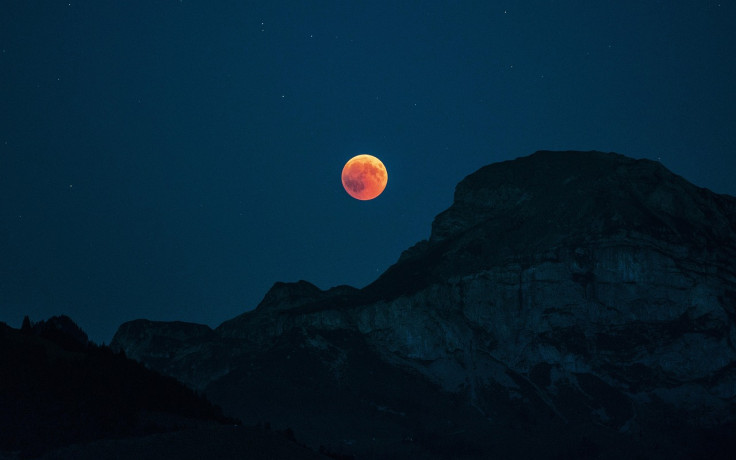
The event, the first and only total lunar eclipse of 2026, unfolded across multiple continents with prime visibility in North America (early morning), the Pacific, eastern Asia, Australia and New Zealand (evening hours). It marked the last total lunar eclipse visible from much of the globe until the New Year's Eve event spanning Dec. 31, 2028–Jan. 1, 2029.
Phases began with the penumbral eclipse at 8:44 UTC (3:44 a.m. EST), when the Moon dipped into Earth's faint outer shadow. The partial phase followed at 9:50 UTC (4:50 a.m. EST), as the darker umbral shadow began creeping across the lunar disk. Totality commenced at 11:04 UTC (6:04 a.m. EST), peaked at maximum eclipse 11:33 UTC (6:33 a.m. EST) with an umbral magnitude of 1.1507, and concluded at 12:02 UTC (7:02 a.m. EST). The full eclipse wrapped at 14:23 UTC (9:23 a.m. EST), lasting over 5 hours and 39 minutes overall, with 58 minutes and 19 seconds of totality.
In North America, viewers on the East Coast saw the Moon low on the western horizon as totality began around sunrise, with the blood-red hue visible briefly before moonset in places like New York and Washington, D.C. (totality roughly 6:04–7:02 a.m. EST). Western regions enjoyed higher lunar positions throughout, with clearer, longer views. In Chicago and New Orleans, the penumbral phase started around 2:44 a.m. CST, partial at 3:50 a.m. CST, and totality from 5:04–6:02 a.m. CST. Pacific time zones caught the event earlier, with totality peaking around 3:33 a.m. PST.
Eastern Asia, Australia and New Zealand experienced the eclipse in evening skies. In Sydney, the Moon rose already partially eclipsed, with totality unfolding under dark conditions. Observers in Christchurch, New Zealand, streamed views starting around 9:30 p.m. NZT, capturing the transition to red as partial phases progressed.
The characteristic red coloration arose from sunlight refracting through Earth's atmosphere, scattering blue light and allowing longer red wavelengths to illuminate the Moon — a process akin to why sunsets appear orange. Weather permitting, the eclipse appeared deep copper or brick-red, varying by atmospheric conditions and viewer location.
Live coverage proliferated online as millions tuned in. Timeanddate.com streamed the event from multiple global sites, offering real-time animations, maps and commentary. The Virtual Telescope Project broadcast high-resolution views, collaborating with imagers in Australia, Hawaii and California. AfarTV provided 4K footage capturing the Moon's shift from bright full to deep red. Griffith Observatory in Los Angeles hosted an online broadcast from midnight to dawn PST, while Associated Press and other outlets delivered visuals from Yucca Valley, Calif., and western Australia. NASA-affiliated streams and Fox Weather offered expert analysis alongside viewer-submitted photos.
Early images flooded social media and astronomy sites. Captures from New Zealand showed Earth's curved shadow advancing across lunar maria during partial phases. Manila observers photographed the rising full moon mid-eclipse, while Dunedin Astronomical Society images highlighted the dramatic darkening. Post-totality galleries on Space.com showcased breathtaking blood moon portraits, with photographers praising the event's clarity in clear-sky regions.
No special equipment was required — the eclipse was safely viewable with the naked eye, binoculars or telescopes enhancing details like subtle color variations and crater visibility. Tripod-mounted cameras with long exposures captured stunning stills. Unlike solar eclipses, lunar events pose no eye-safety risks.
The eclipse coincided with the March full moon, traditionally called the Worm Moon for emerging earthworms in thawing soil. It occurred near the Moon's descending node with an average apparent diameter, 6.7 days after perigee and 6.9 days before apogee.
Astronomers noted the event's significance as a rare celestial alignment visible to billions. Umbral magnitude 1.1507 indicated a relatively deep eclipse, with the Moon well within the umbra for pronounced reddening.
As totality concluded, the Moon gradually brightened through partial and penumbral phases. In many North American locations, the final stages occurred after sunrise, limiting visibility to early risers or those with western views.
With no total lunar eclipse until late 2028, this March 3 spectacle served as a highlight for 2026 astronomy enthusiasts. Clear skies across key regions allowed widespread enjoyment, from urban rooftops to remote observatories.
Live streams and archived footage remain available for those who missed it, preserving the awe-inspiring views of Earth's shadow dancing across its natural satellite.
© Copyright 2026 IBTimes AU. All rights reserved.
- MOST POPULAR IN Science