

Are the Lakers Better Off Without LeBron James? Luka Doncic's Post-LeBron Roster Faces Scrutiny Into 2027
Lakers Rebuild Around Doncic and Reaves After LeBron's Departure
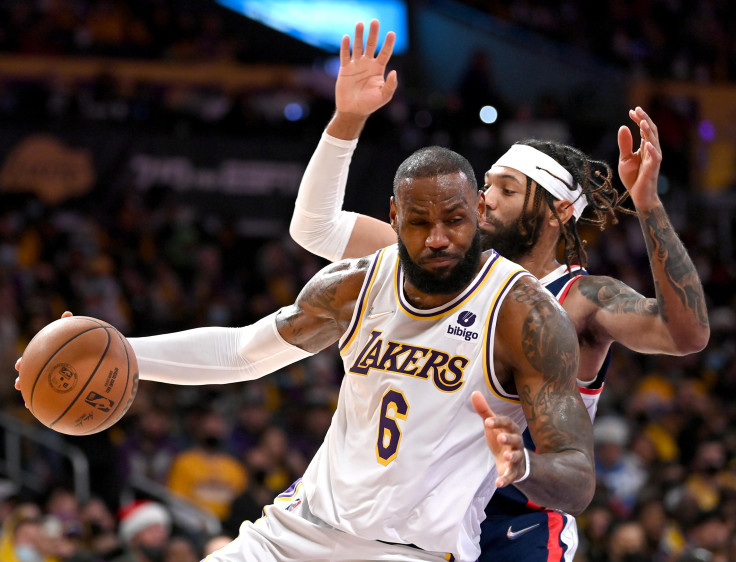
The Los Angeles Lakers will open the 2026-27 NBA season without LeBron James for the first time since 2018-19, closing out an eight-year run that included the franchise's 2020 championship, after James informed the team on June 30 that he intended to sign elsewhere before ultimately joining the Philadelphia 76ers. In his absence, the Lakers have been fully handed over to Luka Doncic, and the question of whether the franchise is genuinely better positioned without its longtime superstar has become one of the most closely debated storylines heading into the coming season.
Rather than attempting to replace James with a single comparable talent, the Lakers' front office spent the summer rebuilding the roster specifically around Doncic and Austin Reaves, prioritizing size, defense and secondary ball handling over a traditional co-star. According to LakersDaily.com, the Lakers acquired 7-foot-2 center Walker Kessler from the Utah Jazz in a sign-and-trade, sending unprotected first-round picks in 2031 and 2033, along with first-round swap rights in 2028 and 2030, before signing him to a four-year, $130 million extension. The Lakers also added guard Quentin Grimes on a four-year, $60 million deal and forward Sandro Mamukelashvili on a four-year, $52 million contract, while Collin Sexton and Matisse Thybulle joined as further depth pieces.
In exchange, the roster lost significant experience beyond James alone. According to a July analysis from Kyle Mucerino, Marcus Smart, Luke Kennard and Jaxson Hayes all departed, while Rui Hachimura, the team's most efficient postseason scorer last spring, signed a two-year, $28 million deal with the crosstown Los Angeles Clippers after the Lakers declined to route his exit through a sign-and-trade.
The case for the overhaul centers primarily on structural coherence rather than star power. LakersDaily.com framed the argument directly: "For the first time in the Doncic era, the roster is built around him rather than stapled to an aging co-star." Kessler gives Doncic the rim-running, rim-protecting center he had reportedly requested, while Grimes and Reaves provide shooting and secondary shot creation, and a deeper bench gives the Lakers defined roles they lacked the previous season. The resulting roster is younger, more athletic, and, in theory, better equipped to withstand the grind of an 82-game season without leaning as heavily on aging, higher-mileage players.
The case against the rebuild is equally direct. As the same analysis put it, "No single addition replaces what James provided in shot creation, gravity and late-game shot-making, and losing Hachimura's playoff shooting stings more the longer Kuminga stays unsigned." National analysts have reportedly expressed open skepticism about the overhaul, characterizing the summer's moves as a talent downgrade dressed up as a youth movement, according to Lakers Daily's coverage of the offseason reshaping.
Doncic himself enters the season as the unquestioned centerpiece for the first time in his Lakers tenure, after splitting the offensive workload with James for roughly 18 months following his midseason trade to Los Angeles. According to Yardbarker's NBA Analysis Network, the Lakers no longer have a "big three" structure following James' departure, leaving Doncic and Reaves to carry the bulk of the offensive burden. Doncic averaged 33.5 points per game last season while Reaves scored 23.3 points per game, and both players may need to produce even more this coming season for the Lakers to remain competitive, with Yardbarker suggesting Doncic could push above a career-high 35 points per game, a mark that would put him firmly in the MVP conversation.
The Lakers' projected starting lineup, according to Lakers Daily's most recent depth chart analysis, features Doncic, Reaves, Grimes, Kessler and a fifth spot still being contested in training camp between incumbent forward Jake LaRavia and newer perimeter defenders Thybulle and Ziaire Williams, both signed specifically to address the team's point-of-attack defense, a role neither Doncic nor Reaves is well-suited to fill for the other.
Kessler's individual production last season offers a data point supporting optimism about the fit. According to Lakers Daily, Kessler averaged 11.1 points, 12.2 rebounds and 2.4 blocks per game while leading the league in a defensive category during his time with Utah, statistics that suggest he could meaningfully address the interior defensive and rebounding deficiencies that had periodically plagued the Lakers during the Doncic-James era.
From a fantasy basketball and individual production standpoint, at least, the shift toward a Doncic-centered roster has been broadly framed as a positive development. Athlon Sports described Doncic as "one of the safest picks in fantasy basketball" heading into the new season, while projecting that Reaves "should take another step forward as the unquestioned second option." The outlet characterized the broader roster shift bluntly: "This isn't LeBron's team anymore."
Whether that shift translates into genuine team-level improvement remains an open and unresolved question that will only be answered once games begin. LakersNation.com framed the central variables shaping the Lakers' outlook as Doncic's individual workload, Kessler's defensive impact, and whether Reaves can thrive in his expanded role, alongside the projected win total for a reshaped roster that head coach JJ Redick must now turn into a team with what the outlet described as "a repeatable identity." As Lakers Daily summarized the situation heading into training camp, "What it is, unquestionably, is a different one" — leaving the more consequential question, whether different ultimately means better, as one Lakers fans and NBA analysts alike will spend the coming season debating in real time, with genuine, well-supported arguments existing on both sides of the discussion heading into 2027.
© Copyright 2026 IBTimes AU. All rights reserved.