(VIDEO) South Korea's KF-21 Boramae Emerges as Game-Changing Fighter Reshaping Asia-Pacific Defence
SEOUL — South Korea has rolled out the first production model of its KF-21 Boramae fighter jet, marking a stunning achievement in military aviation: moving from concept to series production in roughly a decade. Experts are hailing the indigenous 4.5-generation platform as a potential game changer for middle-power nations seeking advanced combat capability without the massive costs and delays that plague traditional fifth-generation programs.
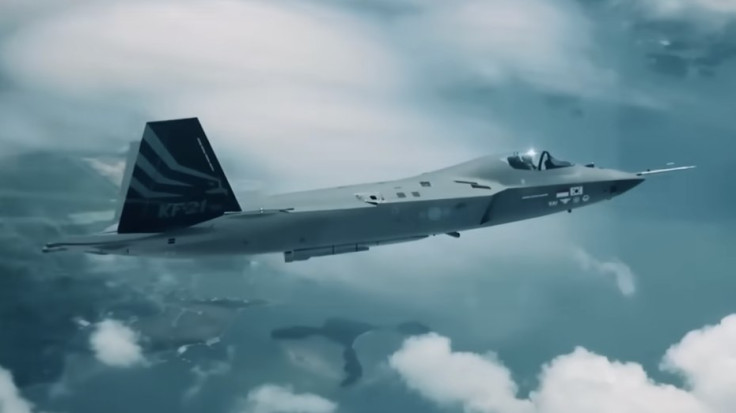
The milestone, celebrated at Korea Aerospace Industries facilities last week, comes just four years after the KF-21's maiden flight. It underscores South Korea's rapid rise as a serious player in the global fighter market and offers a compelling model for countries like Australia grappling with how to build sovereign defence industry capacity.
Military analysts describe the KF-21 as a highly adaptable platform that bridges 4.5-generation and fifth-generation capabilities. Designed primarily as a multirole fighter, it features advanced avionics, a capable AESA radar, internal weapons bays in later variants, and significant growth potential for stealth features and next-generation sensors.
How South Korea Did It So Quickly
The video analysis by Australian Military Aviation History highlights three key factors behind the program's success: a modular, upgrade-driven design philosophy; a dual-path procurement strategy; and unusually tight control over requirements creep.
From the outset, South Korea treated the KF-21 as an evolutionary platform rather than a revolutionary one. Early blocks emphasize proven technologies and export potential, while later configurations incorporate low-observable features and advanced networking. This "block upgrade" approach mirrors successful programs like the F-16 but on a compressed timeline.
The dual-path strategy separated risk: one track focused on delivering operational aircraft quickly using off-the-shelf and co-developed components, while parallel efforts advanced more ambitious technologies. Close government-industry collaboration and firm requirements management prevented the scope creep that has ballooned costs and timelines in programs such as the U.S. F-35 and several European efforts.
South Korea invested heavily in its domestic aerospace sector, leveraging experience from the T-50 trainer and international partnerships, particularly with Indonesia (though that collaboration faced challenges). The result is a fighter estimated to cost significantly less than Western fifth-generation peers while offering strong performance for regional missions.
Implications for Australia and Regional Partners
The KF-21's development model holds particular interest for Australia, which is investing billions in its own defence industry ambitions under the AUKUS pact and broader sovereign capability goals. Analysts suggest the Korean approach — focused on rapid iteration, modularity and realistic requirements — could inform Australia's future combat aircraft programs beyond the current F-35 and Ghost Bat drone initiatives.
With its mix of range, payload, advanced sensors and potential for growth, the Boramae could appeal to nations seeking a high-performance fighter without the political and logistical complexities of U.S. or European platforms. Several Southeast Asian and Middle Eastern countries are already monitoring the program closely.
Technical Highlights
The production aircraft features a sleek design with twin engines, leading-edge root extensions, and provisions for conformal fuel tanks. It is powered by General Electric F414 engines (co-produced locally), delivering strong thrust and supercruise potential in later blocks. Avionics include an indigenously developed AESA radar and integrated electronic warfare suite.
Initial production models will operate primarily in a 4.5-generation configuration with external weapons, transitioning to greater stealth and internal carriage as the program matures. South Korea plans to acquire at least 120 aircraft for its own air force, with ambitious export targets.
Broader Strategic Context
The KF-21 arrives at a time of heightened tensions in the Indo-Pacific. North Korea continues missile tests, China expands its air force, and regional powers seek credible deterrence. For Seoul, the fighter strengthens its independent strike and air superiority options while reducing reliance on foreign suppliers.
The program also boosts South Korea's defence export credentials. The nation has already succeeded with the K9 howitzer, K2 tank and various missile systems. A competitive fighter could open new markets and deepen strategic partnerships.
Challenges remain, including full integration of advanced stealth coatings, secure data links and engine performance at the highest levels. However, the rapid progress to production suggests these hurdles are being managed effectively.
Why It Matters Globally
The KF-21 demonstrates that middle powers with focused investment, clear vision and disciplined execution can develop sophisticated combat aircraft in timelines once thought impossible outside superpowers. Its success challenges the notion that only the U.S., China or Russia can field modern fighters.
For Australia, the Korean model offers lessons in balancing ambition with pragmatism — delivering capability now while preserving upgrade paths for the future. As Canberra weighs options for future air power, the Boramae's story provides both inspiration and a practical blueprint.
As production ramps up and the KF-21 enters operational service, it is poised to reshape not only South Korea's defence posture but also the broader fighter aircraft market. What began as an ambitious national project has become a case study in efficient defence innovation — one that could influence procurement decisions across the region for years to come.
© Copyright 2026 IBTimes AU. All rights reserved.
- Recommended For You