FTSE 100 Rises Above 10,400 as Markets Take Starmer's Resignation in Stride
FTSE 100 shows resilience despite political upheaval following Keir Starmer's resignation as UK Prime Minister.
LONDON — The FTSE 100 climbed 0.51% on Monday to 10,415.84, gaining 52.57 points, as UK markets absorbed the surprise resignation of Prime Minister Keir Starmer with relative calm even as the country braced for its seventh leader in a decade.
A Day Dominated by Political Upheaval
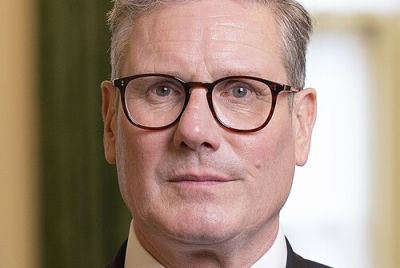
Britain's Prime Minister Keir Starmer announced on Monday he would resign as the leader of his party and as prime minister, setting the stage for the United Kingdom's seventh prime minister within a decade. The announcement came in a televised statement outside 10 Downing Street shortly after 9:30 a.m. London time. "I have heard the answer of my parliamentary party to that question, and I accept that answer with good grace," Starmer said, framing his decision around whether he remained the right person to lead Labour into the next general election.
Starmer indicated he intends to remain in post as caretaker prime minister until a successor is formally chosen, which he said would help ensure an orderly handover of power.
The Catalyst: A Decisive By-Election Defeat
The resignation announcement followed months of turmoil for Starmer, with some members of his own party criticizing his leadership, saying he had not been able to deliver the rapid change needed after taking office following 14 years of Conservative Party rule in Britain. The timetable for his departure sped up after Andy Burnham, the former mayor of Greater Manchester, secured a return to Parliament last week, winning a decisive victory in a special election on June 18 that effectively set up a leadership challenge.
Markets Show Resilience Despite the Political Shock
Despite the magnitude of the political news, UK equity markets showed a notably calm reaction, continuing a recent pattern of resilience even as British politics has churned. The FTSE 100 has demonstrated such resilience after Starmer's resignation, even as the FTSE 250, which tracks more domestically focused companies, has shown comparatively more sensitivity to the political uncertainty.
A Volatile Run-Up to Monday's Session
Monday's gains followed a choppy stretch for UK equities in recent sessions, shaped heavily by both domestic economic data and global geopolitical developments. The FTSE 100 fell 0.4% on Friday as oil prices remained volatile amid mixed signals surrounding U.S.-Iran negotiations and renewed tensions between Israel and Lebanon. Mining stocks were among the biggest drags that session, with Rio Tinto down more than 2%, Glencore falling 1.5%, Anglo American declining 2.5%, and Antofagasta dropping 3.2%.
UK economic data released last week also weighed on sentiment ahead of the weekend. UK data showed public sector borrowing reached £23.3 billion in May, above expectations, while retail sales recovered 1.2%, beating forecasts. Despite Friday's modest late-session gains, the FTSE 100 finished that week down more than 1%.
The Political Backdrop Driving the Leadership Change
Starmer's departure caps an extraordinary reversal of fortune for a leader who, less than two years ago, delivered one of Labour's most decisive electoral victories in decades. It marks an astonishing fall for a leader who sealed a landslide election victory in 2024, riding a wave of popular discontent against 14 years of right-wing Conservative rule.
Calls for Starmer to quit have intensified since May, when, after just two years in power, he led his party to one of its worst-ever performances in local and regional elections, as Nigel Farage's hard-right Reform UK made historic gains. An Ipsos poll published Friday suggested that 52% of the British public think Starmer should stand down as prime minister, five percentage points higher than in May, while 35% think he should continue.
Burnham Emerges as the Clear Frontrunner
Attention has now turned decisively to who will replace Starmer, with Burnham positioned as the overwhelming favorite to take over. The announcement clears the path to power for Starmer's likely successor, Andy Burnham, the popular ex-mayor of Greater Manchester who secured a return to Parliament last week. Burnham confirmed Monday, shortly after Starmer said he would stand aside, that he would seek to replace the departing leader.
Wes Streeting, who had himself been viewed as a potential rival for the leadership, threw his support behind Burnham on Monday. "We could spend the summer exaggerating our small differences, or we can roll up our sleeves and help [Burnham] to deliver the change our Party and our country needs," Streeting said in a statement. "That is the choice that I am making and I hope that everyone else will back Andy, too."
Trump's Reaction
The resignation also drew an immediate response from across the Atlantic, reflecting the increasingly strained relationship between Starmer and the U.S. president in recent months. "Keir Starmer will resign as Prime Minister of The United Kingdom. He failed badly on two very important subjects - IMMIGRATION AND ENERGY (OPEN NORTH SEA OIL!). I wish him well!" Trump posted on his social media platform.
Starmer's Defense of His Record
Before announcing his resignation, Starmer touted his achievements in office, including what he said was a stronger economy and wages, improvements in rights for workers, bigger defense spending, and lifting a million children out of poverty — all "because of the choices that I made," he said.
What Sectors Moved on Monday
Beyond the political headlines, individual sector performance continued reflecting the same broader themes that have shaped UK markets throughout June. Defence stocks performed well in recent sessions, with BAE Systems, Babcock International, and Rolls-Royce all advancing, while pharmaceutical names including AstraZeneca, GSK, and Hikma Pharmaceuticals also posted gains. Oil majors BP and Shell have continued benefiting from volatile but generally elevated crude prices tied to the broader Middle East situation.
With Starmer expected to remain in office in a caretaker capacity until Labour formally selects its new leader — a process that could move quickly if Burnham faces no serious challenger — investors and political observers alike will be watching closely for signs of how a Burnham-led government might shift economic and fiscal policy heading into the back half of 2026. Given the FTSE 100's demonstrated resilience through Monday's political upheaval, market participants appear, for now, to be treating the leadership transition as a domestic political story rather than one likely to trigger significant near-term disruption to UK equities, even as the broader question of Britain's economic direction under new leadership remains very much unresolved.
© Copyright 2026 IBTimes AU. All rights reserved.
- Recommended For You