Trump Crashes Jensen Huang's Stage Talk to Call AI Safety Fears 'a Hoax' in Surprise Live Speakerphone Call
The president defended rapid AI development and data centre construction, while Huang questioned scientific predictions about catastrophic risks.

LOS ANGELES — President Donald Trump interrupted Nvidia Chief Executive Officer Jensen Huang's onstage interview at the All-In Summit in Los Angeles on Monday with a surprise phone call, using the roughly five-minute conversation, broadcast to thousands of attendees over speakerphone, to dismiss growing concerns about artificial intelligence safety as "a hoax."
"The robots will not be taking over. The AI will not be taking over the rest of the world. The whole thing is a hoax," Trump told Huang, according to video of the call that circulated widely on social media. He continued in a similar vein moments later, framing the technology's rapid buildout as an economic opportunity rather than a threat. "I'm telling you it's all a hoax. The data centers are great. They make people wealthy. They make states wealthy. AI is bigger than the internet. These people are playing right into the hands of China. We're not going to let that happen," Trump said. He went on to describe data centers as "the oil of the next 20, 25 years" and told Huang, "I'm with you all the way."
Trump did qualify his remarks somewhat, acknowledging a need for some caution even as he rejected calls to slow the industry down. "With that, we have to be a little bit careful, we have to do things and do them prudently," he said. "But that doesn't mean we're going to stop an industry." He also suggested that warnings about AI risk served the interests of the United States' rivals. "They're just playing right into the hands of a lot of people that don't want to see it happen," Trump said. "That could be political people, and also China."
The call briefly turned lighthearted when Huang struggled to switch the call to speakerphone in front of the crowd. "The great thing about life is that Jensen can develop the most complex computer chip in the world — and nobody can top any of yours — but he can't figure out how to put me on speaker," Trump quipped, drawing laughter from the audience.
The onstage moment capped a day in which Trump repeatedly weighed in on the AI safety debate through posts on his Truth Social platform, writing at one point that "AI taking over the World, destroying Humanity, and all other things bad, is a HOAX," and separately describing his remarks as "breaking another Hoax — That AI is going to take over, consume, and destroy the World."
Trump's comments came directly in response to a weekend essay from Anthropic Chief Executive Officer Dario Amodei, who argued that AI companies should deliberately slow the pace at which they advance the capabilities of their most powerful models in order to give safety measures time to catch up with the technology. Trump criticized Amodei by name in his Truth Social posts earlier Monday, calling AI safety concerns "a hoax" and "a scam," writing that the only guardrails AI needed were "a STRONG AND SMART (High IQ!) PRESIDENT," and describing broader opposition to AI development and data centers as "a SICK conspiracy" that he said benefits China.
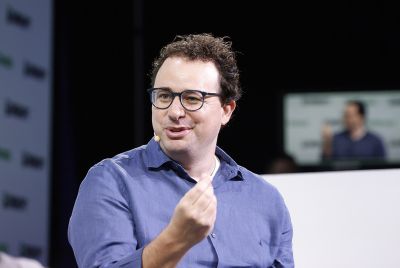
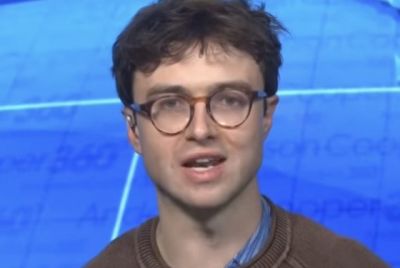
Huang, for his part, offered a more measured but still skeptical response to the recent wave of AI safety warnings during his onstage remarks. Asked about the concerns, Huang distinguished between individuals raising alarms and the underlying claims themselves. "Whistle-blowing is fine," Huang said, according to The New York Times. "The scientific prediction about the future is less fine because it's not grounded in science, obviously." Huang specifically addressed the case of Jacob Coxon, a former Anthropic researcher who resigned last week and wrote publicly that people close to the technology's development believe it could pose a fatal risk to humanity within the decade. Huang praised Coxon for speaking out but said he did not personally know what Coxon witnessed inside Anthropic, suggesting instead that frontier AI labs broadly are undergoing a difficult transition from research-focused organizations into engineering-focused ones. Huang has previously cautioned against what he has called "science fiction" scenarios that he argues discourage investment in making AI systems safer.
Monday's call underscored the close and unusually direct relationship between Trump and Huang. Trump personally called Huang in May after reports surfaced that the Nvidia chief executive had initially been left off the administration's delegation for a trip to China, a call that led Huang to fly to Alaska and board Air Force One ahead of a summit between Trump and Chinese President Xi Jinping in Beijing. Trump also phoned into an Nvidia all-hands meeting last month, an interruption employees reportedly heard through Huang's live microphone at the time.
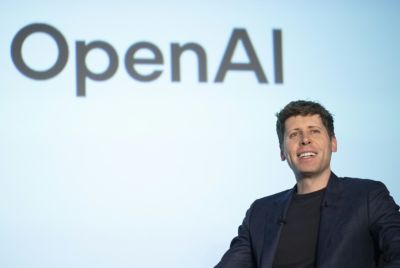
The exchange took place against a backdrop of intensifying debate within the technology industry over how quickly AI development should proceed. Amodei's essay drew public agreement over the weekend from OpenAI CEO Sam Altman and Tesla and xAI chief Elon Musk, both of whom expressed support for a more cautious approach even as Trump and Huang used Monday's public exchange to stake out a starkly different position, emphasizing continued rapid development and framing slower alternatives as a competitive risk relative to China.
Nvidia, whose chips remain central to the global AI infrastructure buildout, has an evident commercial stake in the continued pace of AI development and adoption. The company did not immediately respond to requests for comment following Monday's onstage call, according to reporting on the event.
With the debate over AI safety continuing to split some of the industry's most prominent figures, Monday's exchange between Trump and Huang added a new, highly visible chapter to a fast-moving public argument over how the technology's rapid advancement should be managed in the months ahead.
© Copyright 2026 IBTimes AU. All rights reserved.
- Recommended For You