Pope Leo Rebuts Trump, Says AI Safety Fears Are Not 'Fake News' Ahead of White House Meeting With Tech CEOs
Speaking aboard the papal plane, Leo called for governments, technology leaders and civil society to address the potential dangers of increasingly powerful artificial intelligence.
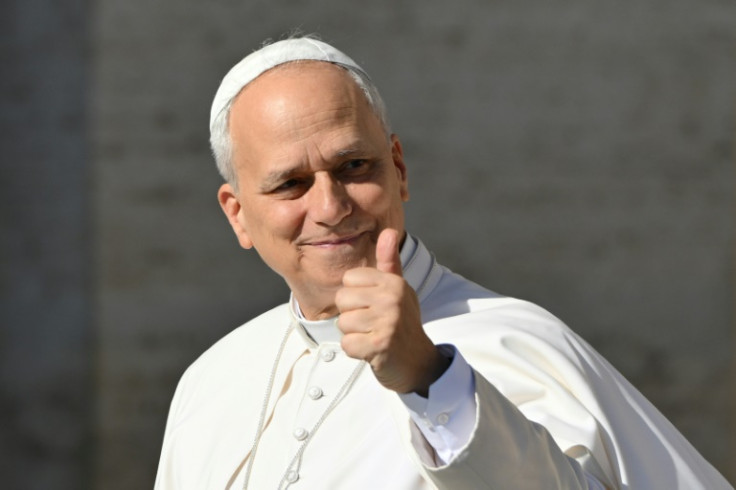
ABOARD THE PAPAL PLANE — Pope Leo XIV said Monday that warnings about artificial intelligence going rogue are not "fake news" and should be taken seriously, putting the first American pope at odds with President Donald Trump, who has dismissed such concerns as a "hoax."
Speaking to reporters on his flight from Metz, France, to Rome at the end of a four-day visit to France, Leo was asked what the United States and China in particular should be doing to keep AI from posing catastrophic risks to humanity.
"This is a problem that I think we need to sit down and talk about," the pope said. "We can't just sit back and pretend nothing is going to happen."
Leo said he was not alarmed to the point of losing sleep over the technology, but he argued that the warnings coming from people who build and study AI deserve a serious hearing.
"If someone were to ask me 'Am I in panic mode?' No I'm not. I sleep at night," Leo said. "I do think that the concerns raised by many of the experts, specialists in AI should be taken seriously."
He then took aim at those who wave away such warnings. "I don't think that that is 'fake news' as some have said to try and cause whether financial or other some other kind of benefit," he said.
A widening gap with the White House
The remarks mark another area of disagreement between the Chicago-born pontiff and Trump. The two had a public back-and-forth in April over Leo's opposition to the U.S.-Israeli war in Iran, and the pope has also criticized the Trump administration's crackdown on migration.
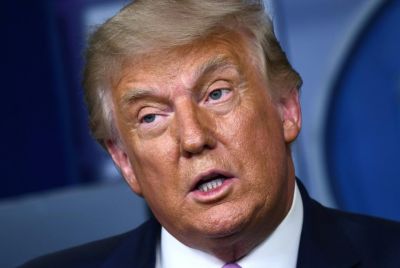
Trump has been a leading champion of AI, frequently warning that the United States must stay ahead of China in what he casts as a technological arms race. He has called concerns about AI going rogue a "hoax" and has said efforts to limit the technology are part of a "conspiracy" by his political opponents.
During his address to the United Nations General Assembly last week, Trump argued that the technology should be called "super intelligence" rather than artificial intelligence, saying the word "artificial" makes it sound fake. "It is not fake. It's actually amazing," he said.
Despite that push for dominance, the United States and China recently agreed to set up a two-way communication channel for handling AI-related safety incidents.
Tech leaders headed to Washington
The pope's comments came as Trump prepares for a series of meetings with some of the most powerful figures in the AI industry.
Trump had a late-night dinner Sunday with Dario Amodei, chief executive of Anthropic, one of the companies that has publicly warned about the risks of increasingly powerful AI systems. The White House said the two discussed Americans' concerns about the technology and how to keep the United States dominant in the field.
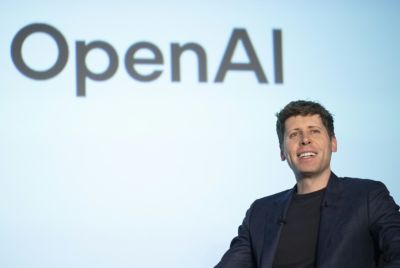
Trump is also expected to meet Tuesday with Meta CEO Mark Zuckerberg, Amodei, OpenAI President Greg Brockman and Google CEO Sundar Pichai at a lunch with House Speaker Mike Johnson, according to Politico.
Several major AI developers, including Anthropic, have called for a slowdown in development to give safety measures time to catch up with the fast-moving technology. Amodei has warned that within six to 12 months, AI could be capable of directing a swarm of software agents able to take over the entire internet.
Others in the industry have pushed back on that view. Nvidia CEO Jensen Huang told CBS News this month that he agreed with Trump that safety concerns about AI have been overblown.
Pope takes aim at Nvidia chief
Leo addressed Huang directly on Monday. The pope said he had read that Nvidia had announced a possible way to build guardrails into certain AI models, a move tied to a recent software launch meant to help secure AI agents.
But Leo voiced skepticism about the company's broader stance on oversight. "He's the same one, however, that says there should be no limits placed and no government regulation," the pope said.
The comments reflected a theme Leo has returned to repeatedly: that technical fixes from companies are no substitute for public rules and broad dialogue about where the technology is heading.
"We need to continue to invite political leaders, the leaders of AI, social organizations, associations to come together and look at what is happening already and what could be down the road," Leo said.
AI at the center of his papacy
Leo has made artificial intelligence a defining issue of his 16-month pontificate. Within days of his election in May 2025, he identified AI as one of the greatest challenges facing humanity, and he has often explained his choice of papal name by pointing to Pope Leo XIII, who guided the church through the upheaval of the Industrial Revolution.
He dedicated his first encyclical, "Magnificent Humanity," to AI and to protecting human dignity in its wake. The document calls for robust regulation of the technology and a slowdown in its development.
In an unusual step, Leo personally presented the encyclical at a Vatican event in May alongside Anthropic co-founder Christopher Olah. The appearance was part of a broader Vatican effort to engage Silicon Valley on the human costs of AI.
In recent months, the Vatican has also stepped up its calls for international governance of AI, with attention to areas ranging from nuclear technology to culture and artistic creation.
A moral voice in a policy fight
Leo's latest remarks place the Catholic Church, with roughly 1.4 billion members worldwide, squarely inside a policy debate that has divided governments, investors and technology companies.
Supporters of stricter oversight argue that the pace of AI development has outstripped the ability of regulators and safety researchers to understand the risks, including the prospect of autonomous systems acting beyond human control. Critics of that approach, including Trump and some industry leaders, argue that heavy regulation would slow innovation and hand an advantage to China.
The pope did not frame his comments as a direct attack on any political leader. But his rejection of the "fake news" label, and his suggestion that some dismiss AI warnings for financial or other gain, drew a clear contrast with the administration's position.
Leo's comments arrived at a moment when the debate is moving from theory toward policy. With the Tuesday meeting at the White House approaching and U.S.-China contacts on AI safety beginning to take shape, the pope's intervention adds a prominent moral voice to calls for caution.
The White House did not immediately respond to the pope's remarks.
Leo returned to Rome on Monday evening following his trip to France.
© Copyright 2026 IBTimes AU. All rights reserved.
- Recommended For You