

5 Reasons Bitcoin's Price Suddenly Surged Past $80,000 for the First Time Since May Amid Massive Short Squeeze
Key Factors Behind Bitcoin's Recent Rally and Market Implications
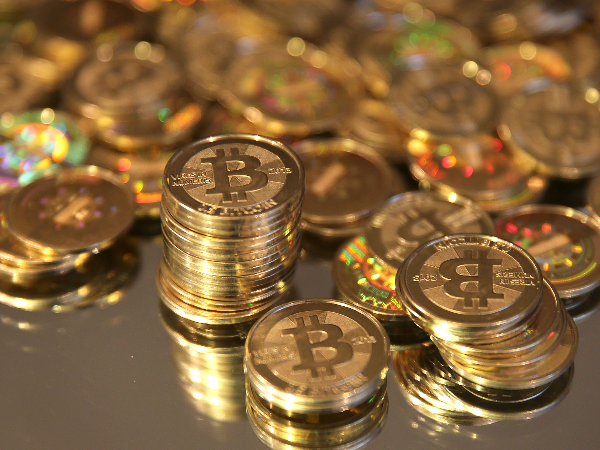
Bitcoin climbed above $80,000 Tuesday for the first time since mid-May, capping what CNBC described as the cryptocurrency's biggest three-day rally since 2023, according to Cryptonomist, as bitcoin rose as much as 2.9% to touch $81,257 before settling around $79,300, according to Bloomberg. The cryptocurrency gained roughly 22% to 38% over the preceding week, depending on the specific measurement window, marking one of its strongest short-term advances in years. Here are five key factors analysts have identified behind bitcoin's sudden surge.
1. The U.S. Treasury's expanded bond buyback program
The single most frequently cited catalyst behind the rally is the U.S. Treasury Department's decision to significantly expand its buybacks of long-dated government debt. According to crypto.news, the Treasury doubled its long-end buyback limits to at least $4 billion, a move that initially sent bond yields lower and signaled easing monetary conditions to markets. The Block reported that analyst d'Anethan connected that decision directly to bitcoin's rally, explaining the logic behind the move. "Treasury decision to artificially lower rates by buying back bonds sends a powerful and solid signal that monetary conditions and thus capital are easing up. It's easy to see why BTC, which underperformed in the first half of 2026, would be the prime beneficiary of this," d'Anethan said.
2. A "debasement trade" driving investors toward bitcoin and gold
Several outlets identified a broader macroeconomic dynamic, commonly referred to as the "debasement trade," as a key driver of the rally. According to the Rio Times, easing Treasury yields and expanded bond buybacks have pushed investors into both bitcoin and gold as hedges against what they view as ongoing fiscal erosion tied to the U.S. government's growing debt burden. That dynamic reflects a broader pattern in which investors turn toward scarce assets during periods of expansive monetary or fiscal policy, treating both bitcoin and gold as stores of value less subject to currency debasement than traditional cash holdings.
3. A massive cascade of forced short liquidations
The speed and scale of bitcoin's advance were significantly amplified by a wave of forced liquidations among traders who had bet against the cryptocurrency. According to the Rio Times, a $1.14 billion cascade of short liquidations amplified the price move, forcing bearish traders to buy back bitcoin to close out their losing positions, which in turn accelerated the price climb further. Cryptonomist similarly described the rally as being "triggered by a Treasury-related buyback event that forced a massive short squeeze on traders positioned below $67,000," a dynamic in which the initial catalyst set off a self-reinforcing chain reaction as traders scrambled to exit losing bets.
4. Strong institutional demand through spot bitcoin ETFs
Renewed institutional buying through exchange-traded funds provided a further pillar of support beneath the rally. According to crypto.news, U.S.-listed spot bitcoin ETFs attracted approximately $1.9 billion to $1.92 billion in net inflows during the week ending Aug. 21, marking their strongest weekly intake since October 2025. The funds attracted capital for five consecutive trading sessions, according to the same report, with BlackRock's iShares Bitcoin Trust accounting for a significant portion of that buying activity. That sustained ETF demand offered evidence of genuine underlying spot market demand, distinguishing the current rally from moves driven purely by leveraged futures market activity.
5. Improving technical and derivatives market positioning
Bitcoin's price action has also been reinforced by a series of favorable technical signals. According to CryptoTimes, bitcoin reclaimed and closed above its 20-day, 50-day, 100-day and 200-day exponential moving averages, forming what the outlet described as a bullish alignment of moving averages that had previously served as resistance during the extended prior downtrend. Options market positioning has similarly shifted in a bullish direction; according to a separate CryptoTimes report citing data from Glassnode, bitcoin's options skew fell to its lowest level of the year across the pricing curve, with front-end skew turning negative, indicating traders are now paying a higher premium for calls relative to comparable puts, a sign of stronger demand for further upside exposure. Notably, data from Santiment Intelligence showed that coin-denominated open interest actually declined roughly 11% even as bitcoin's price rose approximately 22% over the same period, suggesting the rally was not built on increasingly crowded, risky futures positioning, a factor some analysts view as making the current advance more structurally sound than a purely leverage-driven spike.
Despite the strength of the advance, bitcoin remains well below its all-time high. According to Bloomberg, the cryptocurrency remains well beneath its October peak of roughly $126,000, and Cryptonomist noted bitcoin had spent much of 2026 trading in a range roughly 40% to 50% below that record, as investor attention and capital instead flowed toward the AI-driven stock market rally that has dominated markets for much of the year.
Analysts have offered a cautious assessment of what comes next. The Block reported that the Crypto Fear & Greed Index climbed to a reading of 83, characterized as "Extreme Greed," while analysts cautioned it remains too early to determine whether the current rally will translate into a sustained bull market, given ongoing concerns over sticky inflation and continued geopolitical uncertainty. Bitcoin Foundation's coverage similarly noted that while ETF inflows and reduced leverage offer encouraging signs, further spot demand will likely be necessary to convert the $80,000 level from a resistance point into a durable, structural support base, rather than risking a failed retest that could weaken the broader breakout narrative.
With bitcoin's daily relative strength index reading above 80, deep into overbought territory according to multiple technical measures, some analysts have cautioned that a near-term pullback or period of consolidation remains a genuine possibility even as the underlying catalysts, including continued Treasury buyback support, remain broadly favorable. As CryptoTimes noted, continued Treasury bond-buyback support could keep liquidity conditions favorable enough to eventually push bitcoin toward testing the $90,000 level within the coming months, though that outcome remains far from guaranteed given the combination of overbought technical conditions and the broader macroeconomic uncertainty still weighing on markets.
© Copyright 2026 IBTimes AU. All rights reserved.