Australia's Luxury Car Tax Survives EU Deal: New $120,000 Threshold for Zero-Emission Vehicles Boosts EVs
SYDNEY — Australia's controversial luxury car tax remains in place after the federal government signed a historic free trade agreement with the European Union on Tuesday, but buyers of high-end electric vehicles from Europe stand to save thousands of dollars thanks to a new $120,000 threshold for zero-emission models.

The deal scraps 5 percent import tariffs on European cars while introducing a dedicated higher luxury car tax category for zero-emissions vehicles, lifting the threshold from the current $91,387 for fuel-efficient cars to $120,000. Traditional petrol, diesel and hybrid vehicles continue to face the standard $80,567 threshold for the 2025-26 financial year, with the 33 percent tax applying only to the amount above it.
The luxury car tax, or LCT, has long been a point of contention in Australia's automotive sector. Introduced in 2000 as a temporary measure, it now generates more than $1.2 billion annually for government coffers while adding significantly to the price of popular family SUVs and premium sedans that exceed the thresholds.
As of March 2026, the Australian Taxation Office sets two main thresholds for the 2025-26 financial year: $91,387 for fuel-efficient vehicles (those with combined fuel consumption of 3.5 liters per 100 kilometers or less following tightened rules from July 2025) and $80,567 for all other vehicles. No indexation increase occurred this year because the relevant consumer price index factors fell below 1.
The tax is calculated on the GST-inclusive value of the vehicle before on-road costs, stamp duty or registration. For example, a non-fuel-efficient car priced at $90,000 would attract LCT of 33 percent on the $9,433 above the $80,567 threshold — adding roughly $3,113 to the cost.
The new EU agreement, finalized after years of negotiations, represents a compromise. Europe had pushed for the complete removal of the LCT, which critics argued disproportionately affected European brands. Instead, the government opted for targeted relief on zero-emission vehicles while preserving revenue from internal combustion engine models.
Treasurer Jim Chalmers welcomed the deal as a win for consumers and exporters. "This agreement delivers cheaper European cars for Australian families while protecting revenue and supporting our transition to cleaner vehicles," he said in a statement Tuesday.
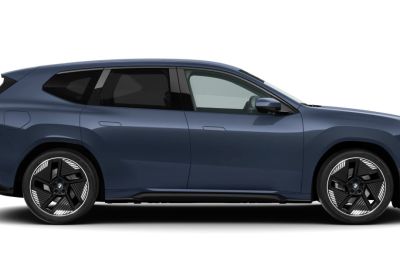
Industry groups reacted with mixed feelings. The Australian Automotive Dealer Association expressed disappointment that the LCT was not fully scrapped but acknowledged the boost for electric vehicles. "Raising the threshold for ZEVs to $120,000 will make premium models like the upcoming BMW iX3 and Mercedes-Benz equivalents more accessible," an AADA spokesperson said. "However, the tax still hits many popular SUVs that Australians rely on for family transport."
Recent changes to the definition of "fuel-efficient" vehicles, effective from July 1, 2025, have already pushed more models into the lower threshold category. The maximum allowable fuel consumption for the higher $91,387 threshold dropped from 7 liters per 100km to 3.5 liters per 100km, affecting vehicles such as the Toyota Kluger Hybrid, Mazda CX-90 and Audi Q5 mild hybrids that previously qualified for the concession.
Dealers report that these shifts increased LCT liability on several mid-range luxury SUVs by $1,000 to $3,000, contributing to slower sales in some segments during the current financial year.
The LCT applies to both new locally delivered vehicles and imports. Dealers must quote the tax correctly, and buyers cannot claim GST credits on the LCT portion even for business use. Second-hand vehicles are generally exempt unless imported.
Critics of the tax argue it has outlived its original purpose as a "temporary" levy on luxury goods. When introduced, the threshold was around $57,000 for standard vehicles. Adjusted for inflation and rising car prices, many mid-spec Toyota LandCruiser Prado variants and high-end family wagons now routinely trigger the tax.
Supporters, including environmental advocates, say the tiered structure encourages uptake of more efficient and electric models. The new $120,000 zero-emission threshold under the EU deal further tilts the scales toward EVs, potentially accelerating Australia's slow transition to battery electric vehicles compared with other developed nations.
Electric vehicle advocates welcomed the move but called for broader reforms. The Australian Electric Vehicle Association had previously urged limiting the higher threshold exclusively to zero-emission cars rather than any low-fuel-consumption model.
For buyers considering a luxury purchase in 2026, the implications are clear. A European petrol-powered luxury sedan priced at $100,000 GST-inclusive would incur about $6,400 in LCT. The same model as an electric variant could fall under the new $120,000 threshold, avoiding the tax entirely and benefiting from the removed 5 percent tariff.
Industry analysts predict the changes could lower prices of flagship European EVs by $8,000 to $15,000 once the agreement takes full effect, making models from BMW, Mercedes-Benz, Audi and Porsche more competitive against Tesla and Chinese brands.
The government has signaled that a full phase-out of the LCT remains under consideration in future budgets, but no timeline has been set. Earlier reports suggested a gradual wind-down to protect residual values of existing luxury cars already on Australian roads.
Automotive economists note that while the LCT raises significant revenue, it represents a small fraction of total motoring taxes including fuel excise, GST on vehicles and state registration fees. Removing it entirely could stimulate the premium segment but would require offsetting revenue measures elsewhere.
As the EU trade deal moves toward implementation, dealers are advising customers to check exact LCT calculations with the ATO or trusted financiers. Online LCT calculators updated with the latest thresholds help buyers estimate costs, but final figures depend on the precise GST-inclusive price and vehicle specifications.
The Port of Melbourne and other import hubs report steady volumes of European vehicles, with the tariff removal expected to ease supply chain costs further.
For now, the luxury car tax endures as one of Australia's more visible automotive levies, but the new zero-emission concession marks a significant evolution aligned with global climate goals and trade priorities.
Buyers planning a luxury purchase are encouraged to review the latest ATO guidelines, consult dealers on upcoming EU-sourced models and consider total ownership costs including potential future changes to thresholds or incentives.
With the agreement signed, the focus shifts to parliamentary ratification and the precise timing of the new $120,000 threshold rollout. For many Australian motorists eyeing their next premium vehicle, the changes could mean meaningful savings — particularly if they choose electric.
© Copyright 2026 IBTimes AU. All rights reserved.
- Recommended For You