Origin of Amber Alert: Named After 9-Year-Old Texas Victim Amber Hagerman
Amber Hagerman's abduction inspired the creation of the Amber Alert system, a crucial tool in child abduction cases.
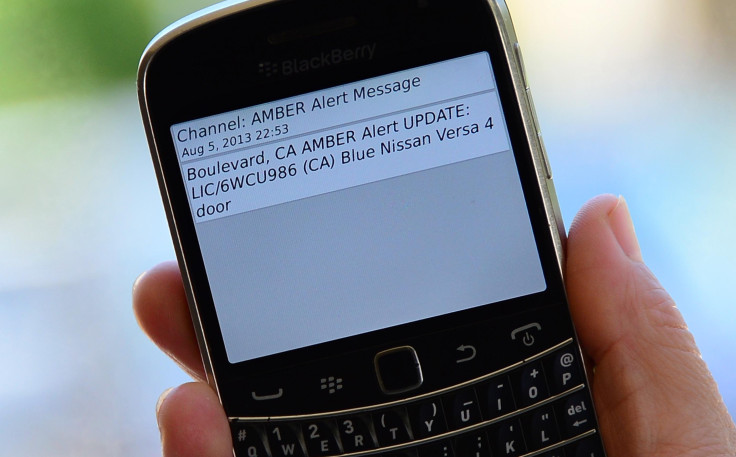
ARLINGTON, Texas — The Amber Alert system, a nationwide emergency notification program for abducted children, takes its name from Amber Rene Hagerman, a 9-year-old girl who was kidnapped and murdered in Arlington, Texas, in January 1996.
Amber Hagerman was riding her bicycle in a parking lot near her grandparents' home on Jan. 13, 1996, when an unknown man abducted her. Her body was found four days later in a creek a few miles away. The crime remains unsolved.
In response to the tragedy, local residents and broadcasters in the Dallas-Fort Worth area pushed for a better emergency alert system. Radio stations and law enforcement collaborated to create an early warning mechanism that could quickly inform the public about child abductions.
The system was officially named in memory of Amber Hagerman. Although "AMBER" is presented as the acronym for "America's Missing: Broadcast Emergency Response," this is a backronym created after the system was already named for the girl.
The first Amber Alert was issued in the Dallas-Fort Worth area in 1996. It quickly spread to other Texas regions and then nationwide. By the early 2000s, the program had expanded across the United States and into Canada and Mexico.
The National Center for Missing & Exploited Children (NCMEC) played a key role in standardizing criteria and promoting the system. Amber Alerts are now activated only in cases meeting specific guidelines: confirmed abduction, risk of serious harm or death to the child, and sufficient descriptive information for public assistance.
As of 2026, the Amber Alert system has helped recover more than 1,000 children safely since its inception. It utilizes emergency broadcast systems, highway signs, cell phone alerts, social media and news outlets to distribute information rapidly.
Amber's mother, Donna Williams, has spoken publicly about her daughter's legacy. She has expressed gratitude that the alert system continues to save lives in her daughter's name.
The program has evolved with technology. In 2015, Facebook partnered with NCMEC to deliver Amber Alerts directly to users' news feeds and notifications based on location. Wireless Emergency Alerts now reach cell phones in targeted areas without requiring apps.
Alternative names were used in some states early on, such as "Levi's Call" in Georgia or "Rachael Alert" in Utah, but the Amber Alert name became the national standard.
The system is administered through partnerships between law enforcement, broadcasters, wireless providers and NCMEC. Activation criteria are strict to avoid overuse and maintain public trust.
Amber Hagerman was born Nov. 25, 1986. She was described by family as an outgoing child who loved riding her bicycle. Her abduction occurred in broad daylight, highlighting vulnerabilities even in familiar neighborhoods.
The case galvanized the community. A local radio station manager and others advocated for immediate public alerts, leading to the creation of what became the Amber Alert.
President George W. Bush signed the PROTECT Act in 2003, which included national support for Amber Alert systems. The law enhanced coordination and funding for the program.
Today, every U.S. state has an Amber Alert plan. The system has expanded internationally, with similar programs in other countries using different names but following comparable principles.
Amber's legacy is honored annually on National Amber Alert Awareness Day, observed around the anniversary of her abduction. Law enforcement and child safety advocates use the occasion to educate the public on prevention and response.
The Amber Alert has become one of the most recognized emergency notification systems in the United States. It demonstrates how one child's tragedy led to a nationwide tool that continues to protect others.
Authorities stress that Amber Alerts are reserved for the most serious abduction cases. The rapid public response they generate has proven effective in many recoveries.
The unsolved murder of Amber Hagerman remains under investigation by Arlington police. Her family continues to advocate for child safety and support for the alert system named in her honor.
The Acronym: What it Stands For As the program expanded nationwide and globally, the name was turned into a "backronym" (an acronym created from an existing word) to officially describe the system's function: A – America's M – Missing: B – Broadcast E – Emergency R – Response
© Copyright 2026 IBTimes AU. All rights reserved.
- Recommended For You