

Trump Approves Firing Squad for Fort Hood Shooter Nidal Hasan, Setting Up First Military Execution Since 1961
The decision clears a procedural hurdle, but legal challenges could delay the first US military execution since 1961 for years.
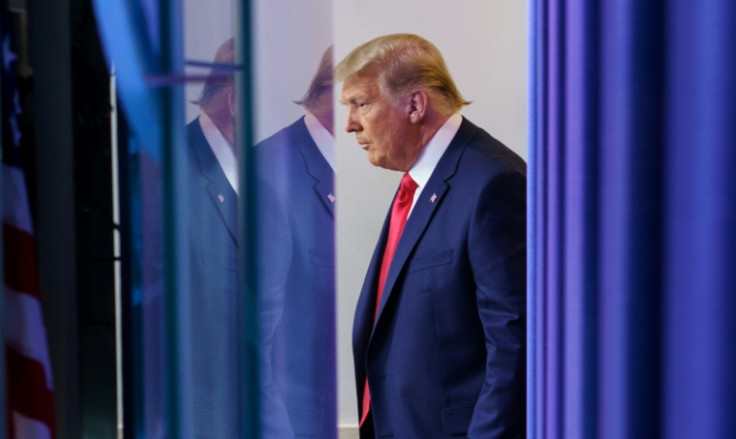
WASHINGTON — President Donald Trump has approved the execution of Nidal Hasan, the former Army psychiatrist who killed 13 people in the 2009 mass shooting at Fort Hood, Texas, by an Army firing squad, the Pentagon said.
Pentagon spokesman Sean Parnell announced the decision Monday evening, saying Trump had signed off on a recommendation from Defense Secretary Pete Hegseth.
"Trump has approved — death by U.S. Army firing squad for convicted terrorist Nidal Malik Hasan, the jihadist who opened fire on unarmed American soldiers at Fort Hood in 2009," Parnell said in a post on X.
BREAKING: President Trump has approved the execution of Nidal Hasan by an Army firing squad for killing 13 people and wounding 32 in the 2009 Fort Hood attack. pic.twitter.com/p9Pr5zvyym
— Breaking911 (@Breaking911) October 6, 2026
Parnell said the secretary of the Army will now decide a time and place for the execution.
"Judgement day for Hasan has finally come," Parnell wrote.
If carried out, it would be the first execution by the U.S. military since 1961 and the first execution of an Army prisoner by firing squad in more than 80 years.
The 2009 attack
On Nov. 5, 2009, Hasan, then an Army major and psychiatrist, walked into the Soldier Readiness Center at Fort Hood armed with a semi-automatic pistol and opened fire on fellow service members who were preparing to deploy overseas.
Thirteen people were killed and more than 30 were wounded in the attack, one of the deadliest mass shootings ever on a U.S. military installation. Hasan was convicted of 13 counts of premeditated murder and 32 counts of attempted premeditated murder.
The rampage ended when Hasan was shot by civilian police officers responding to the attack. The wounds left him paralyzed from the waist down.
Hasan, a U.S.-born Muslim, said he acted to protect Islamic insurgents abroad from American aggression and never denied being the gunman. Investigators later found he had exchanged messages with Anwar al-Awlaki, a U.S.-born extremist cleric who was killed in a U.S. drone strike in Yemen in 2011.
Conviction and appeals
A military jury convicted Hasan in August 2013 and unanimously sentenced him to death. Hasan represented himself at trial, called no witnesses and offered little defense.
During the trial, documents leaked to journalists showed Hasan telling military mental health workers in 2010 that he could "still be a martyr" if executed. The lead prosecutor told jurors that Hasan would "never be a martyr."
Hasan has spent more than a decade on military death row at the U.S. Disciplinary Barracks at Fort Leavenworth, Kansas. He lost his final military appeal in April 2025, clearing the way for the case to be sent to the president.
Under military law, a death sentence cannot be carried out without the president's approval.
Hegseth's push
Hegseth had made clear for more than a year that he wanted Hasan executed. In September 2025, he said he had asked Trump to approve the execution.
"I am 100 percent committed to ensuring the death penalty is carried out for Nidal Hasan," Hegseth said at the time. "This savage terrorist deserves the harshest lawful punishment for his 2009 mass shooting at Fort Hood."
He added: "The victims and survivors deserve justice without delays."
The Army secretary had formally recommended the execution before the request was sent to the president.
Legal hurdles remain
Trump's approval sets in motion a series of procedural steps, but the execution may not happen soon.
Hasan could seek to delay it, potentially for years, by filing a habeas corpus petition in the civilian federal court system, according to an article published in May in the magazine Army Lawyer.
It was not immediately clear whether Hasan or any attorney representing him planned to challenge the decision. The Pentagon did not announce a date for the execution.
A rare military punishment
The U.S. military has not executed anyone since April 1961, when Army Pvt. John Bennett was hanged at Fort Leavenworth after being convicted of rape and attempted murder.
The last Army execution by firing squad was that of Pvt. Eddie Slovik, who was shot in France in January 1945 after being convicted of desertion during World War II. He remains the only American soldier executed for desertion since the Civil War.
Hasan is one of four people on the military's death row, according to the Death Penalty Information Center.
Military executions have historically been carried out by hanging, firing squad or lethal injection. The choice of a firing squad for Hasan marks a sharp break from the methods used in recent decades for civilian executions in the United States, where lethal injection has been the dominant method.
Broader push on capital punishment
The decision comes as the Trump administration has moved to expand the use of the death penalty.
Trump resumed federal executions near the end of his first term after a hiatus of nearly two decades. The federal government executed 13 people between July 2020 and January 2021.
In April, then-acting Attorney General Todd Blanche announced that the Justice Department was expanding the methods available for federal executions to include firing squads, electrocution and gas asphyxiation.
The announcement also came days after a failed execution in Tennessee, where death row inmate Christa Pike survived two doses of pentobarbital last week before her execution warrant expired. Pike had previously asked to be executed by firing squad rather than lethal injection.
Asked whether the Tennessee case would lead him to seek changes to capital punishment, Trump called it "an interesting situation."
"It shouldn't be very difficult," Trump said of carrying out lethal injections.
Victims and survivors
Families of those killed and survivors of the Fort Hood attack have long pressed for Hasan's sentence to be carried out, criticizing years of delays.
Many survivors also fought for years to have the attack classified as an act of terrorism rather than workplace violence, a designation that affected their eligibility for combat-related benefits. In 2015, Congress changed the law to make victims eligible for the Purple Heart, and the Army awarded the medals to victims and survivors that year.
The base where the attack took place, located in central Texas, is one of the largest military installations in the world. It was renamed Fort Cavazos in 2023 as part of an effort to remove the names of Confederate officers from military bases, before the Trump administration restored the name Fort Hood in 2025, this time honoring a World War I soldier who shared the surname.
The secretary of the Army is expected to set the date, time and location for the execution. The Pentagon has not said where it would take place or how the firing squad would be assembled.
Any legal challenge filed by Hasan could delay the execution while federal courts review the case.
© Copyright 2026 IBTimes AU. All rights reserved.