(VIDEO) SpaceX Starship Flight 14 Aims for First Orbit, Carrying 26 Starlink V3 Satellites in 10-Hour Test
The 14th test flight will put Ship 41 into a planned low orbit, test its heat shield and examine whether the vehicle is ready for more ambitious missions.

STARBASE, Texas — SpaceX is preparing to launch its Starship megarocket on Monday in an attempt to reach orbit for the first time, a 10-hour test flight that would also see the vehicle deploy 26 operational Starlink internet satellites and mark a turning point in the rocket's long development campaign. The outcome of the launch was not known at the time of writing.
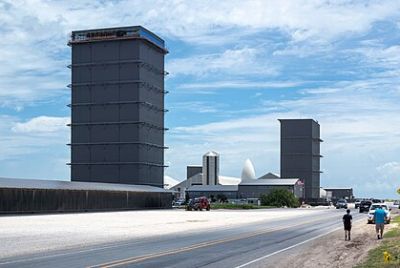
The 14th Starship test flight, designated Starlink Group 31-1, has a 75-minute launch window that opens at 8:15 a.m. Eastern time (7:15 a.m. local, 1215 GMT) from SpaceX's facilities at Starbase, Texas. SpaceX said it is targeting liftoff about a half-hour into the window, at roughly 8:46 a.m. Eastern, according to CNN. Space.com reported the countdown was tracking toward 8:49 a.m. Eastern. As of the latest updates, SpaceX had begun its live broadcast and started loading propellant, including superchilled liquid methane and liquid oxygen, onto the Super Heavy booster and the Starship upper stage. The mission was originally slated for September 22 before SpaceX announced a postponement on September 17 without giving a reason, according to BigGo Finance, and Teslarati reported that the Federal Aviation Administration has cleared the flight.
"Weather is gorgeous," SpaceX spokesperson Dan Huot said, noting there were some clouds but they were "not going to be an issue throughout the count." He described the operation as an unusually demanding one. "This is the most complex range operation we've ever had to do with Starship," Huot said. "But things are looking good right now."
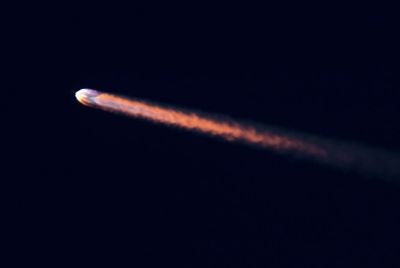
All 13 previous Starship flights were flown on suborbital trajectories, lasting up to roughly an hour, in part to protect public safety if something went wrong. This mission is different. The upper stage, known as Ship 41, will attempt to enter a roughly 275-kilometer orbit and complete about six laps around Earth over just under 10 hours. About 25 minutes after liftoff, the ship is planned to reignite one of its Raptor engines to raise and circularize its path, according to Spaceflight Now. SpaceX said the ship will only perform that burn once flight controllers have confirmed enough hardware redundancy to carry out the deorbit burn at the end of the mission. If the ship is judged unsafe to remain in orbit, mission control could shorten the flight to two or five orbits, according to the mission description.
Deployment of the 26 Starlink V3 satellites is expected to begin about 34 minutes after liftoff through a door on the ship and to take about 30 minutes, Space.com reported. SpaceX says each V3 satellite will add 1 terabit per second of capacity, for a total of 26 terabits per second on this flight, about 10 times the capacity of a single Falcon 9 launch of the smaller V2 mini satellites. Three of the satellites have been modified with cameras to image the ship's heat shield. "Three of the satellites have been modified with a suite of cameras to scan Starship's heatshield and transmit imagery down to operators to continue testing methods of analyzing Starship's heatshield readiness for return to launch site on future missions," SpaceX said on its website. The Starlink service already has about 12 million customers, CNN reported.
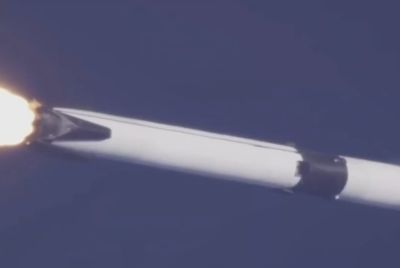
After the deployment and a deorbit burn, the ship is scheduled to make a controlled reentry and splash down in the Pacific Ocean west of Chile. The Super Heavy booster, designated Booster 21, is planned to make a soft splashdown in the Gulf of Mexico about seven minutes after liftoff. SpaceX will not attempt to catch either vehicle with the launch tower's mechanical arms on this flight. Musk had suggested after the last flight that a ship catch might be tried, but he later changed his mind, citing the risk of debris falling on people. "What we're most concerned about is if the ship were to break up over land and rain debris on people," Musk said at the All-In Summit. "Our popularity would diminish very rapidly." Two ships broke up unintentionally on 2025 test flights, raining debris near populated areas of Turks and Caicos and the Bahamas, CNN noted.
The heat shield remains a central focus. During Flight 13 on July 24, dubbed "Lucky 13," Ship 40 made a nearly perfect splashdown in the Indian Ocean and was later towed for about 24 days to a location off Christmas Island so engineers could inspect it. "After approx. 24 days at sea, the SpaceX Recovery team successfully guided Starship to a location just off the coast of Christmas Island," SpaceX said on August 18. The analysis informed changes to the vehicle flying today, including "additional retention mechanisms added to tiles in areas deemed to be at highest risk of falling off during ascent," and a curved tile design that SpaceX says reduces heating in gaps between tiles. Two hexagonal tiles recovered from Ship 40 are also flying on Ship 41, marking the first reuse of heat shield tiles.
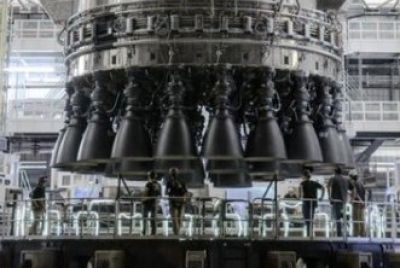
The booster has its own test objectives. On Flight 13, the Super Heavy used all 33 engines on its boostback burn for the first time, but ice clogging in the three center engines cut the maneuver short. Only eight of 13 planned engines then reignited for the landing burn, and the booster splashed down hard in the Gulf, SpaceX said. For Flight 14, SpaceX modified the hardware to improve engine filtering and changed software to make relights more reliable.
The stakes extend beyond a single test. Reaching orbit is a key step in moving Starship from development toward regular operations, including deploying larger Starlink satellites and supporting NASA's efforts to return astronauts to the Moon. CNN reported that SpaceX faces intense pressure to ready Starship for a crucial NASA test flight next year. SpaceX is also planning a $100 billion spaceport, "Starbase, Louisiana," where it wants to launch Starship thousands of times per year, with construction expected to begin by the end of next year and a first launch targeted as soon as 2029, according to an economic development website cited by CNN.
Reusability is the goal that Musk has said makes the effort worthwhile. "If full and rapid reusability can be achieved, it reduces the cost of access to orbit by a factor of 100 or more," he said in 2021. Success or failure on Monday will show how close the company is to that goal.
© Copyright 2026 IBTimes AU. All rights reserved.
- Recommended For You