Musk's 30-Minute Rocket Flight From Tokyo to New York: When It Could Actually Happen, and What's Stopping It
SpaceX has outlined suborbital journeys between major cities, but safety certification, regulation, environmental concerns and launch infrastructure remain unresolved.

There is no confirmed date for when Elon Musk's vision of rocket travel between distant cities, such as a roughly 30-minute hop from Tokyo to New York, will become a real service. SpaceX has never published a launch schedule for passenger point-to-point flights, and reporting this year describes commercial service as years away, with a long list of safety, regulatory and environmental hurdles still ahead.
The concept, sometimes called Starship Earth to Earth, would use SpaceX's giant reusable Starship rocket to carry passengers on brief suborbital trips between cities. Musk first laid it out publicly in 2017 at the International Astronautical Congress in Adelaide, Australia, where he showed a video of travelers boarding a floating launch platform in New York and landing in Shanghai, roughly 12,000 kilometers away, in about 39 minutes. He framed the idea as a byproduct of the company's Moon and Mars ambitions. "If building this thing to go to the Moon and Mars then why not go to places on Earth as well?" Musk said at the time, according to coverage of the event in the New Zealand Herald.
Coverage of that presentation reported Musk saying most routes, including New York to Tokyo, would take about 30 minutes and that any two points on Earth could be linked in under an hour. He also said the cost per seat could be about the same as a full-fare economy airline ticket. SpaceX has since published illustrative journey times, including Los Angeles to New York in 25 minutes, Bangkok to Dubai in 27 minutes, Tokyo to Singapore in 28 minutes, New York to Paris in 30 minutes and London to Hong Kong in 34 minutes, according to reporting by Inverse and The Conversation.
Those figures describe what the vehicle could do in principle, not what any customer can buy. In an April 2026 assessment, the International Business Times Australia reported that a commercial launch of passenger point-to-point service "remains years away" and that Starship's main customers for now are NASA and, potentially, the U.S. Department of Defense for point-to-point cargo demonstrations. The outlet noted that former SpaceX President Gwynne Shotwell once suggested Earth-to-Earth services could begin as early as 2025 in the most optimistic scenarios, but that timeline has quietly faded as Starship's development has concentrated on lunar and Mars goals.
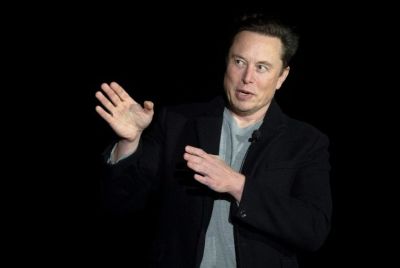
Musk himself has been characteristically bullish about the idea's feasibility, without offering a delivery date. In late 2024, responding to a social media post about the concept, he wrote, "This is now possible," a remark widely read as a signal that a friendlier regulatory climate under the incoming U.S. administration might speed progress. He has also spoken of eventually flying dozens of Starship missions each year once the system matures, which could build the flight history regulators would want to see before certifying a passenger version.
The obstacles are substantial. According to the International Business Times Australia, carrying paying passengers would require human-rating the vehicle to aviation-level safety standards, which are far stricter than those applied to cargo or uncrewed test flights. It would also need approval from the Federal Aviation Administration and international aviation authorities, environmental studies for coastal or offshore launch sites, solutions for noise, robust emergency abort systems, and a workable framework for insurance and liability when civilians fly at hypersonic speeds.
Other outlets have flagged additional concerns. An analysis by Orbit Scholar listed safety, cost, infrastructure and environmental impact as the main hurdles, noting that launch pads would need to be built near major cities, that early tickets could cost more than first-class airfare, and that rocket emissions and sonic booms could raise ecological and noise concerns. The Conversation observed that Starship burns vastly more fuel per trip than a conventional airliner, though it argued the technology could spur research into carbon-neutral methane production.
Comfort would also differ sharply from airline travel. Musk has said flights would last roughly 15 to 20 minutes and has suggested a bare-bones cabin with no toilets, food service or pilot area. In 2019 he described the rocket in stark terms on Twitter. "It's basically an ICBM traveling at Mach 25 that lands," he wrote, adding that passengers would probably need "a restraint mechanism like Disney's Space Mountain roller coaster."
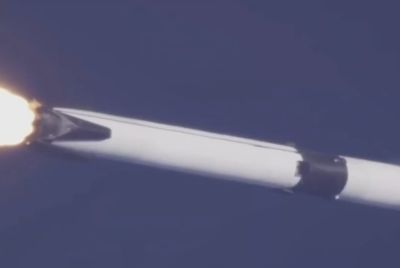
Starship itself remains in development, and the version needed for passenger service would be a further step beyond the vehicle now being tested. As reported in earlier coverage of SpaceX's plans, the company is working on an upgraded Starship V3 with its newer Raptor V3 engine, with in-orbit propellant transfer tests expected during 2026, a capability aimed mainly at lunar and Mars missions rather than city-to-city travel.
Musk's record on timelines adds another reason for caution. He has often projected dates that later slipped, and analysts have generally treated his forecasts as ambitions rather than schedules. The IBTimes Australia analysis made the same point, writing that his timelines often shift even as Starship's rapid testing shows steady progress.
For travelers dreaming of breakfast in Tokyo and dinner in New York on the same day, the practical answer is that no one can say when, or whether, the flight will exist. Nothing in SpaceX's published plans or in the current reporting sets a target year, and the milestones that would have to come first, certified passenger safety, regulatory approval and dedicated launch sites near major cities, have not yet been completed.
© Copyright 2026 IBTimes AU. All rights reserved.
- Recommended For You